Craig Mod: Walking as an Operating System
40,000 subscribers. Books that sell out in 48 hours. Random House came to him. 100% membership-funded.
The Thesis: Fund the Practice, Not the Product
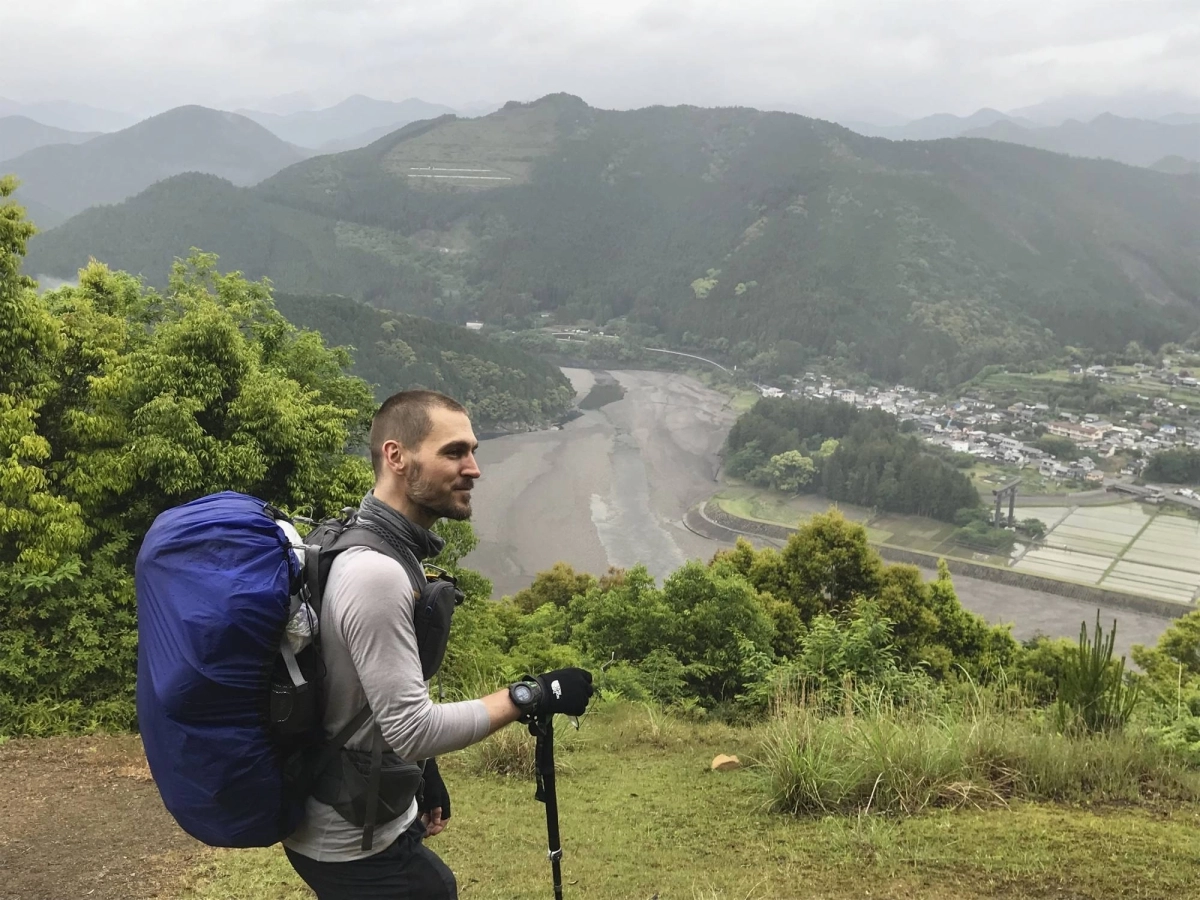
Craig Mod walks. He walks for weeks at a time along ancient routes through rural Japan — the Nakasendō, the Kumano Kodō, the Tōkaidō — covering 20–30 kilometers a day, then spending four to five hours each evening writing and editing photographs. He sends daily dispatches to subscribers of pop-up newsletters that exist only for the duration of the walk, then automatically unsubscribe everyone when it ends. The walks produce books. The books sell out — Kissa by Kissa, his book about Japanese kissaten encountered along the Nakasendō, has gone through five editions, the first selling out in 48 hours. Things Become Other Things, his walking memoir of the Kii Peninsula, was picked up by Random House and named a Best Book of the Year by Smithsonian Magazine and Kirkus Reviews.
All of this — the walks, the newsletters, the books, the photographs, the podcast, the ambient audio recordings, the open-source crowdfunding tools he built — is funded by a membership program called SPECIAL PROJECTS. No investors. No advertising. No platform dependency. One hundred percent membership and book sales.
The membership doesn't pay for content. It pays for the ability to do the work at all. That's a fundamentally different value proposition — and it's why SPECIAL PROJECTS has been running for six years with growing membership.
This is the most structurally innovative creative practice in the library — and the clearest demonstration of what happens when a creative professional owns every layer of their work, from the walk to the words to the printing to the distribution to the revenue. The structures we read against Mod's practice — membership / retainer, product partnership, creator-as-platform, exclusive licensing — are our framework, not a deal-structure menu he sat down to apply. Magazine pieces fell through, so he started a newsletter; the newsletter built an audience that funded books; the books attracted Random House. The fit between what he did and how the structures behave is what makes the case useful.
Timeline
The Membership Model: SPECIAL PROJECTS
The key design decision: the membership doesn't gate the primary work. Ridgeline and Roden are free. The pop-up walk newsletters are free. The essays are free. The membership funds the ability to do the work at all — and gives members insider access, archives, and the satisfaction of directly enabling a creative practice they value.
Revenue Architecture
| Stream | Type | Est. Annual Value | Notes |
|---|---|---|---|
| SPECIAL PROJECTS membership | Annual subscription ($100/yr) | Undisclosed | ~300 in 2019; growing — "2023 was most members" |
| Book sales (Kissa by Kissa, TBOT FAE, etc.) | Direct sales | Undisclosed | 5 editions all sold out; limited edition prints |
| Things Become Other Things (Random House) | Advance + royalties | Undisclosed | Best Book of Year 2025; hardcover/paperback rights licensed |
| Freelance writing (NYT, WIRED, Atlantic, etc.) | Per-piece | Decreasing | Increasingly secondary to membership-funded work |
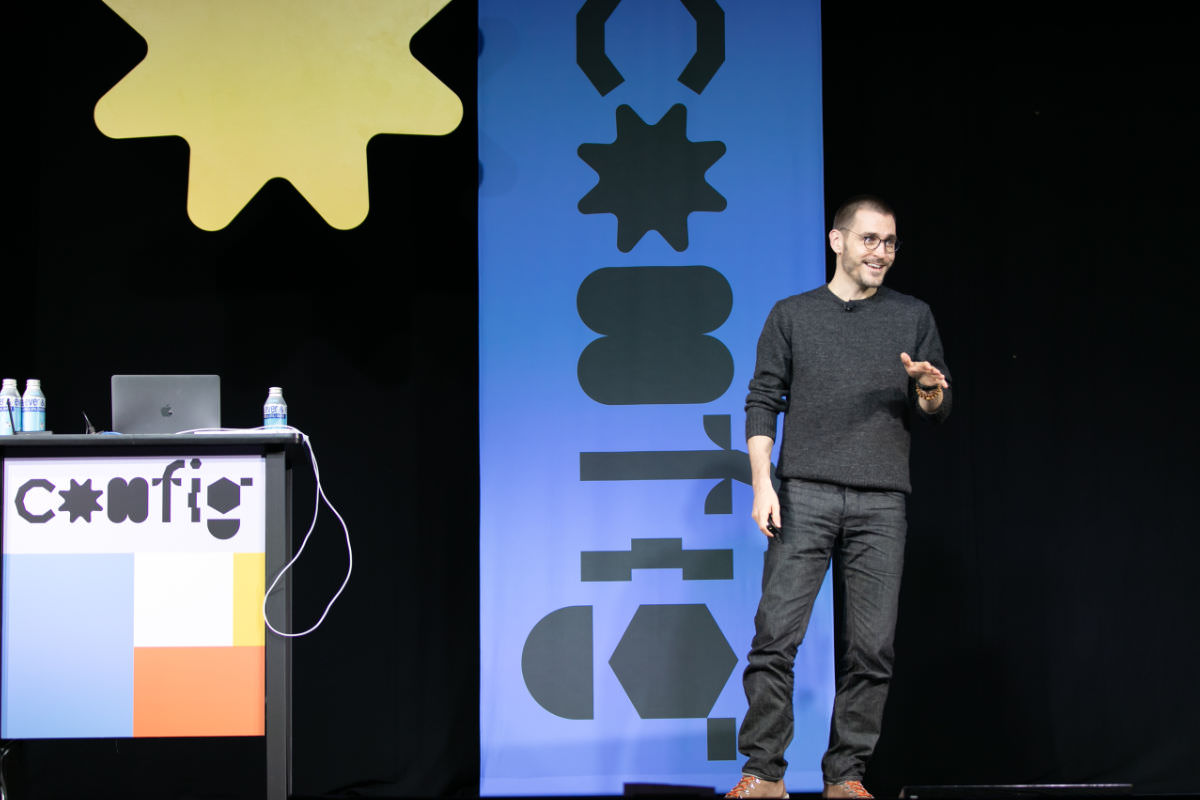
| Speaking (Figma Config, conferences) | Event fees | Variable | Sporadic |
| Print sales (signed photographs) | Direct sales (limited) | Variable | E.g. 30 prints with Kissa by Kissa launch |
He built his own crowdfunding tool because "Kickstarter hadn't changed much in the past four years." Owning the infrastructure is the deepest level of ownership.
Publishing Architecture: Independent First, Traditional Second
Mod's publishing model inverts the traditional sequence. Most writers pitch publishers, get an advance, write the book. Mod writes the book, funds it through membership, sells it directly, proves the audience — and then licenses specific rights to a traditional publisher.
Random House didn't discover Craig Mod. Craig Mod proved the work, built the audience, sold out five editions, and then licensed hardcover and paperback rights. The publisher needed him — because the audience already existed, the quality was already proven, and the commercial viability was already demonstrated. This is the same dynamic as Sanderson's hybrid model: independent success creates the negotiating position for traditional deals on favorable terms.
The Creative System
Walking functions as an "operating system" — a platform for all other creative work. Each walk generates:
| Output | Format | Example |
|---|---|---|
| Daily dispatches | Pop-up newsletters (auto-unsubscribe at walk end) | Nakasendō dispatches; TOKIO TŌKYŌ TOKYO |
| Photography | Medium format Hasselblad + digital | Kissa by Kissa; TBOT |
| Essays | Major publications | WIRED, Eater — pitched mid-walk |
| Books | Independent + licensed | Kissa by Kissa; Things Become Other Things |
| Audio | SW945 binaural ambient recordings | Historic walking paths |
| Video | "Nothing Exciting" series | 80+ Japan walking videos |
| Tools | Open-source software | Craigstarter crowdfunding platform |
| Podcast | On Margins | Conversations on publishing |
The Compounding Effect
Walk generates pop-up dispatches (free, auto-unsubscribe at walk end). Dispatches generate books (Kissa by Kissa, Things Become Other Things — sell out in 48 hours). Books grow the audience (40,000 subscribers). Audience converts to membership (SPECIAL PROJECTS). Membership funds the next walk. And the cycle restarts.
The hub is "Walking as OS" because walking isn't the hobby that generates content on the side. It's the core creative act from which every other output derives. The walk produces the photographs, the essays, the dispatches, the books, the audio recordings, the video. By structuring the practice around an activity that is inherently generative — every step is a new image, a new thought, a new encounter — Mod never runs out of material. The walk is the R&D.
Transferable Lessons
Walking is Mod's. Yours might be different — teaching, building, cooking, interviewing, traveling, restoring. The question: what activity naturally generates multiple outputs (writing, images, ideas, connections) that can be captured in different formats? Structure your practice around that activity, not around a platform or a format.
The test: Does your core creative activity produce more material than you can use? If so, you have an operating system. If you're always hunting for ideas, you're working from the wrong starting point.
Don't ask people to pay for individual pieces of content. Ask them to fund the existence of a creative practice they value. The shift from "pay for this article" to "support this person's ability to keep making things" changes the entire economic relationship. People who fund practices are more loyal, more patient, and more invested than people who buy products.
The design principle: Keep the primary work free. The free work IS the marketing. The membership asks one question: do you want this to continue?
Mod owns the newsletter platform, the crowdfunding platform (Craigstarter — which he built and open-sourced because "Kickstarter hadn't changed much in the past four years"), the book production, the distribution, and the membership infrastructure. Each layer of ownership removes a dependency. Each dependency removed increases creative freedom.
The spectrum: You don't need to build everything from scratch. Start with the most critical dependency (where does your revenue flow through?) and own that first. Then work outward.
Pop-up newsletters that auto-unsubscribe. Walks with fixed durations. Limited edition print runs. These aren't limitations — they're structural decisions that create urgency, respect attention, and produce archival value. The constraint IS the format. The auto-unsubscribe is the innovation.
The application: What if your creative project had a beginning AND an end, announced in advance? What if access was temporary, not permanent? The artificial scarcity of attention-respectful formats generates more loyalty than infinite access ever could.
Random House didn't discover Craig Mod. Five editions of a sold-out, independently produced book made the conversation inevitable. Mod licensed hardcover and paperback rights — specific rights, not everything — because the work already existed, the audience was already proven, and the quality exceeded what they could have commissioned.
The parallel: Sanderson uses Tor AND Dragonsteel. Mod uses Random House AND Craigstarter. Independent success is the strongest negotiating position for traditional deals. Build the proof first. The gatekeepers follow.
Two decades in Japan. Mod's access to rural Japanese culture, ancient walking routes, and depopulating villages is the product of decades of immersion in a specific place. Tech credentials. Advising Medium and mentoring at the Designer Fund created a reputation that intersects technology and publishing in a way few writers can claim. Writing quality. Prose in the NYT, WIRED, and The New Yorker is at a level that took years of editorial development.
But the architecture transfers. Core activity as OS → free output as marketing → membership funds the practice → independent publishing proves the work → traditional deals come on your terms. This structural logic works whether you walk across Japan or teach in Tulsa.
Verification Info
Primary Sources
Verified Data Points
Gaps to Verify