Jessica Hische: Procrastiworking Into Ownership
300+ letters for free. Wes Anderson. Apple. USPS. 2 NYT bestsellers. Bootstrapped SaaS. No investors.
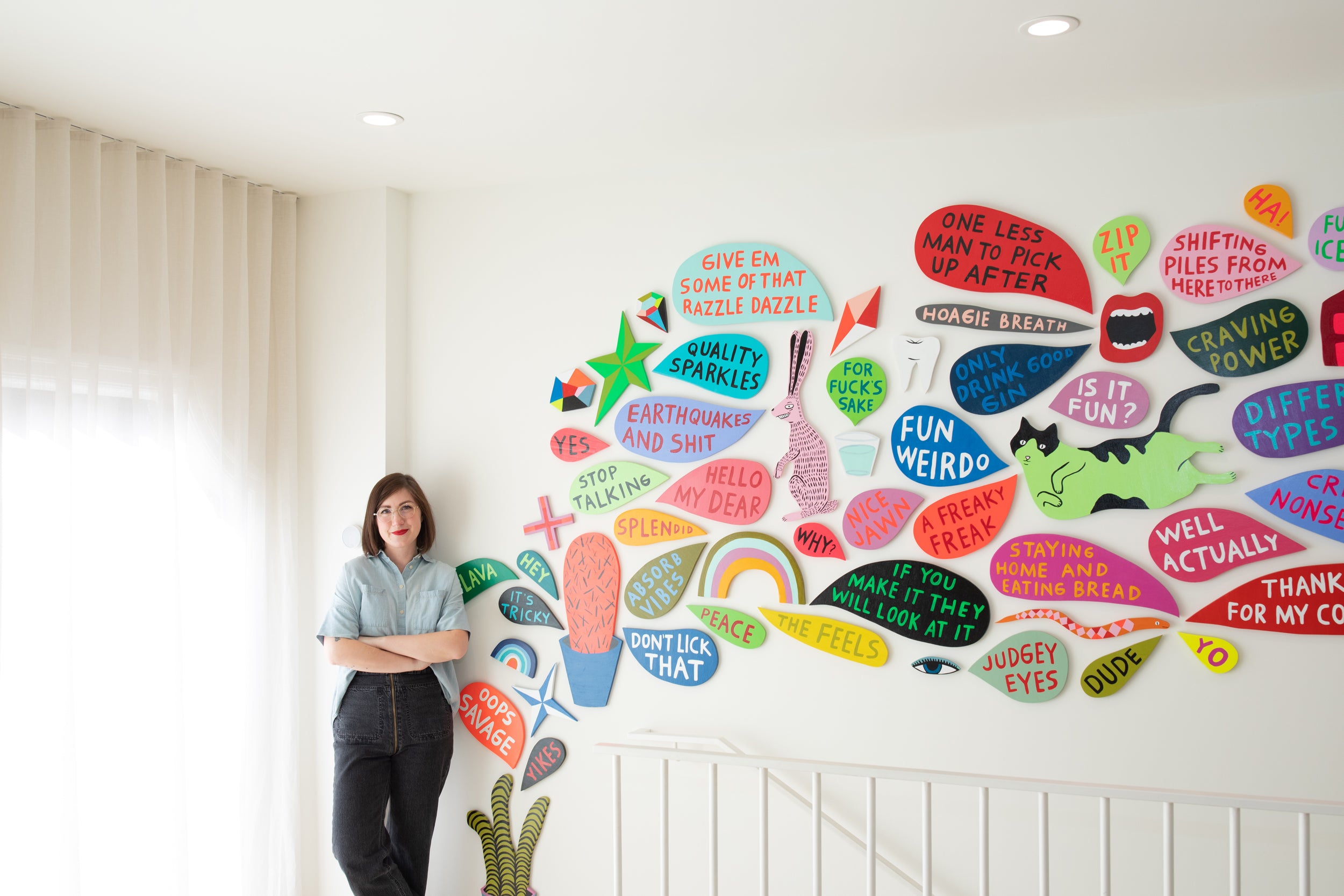
The Thesis: The Projects You Can't Stop Making Are the Strategy
Jessica Hische coined the term "procrastiworking" — the idea that the creative projects you do while procrastinating on client work reveal your true calling. While working nights and weekends at Louise Fili's studio in New York, she started Daily Drop Cap — illustrating one ornate decorative letter every single day, working through the alphabet twelve complete times. She didn't get paid for it. She didn't plan it as marketing. She just made things because she couldn't stop making things. At its peak, Daily Drop Cap attracted 110,000 monthly visitors. It landed her on Forbes 30 Under 30. It brought Wes Anderson's producer to her inbox. It made her, as she put it, "a person on the internet who's worth paying attention to."
Twenty years later, Hische has worked with Wes Anderson (Moonrise Kingdom titles), Apple, the United States Postal Service (Forever stamps), Tiffany & Co., Target, Starbucks, Penguin Books, and American Express. She's authored six books — two of them New York Times bestsellers. She designs commercial typefaces. She's spoken at over 100 conferences. She runs a studio in downtown Oakland with a letterpress printing and laser-cutting workshop.
And now she's building Studioworks — business management software for creative studios, bootstrapped with three co-founders and no investors, with nearly 1,000 founding members before public launch. Because after nearly two decades of running a creative business with cobbled-together tools, she decided to build what she wished had existed.
The side projects were never side projects. They were the strategy — each one opening a market that client work couldn't reach.
For the library, Hische is the practitioner-to-product pipeline case: the clearest example of how a creative professional transitions from trading time for fees to building products that generate revenue without continuous personal output. She is also the case that names the Stage 2→3 bridge costs honestly — client work still makes up the majority of her income, and the transition requires passive income, savings, or partner support. The structures we read onto Hische's career — premium service, product partnership, royalty IP, retainer-bonus SaaS — are the In Sequence library's framework, not Hische's. She started Daily Drop Cap because she couldn't stop making letters; the typefaces, the books, and Studioworks each followed because the procrastiwork kept revealing the next thing. The fit between what she built and how the structures behave is what makes the case useful.
Timeline

Procrastiworking: Side Projects as Career Architecture
| Project | Year | What It Was | What It Actually Did |
|---|---|---|---|
| Daily Drop Cap | 2009–11 | One ornate letter per day, 12 full alphabets | 110K monthly visitors; Forbes 30 Under 30; Wes Anderson |
| Should I Work for Free? | 2010 | Satirical flowchart | Viral reach beyond design community |
| Dont Fear the Internet | ~2010 | HTML/CSS tutorials (with husband Russ) | Positioned as educator, not just practitioner |
| Mom This Is How Twitter Works | ~2010 | Illustrated Twitter explainer | Cross-audience reach; shareability |
| Buttermilk typeface | 2009 | First commercial font | Recurring IP revenue stream |
| Tilda typeface | 2012 | Created for Moonrise Kingdom | Film credit → commercial product pipeline |
These weren't cynical marketing exercises. They were genuine creative impulses that happened to demonstrate skill, generate attention, and attract exactly the clients she wanted. The lesson isn't "do side projects for marketing." It's "follow the impulses you can't suppress — they're signals."
Product Architecture: Each Product Opens a Different Market
Revenue Architecture
| Stream | Type | Market | Notes |
|---|---|---|---|
| Client lettering/design | Project-based (premium) | Art directors, agencies, brands | Still majority of income; increasingly selective |
| Childrens books (6; 2 NYT bestsellers) | Advance + royalties | Parents, gift market | Entirely different audience from design |
| Commercial typefaces | License sales | Designers, studios | Buttermilk, Tilda, Minot, Silencio Sans |
| Studioworks SaaS | Subscription ($29–39/mo) | Independent creatives | ~1,000 founding members; est. ~$27–37K MRR |
| In Progress (process book) | Royalties | Aspiring letterers | Original 2015; re-released 2025 |
| Skillshare courses | Platform revenue share | Students | Lettering, creative business |
| Speaking (100+ conferences) | Event fees | Design conferences | Worldwide |
| Letterpressed products | Direct sales | Collectors, fans | Oakland studio (letterpress + laser-cutting) |
| Workshops | Event-based | Students | In-person at Oakland studio; online |
Studioworks: Build What You Wish Existed
After nearly two decades of managing a creative studio with cobbled-together tools — invoicing with PDFs, overpaying for software with features creatives don't need — Hische co-founded Studioworks. Bootstrapped. No investors. Four co-founders, all with families to support.
| Element | Detail |
|---|---|
| Product | Business management for creative studios (invoicing, payments, client management) |
| Pricing | $29/mo founding member rate; $39/mo public |
| Founding members | ~1,000 (pre-launch); ~60 cancellations |
| Est. MRR | ~$27–37K (based on founding member pricing) |
| Team | 4 co-founders (bootstrapped) |
| Key insight | White-label: client sees branded experience, not generic software |
| Status | Launched 2025; public pricing live |
When your client receives a Studioworks invoice, it looks like you hired a custom backend developer. Branded client portal, professional payment experience, cohesive visual identity. As Hische described it: "you're paying not very much each month to look like you paid someone tens of thousands of dollars to make this custom backend for you." This insight could only come from someone who has sent thousands of invoices and wished they looked better.
"Because so much of my time has been dedicated to Studioworks this year I'm not doing as much client work, which still makes up the majority of my income." Hische names the reality most case studies hide: the Stage 2→3 transition costs real money. She can make the leap because of passive income channels (book royalties, typeface sales) and — she says directly — "having a high-earning partner." The bridge to ownership almost always requires savings, partner income, or passive revenue streams. Pretending otherwise is dishonest.
The Compounding Effect
Make things for free (Daily Drop Cap, side projects). Free work attracts premium clients (Wes Anderson, Apple). Client work generates IP (Tilda typeface created for Moonrise Kingdom, released commercially). IP opens new markets (books reach parents, typefaces reach designers, Studioworks reaches all creatives). New markets build passive revenue (royalties, license sales, subscriptions). Passive revenue funds the next leap (Studioworks bridge). And the cycle continues — each side project potentially becoming the next product.
Transferable Lessons
The projects you can't stop doing — even when they don't pay, even when you're exhausted — are signals, not distractions. They reveal where your intrinsic motivation lives. Daily Drop Cap wasn't a marketing strategy. It was what Hische did because she couldn't stop. That it also attracted Wes Anderson and Apple was a consequence, not a goal.
The test: What are you making that nobody's paying you for? That's your signal. Build from there.
Twelve complete alphabets. One letter per day. Over two years. This isn't a portfolio — it's an evidence base. When Wes Anderson's team needed someone who could design title lettering that felt handmade but precise, they didn't need a pitch. They'd seen 300+ individual proofs of exactly that capability. Volume plus consistency plus visibility equals trust at scale.
The parallel: Beeple (5,000+ days). Butcher (daily VV posts). Charli Marie (1 video/week for 5 years). The internet rewards consistency over brilliance.
Client work reaches art directors. Typefaces reach designers. Children's books reach parents. Studioworks reaches independent creatives of all disciplines. None overlap completely. Each extends reach into a market that client work alone can't access. NYT bestseller lists don't care about your Adobe credits.
After 20 years of managing a creative studio, Hische knows every friction point. The Studioworks white-label insight — making client invoices look custom-built — could only come from someone who has sent thousands of invoices. Domain expertise in the operations of creative work is itself a form of creative value. Potentially more valuable than the creative work that gave you the knowledge.
Hische is transparent: client work still makes up the majority of her income. She can dedicate time to Studioworks because of passive income channels (book royalties, typeface sales) and a high-earning partner. The bridge to ownership almost always requires savings, partner income, passive revenue, or some combination. Most case studies hide this. Hische names it.
The planning question: What funds your transition period? If you can't answer specifically, you're not ready. Build the bridge before you need to cross it.
The lettering niche had a cultural moment. Hische entered at the exact moment hand-lettering resurged. Her Wikipedia entry notes she "was one of the first of a new generation of letterers." Being early to a cultural shift is not replicable by intention. Louise Fili mentorship. Working under one of the most respected typographic designers for 2.5 years is circumstance-specific. Children's book pipeline. NYT bestseller status is partly a function of existing platform, publisher support, and gift-market positioning.
But the pattern transfers: Follow the procrastiwork → daily practice at visible scale → client work generates IP → each product opens a different market → passive revenue funds the next leap. This sequence works in any creative discipline.
Verification Info
Primary Sources
Secondary Sources
Verified Data Points
Gaps to Verify