Jack Butcher: $58 to $1M in 12 Months With Constraints
$58 in the bank. Black-and-white illustrations. $1M/year at 99% margins. $55M+ NFT trading volume. Christie's.

The Thesis: Constraint Is a Business Strategy, Not a Creative Compromise
In January 2020, Jack Butcher's business bank account held $58. He had spent a decade as a creative director in Fortune 100 advertising — Amazon, Nokia, McDonald's, Mercedes-Benz — then burned out running his own agency. He was renting office space, faking scale, and answering client calls at all hours. He was a one-person operation pretending to be an agency, and the pretense consumed more energy than the work. Then he did something counterintuitive: he constrained his output to black-and-white illustrations using only geometric shapes, posted them daily to Twitter, and built Visualize Value — a product business that generated $1M+ by December 2020 at approximately 99% margins.
Then he extended the same visual language into NFT art. Checks VV — inspired by the Twitter verification checkmark controversy — minted 16,031 editions at $8 each in 24 hours, generated $55M+ in secondary trading volume, and culminated in Checks Elements at Christie's with master printmaker Jean Milant. One individual Check originally minted for $8 sold for 52 ETH (~$84,000).
The pitch decks he used to win agency work were more valuable than the agency work itself. He productized the insight, constrained the visual language, and built a media platform that converted attention into ownership.
For the library, Butcher represents two critical patterns: the agency-to-product escape (one of the most common paths for the creative majority), and constraint-based production as a business model — not just an aesthetic choice but a system that eliminates decision fatigue, enables daily production, ensures instant recognizability, and creates zero-marginal-cost replication. We read four structures from the In Sequence library onto Butcher's career — premium service, constraint-based production, product platform, and exclusive-licensing IP extension — but Butcher built none of this from a deal-structure menu. He picked black-and-white because color choices made him procrastinate; he posted daily because Naval's "products with no marginal cost" framing gave him the language; he extended into NFTs when the Twitter checkmark moment surfaced. The structures are how we read the run from $58 to Christie's. The fit is what makes the case useful.
Timeline
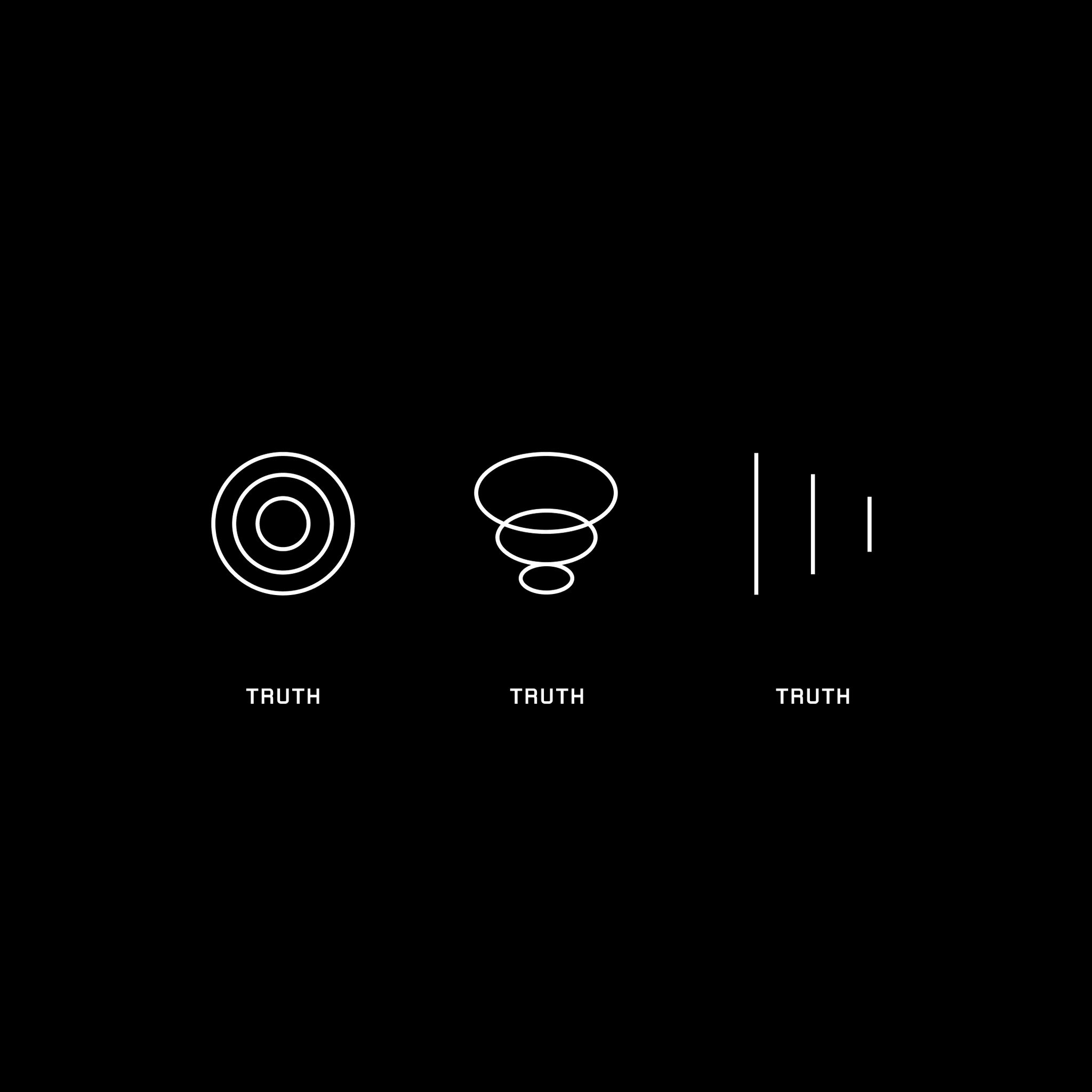
Constraint as Strategy: The Visual System
The Product Business: Agency Escape Velocity
| Stream | Type | Est. Value | Margin | Notes |
|---|---|---|---|---|
| VV courses + digital products | Product (recurring + one-time) | $1M+/yr | ~99% | Templates, planners, frameworks, courses |
| Premium advisory/consulting | Service (selective) | Variable | High | Positioned by audience, not outbound |
| Community membership | Subscription | Part of $1M+ | ~99% | 2,500+ paying members |
| NFT primary sales (Checks, Opepen, etc.) | IP/Art | $128K+ (Checks primary) | ~100% | Digital minting |
| NFT secondary royalties | Passive IP | Variable | ~100% | Creator royalties on resales |
| Speaking + partnerships | Authority | Variable | High | Emerging |
The counterfactual: if Butcher had scaled the agency — hired designers, rented an office, served Fortune 500 clients — he'd likely be running a $1–5M/year agency with 10–30% margins, 10–20 employees, and constant client management. He'd own the business but be trapped in it. The product pivot eliminated the labor-for-revenue relationship entirely.
NFT as IP Extension: Same Language, New Asset Class
Butcher didn't create new art for Web3. He extended his existing visual language into a new ownership structure. Checks VV was Visualize Value applied to a cultural moment (the Twitter verification controversy). The art was the same; the business model was different.
| Collection | Editions | Primary Price | Notable Secondary | Significance |
|---|---|---|---|---|
| Checks VV | 16,031 | $8 each | 52 ETH (~$84K) peak; $55M+ total volume | Cultural commentary as art; burn mechanism |
| Checks Elements | 152 | Auction (Christies) | Institutional pricing | Christies exhibition with Jean Milant monoprints |
| Opepen Edition | 16,000 | Varied | Community-driven reveals | Participatory art; ongoing |
| Trademarks | 10,000 | Varied | Varied | Branding and IP as subject |
Inspired by Damien Hirst's "The Currency": burn two 80-check NFTs to create one 40-check piece. Two 40s create a 20. Down to a theoretical single black checkmark requiring 4,096 original editions. The mechanism turned a static artwork into a dynamic economic system where the community's behavior shaped the art's evolution. It was simultaneously commentary on verification, scarcity, and value — and a functional market.
The $55M+ trading volume reflects peak 2023 NFT enthusiasm. The primary mint revenue was modest ($128K). The secondary market created the headline numbers — and secondary markets are volatile. Butcher hedged by maintaining the VV product business as a stable base independent of crypto cycles. The product business generates $1M+/year regardless of NFT market conditions.
The Compounding Effect
Daily constrained posting (zero marginal cost) builds audience (500K+). Audience converts to product sales ($1M+ at 99% margins). Product revenue funds IP extension (NFTs, physical art, Christie's). IP validation compounds credibility across both art and business worlds. Credibility enables new formats (Opepen, Trademarks, Elements). New formats generate new content. And the cycle continues — each revolution extending the same visual language into a new ownership structure.
The hub is "Constraint = Brand" because everything depends on the rigid visual identity. Remove the constraint and the daily output becomes unsustainable, the recognition disappears, and the product-to-art pipeline breaks.
Transferable Lessons
Across every agency job, the skill that won work wasn't design execution — it was the pitch. The ability to distill complex ideas into visual strategy was the highest-value activity, and nobody wanted to do it. Everyone wanted to make the ads; nobody wanted to make the deck that sold the opportunity to make the ads. Butcher stopped doing the work the pitch decks sold and just did the pitch decks.
The application: What do you do that clients or employers value most? The highest-value activity in your current role is the product — not the full package of services. Isolate it. Sell it directly.
Choose limitations (color, format, medium, subject) and commit to them until the style IS the brand. The constraints eliminated decision fatigue, enabled daily production, and created instant recognizability — at zero cost. This is what a 50-person brand guidelines document accomplishes, built by one person through discipline.
The parallel: Blumhouse constrains budgets ($5M). Defector constrains staff (25 people). Collins constrains size (35 people). Constraint as strategy appears across the entire library. The limitation isn't the obstacle — it's the competitive advantage.
Butcher posted daily for months before selling anything. The audience told him what to sell. The illustrations meant to generate consulting leads became the product themselves. Distribution precedes monetization. Build the distribution first.
Eight years in agencies learning how Fortune 100 brands think, then failing at running his own agency — which taught him exactly which parts of the agency model to keep (creative skill, client relationships) and which to discard (office, employees, proposals, custom scoping). The failure wasn't a detour. It was the curriculum.
Decade of agency credentials. Amazon, Nokia, McDonald's, Mercedes-Benz gave implicit credibility. A designer without Fortune 100 experience needs a different proof mechanism. Twitter/X timing. VV grew during Twitter's 2019–2021 golden era for visual content. The platform dynamics have shifted significantly. NFT market conditions. $55M+ trading volume reflects January 2023 enthusiasm. The primary mint revenue was $128K; the secondary market created the headline numbers.
But the pattern transfers completely. Identify highest-value activity → constrain output → build audience → productize → extend IP into new formats. This sequence works whether the constraint is black-and-white illustrations or something else entirely.
Verification Info
Primary Sources
Secondary Sources
Verified Data Points
Gaps to Verify