Chance the Rapper: Independence Without Infrastructure
Owns everything. Three Grammys. Never signed. Then the momentum stalled.
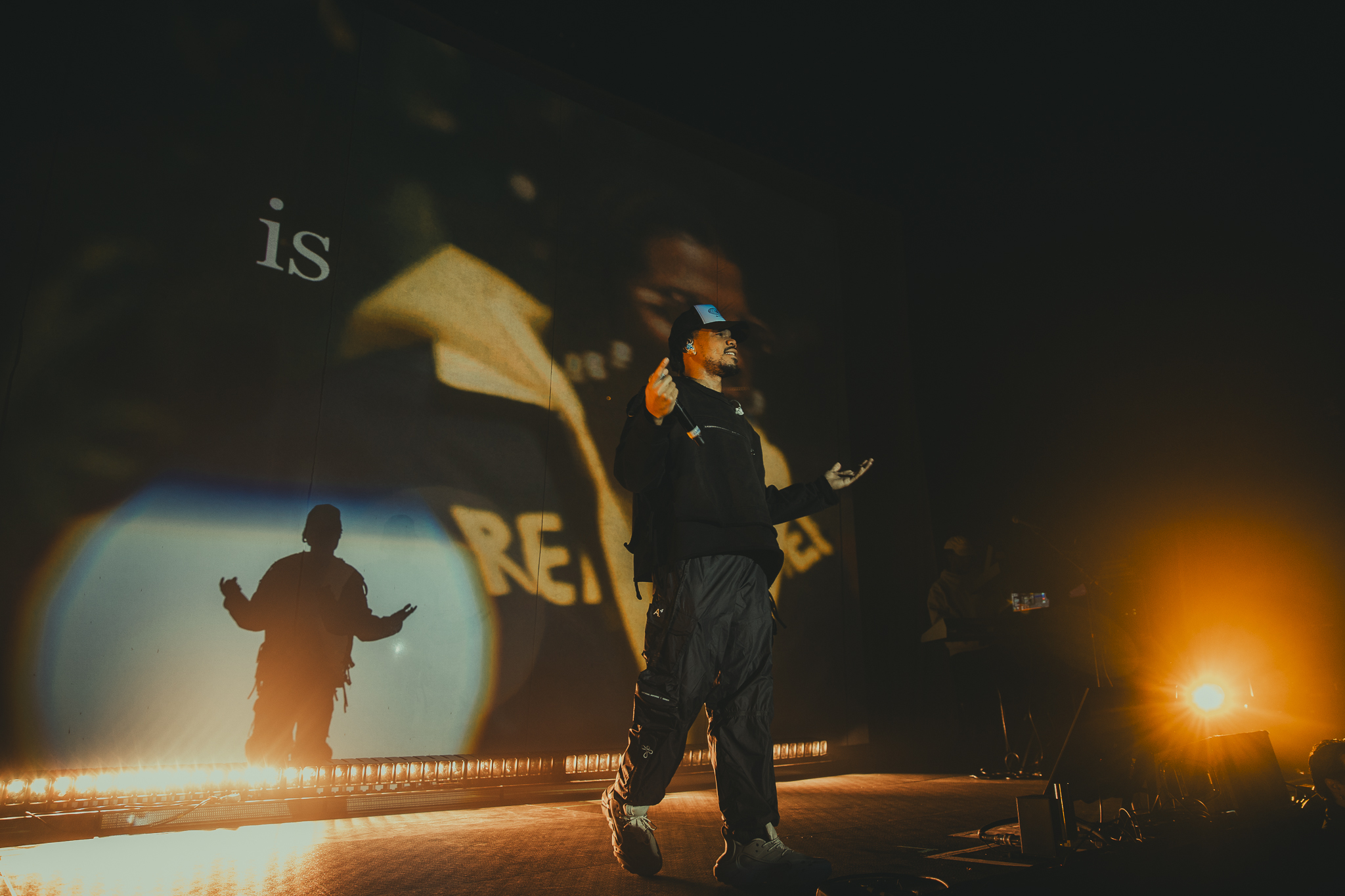
The Thesis: Ownership Alone Isn't Enough
In 2012, Chance the Rapper was offered $120,000 for a six-album deal. He turned it down. He has turned down every label deal since — trade-press coverage (AfroTech via NY Post) cites offers up to $10 million among them. He has never signed a record deal, distribution deal, publishing deal, or management contract with a major label. He owns all his masters. In 2017, he won three Grammy Awards — Best New Artist, Best Rap Album, Best Rap Performance — for Coloring Book, the first streaming-only project to win a Grammy. He did it without a label, without selling a single copy, without radio play. He proved that an independent artist could reach the absolute peak of the industry.
Then things got complicated.
His 2019 debut studio album The Big Day received harsh criticism. A planned 30-city tour was canceled due to poor ticket sales. He fired his manager. His manager sued him for $5.5 million. He sued back. A six-year gap opened — the longest silence of his career. By 2022, he was defending himself against "fallen off" narratives on live radio.
In August 2025, he released STAR LINE — named for Marcus Garvey's Black Star Line — to critical praise and a Chicago homecoming. He's still independent. Still owns everything. Still hasn't signed.
Ownership-minded folks are in deals where their revenue or profit share is higher, but overall dollar amounts are smaller. That's the standard tradeoff.
For the framework, Chance is the independence-as-ideology case — both its power and its limitations. He proves that full ownership is possible at the highest level. He also proves that ownership without infrastructure leaves you exposed when creative momentum stalls. This is the cautionary case the creative majority most needs to hear the full truth about. The structures we read against the Chance arc — non-exclusive licensing, diversified revenue, premium service, creator-as-platform — are our framework, not a deal-structure menu Chance worked from. He turned down offers and put music out for free because that was what felt right; the fit between what he chose and what the structures both enable and fail to enable is what makes the case useful.
Timeline

The Ownership Model: Full Independence at What Cost
Chance sits at the far end of the ownership spectrum — full independence, zero label involvement. He owns all masters, all publishing, all IP. This is the purest expression of ownership-first strategy in the inventory.
Revenue Architecture
| Stream | Type | Est. Annual Value | Trend |
|---|---|---|---|
| Touring / live (And We Back, festivals) | Performance | $2–8M (variable) | Recovering (2025) |
| Brand partnerships (Nike, Kit Kat, Lyft) | Endorsement | $1–3M | Variable |
| Streaming (Spotify, Apple Music, YouTube) | Catalog royalties | $500K–$2M | Stable |
| Merchandise | Direct sales | $200K–$1M | Growing (STAR LINE) |
| House of Kicks (production / film) | Production | Variable | Early stage |
| Acting (The Voice, etc.) | Performance | Variable | Sporadic |
The Apple complication: Chance's "independence" narrative is complicated by Apple's investment. Apple threw undisclosed but likely substantial resources behind Chance starting in 2014. Coloring Book was an Apple Music exclusive — technically "free" but requiring a $9.99/month subscription. As The Ringer noted, this represented a level of corporate partnership reserved for megacelebrities. Chance is independent of labels but was deeply partnered with one of the largest corporations in history.
What Went Wrong: The Structural Analysis
The Big Day's commercial performance (debuted #2) was fine by industry standards. The cultural failure was the problem — and independence amplified its consequences.
Compare: when Sanderson has a gap between books, Dragonsteel's leatherbound editions, convention, and merchandise generate revenue. Hamilton runs eight shows a week without Miranda. Bonobo's 2.7B streams compound passively. When Chance's album disappointed and the tour canceled, income collapsed.
The structural failure: No D2F revenue machine, no catalog monetization system, no recurring revenue mechanism. Revenue depended entirely on new releases and touring — and both stalled simultaneously.
After firing Pat Corcoran, Chance installed his brother and father as management. The creative-operational dyad pattern (consistent across 7+ cases in this inventory) predicts the risk: family loyalty is valuable, but professional management experience is structurally different.
The gap: No one with institutional experience to say "The Big Day isn't ready" or "the tour pricing is wrong" or "build D2F infrastructure during the upswing." The A&R function — creative quality control — disappeared along with the professional manager.
Chance's independence became ideological: "I'm at this point where I'm a beacon of this whole thing." He advised all independent artists to reject all deals — record, distribution, publishing, management. This blanket stance ignores the spectrum between exploitation and strategic partnership.
The distinction: Independence is a tool, not a religion. Sanderson uses Tor AND Dragonsteel. Bonobo uses Ninja Tune AND OUTLIER. The framework's most effective practitioners use strategic partnerships alongside owned infrastructure. Chance rejected all partnerships on principle.
Chance purchased Chicagoist (a journalism website) from WNYC in 2018. It has never relaunched. This is infrastructure investment without operational follow-through — capital deployed, value never activated. Compare: Draplin's Field Notes (activated immediately), Sanderson's Dragonsteel (operational within months).
Independence without infrastructure is freedom without a floor. When the creative stalls, there's nothing underneath to catch you.
The Compounding Effect
The top half of the flywheel worked brilliantly during the upswing (2013–2017): free music built a massive audience, the audience powered brand deals and touring, revenue validated the independence model. But when creative momentum stalled (The Big Day, canceled tour, six-year gap), the bottom half collapsed. No D2F infrastructure to generate revenue without new releases. No recurring revenue mechanism. No institutional buffer. Revenue collapsed because there was nothing underneath to catch it.
The broken flywheel is the visual: the top three nodes spin freely, but the bottom three — the infrastructure that should sustain momentum through downturns — were never built. Compare the complete flywheels of Sanderson (Dragonsteel generates revenue between books), Bonobo (2.7B streams compound passively), or Draplin (Field Notes sells without new client work).
Transferable Lessons
Chance proves that full ownership is possible at the absolute highest level. Three Grammys, never signed. He also proves that ownership alone isn't enough. You need the operational infrastructure — D2F systems, recurring revenue, professional management — to sustain ownership through creative downturns.
The framework test: Can your IP generate revenue without you actively producing? Sanderson passes (leatherbounds, convention, merch). Miranda passes (Hamilton runs nightly). Chance fails — revenue requires continuous personal output.
Giving away 10 Day, Acid Rap, and Coloring Book built Chance's audience. But the revenue came from touring, brands, and merch — not from streaming royalties on free music. Free distribution works for audience-building. It does not generate sustainable revenue.
The naming: Free is a strategy, not a structure. It's a customer acquisition cost. Once the audience exists, you need a monetization structure to capture value from it.
Chance advised all artists to reject all deals. The framework should present a spectrum: exploitative label deals → strategic partnerships → full independence — each with honest tradeoffs. Sanderson uses Tor AND Dragonsteel. Bonobo uses Ninja Tune AND OUTLIER. The most effective practitioners use strategic partnerships alongside owned infrastructure.
The question: Are you choosing independence because it's strategically optimal, or because it's ideologically comfortable? The answer determines whether the choice builds value or limits it.
SocialWorks and $5M+ to Chicago Public Schools aren't separate from the business model — they ARE the brand. Chance's identity as community-first makes him attractive to partners who want social-impact alignment (Nike, Kit Kat, Lyft). The philanthropy reinforces the artistic authenticity, which drives commercial opportunity.
The application: Community investment is brand investment. For the creative majority, even modest community contributions build the kind of authenticity that attracts premium partnerships.
The time to build D2F systems, recurring revenue mechanisms, and institutional infrastructure is during the upswing — when revenue is flowing and creative momentum is strong. Chance had 2013–2019 to build his Dragonsteel, his OUTLIER, his Field Notes. He didn't. When the downturn came, it was too late.
The timing: If you're currently in a creative upswing, this is the most important lesson in the inventory. Build the floor while you can still afford to.
The 2025 comeback demonstrates resilience — but also the cost of independence without infrastructure. Six years between projects. A legal battle still ongoing. A narrative of decline that had to be overcome through sheer creative quality. A signed artist at Chance's level would have had label infrastructure to manage the gap. Chance had to do it alone.
The positive read: He survived. He came back. The ownership he maintained means STAR LINE's revenue flows entirely to him. The question is whether he'll now build the infrastructure the framework says he needs — or continue relying on creative momentum alone.
Chicago social capital from day one. Chance's father worked for Harold Washington and Barack Obama; the political and civic relationships that produced are not portable. They underwrote the SocialWorks credibility, the CPS donation reach, and the city-as-co-author identity that defined the early arc. The Apple Music corporate partnership. Coloring Book's "exclusive" was a level of corporate partnership reserved for megacelebrities. The "independence" narrative was real with respect to labels, but Chance was deeply partnered with one of the largest corporations in history during the formative streaming-economy moment. The 2013–2017 free-distribution-builds-fame window. Acid Rap and Coloring Book arrived during the specific period when free SoundCloud / DatPiff / streaming releases could still build a massive audience in hip-hop. By the late 2010s the algorithmic landscape had shifted; the same release strategy in 2024 would not have produced the same audience compounding. Financial data is estimated. Net worth and revenue figures are analyst projections; specific deal terms (declined offers, Apple investment) are not on the public record.
But the build-infrastructure-around-the-ownership lesson is universal. Owning your masters is necessary but not sufficient — pair ownership with a D2F revenue mechanism, a recurring-revenue layer, and professional management that survives a creative downturn. Treat free distribution as a customer-acquisition cost, not a business model: build the monetization structure that captures value once the audience exists. Treat independence as a tool calibrated to the project, not an ideology applied to every deal. And build the infrastructure during the upswing, when revenue is flowing — not in the downturn, when it's already too late. These principles work whether the catalog produces 57M opening-week streams or twelve hundred.
Verification Info
Primary Sources
Verified Data Points
Gaps to Verify