Tash Sultana: From Bedroom Loops to Full Ownership
Self-produced, self-managed, self-owned. Premium live performance pricing, retained master rights generating royalty income, and milestone-based distribution deals — all without ceding creative or financial control.
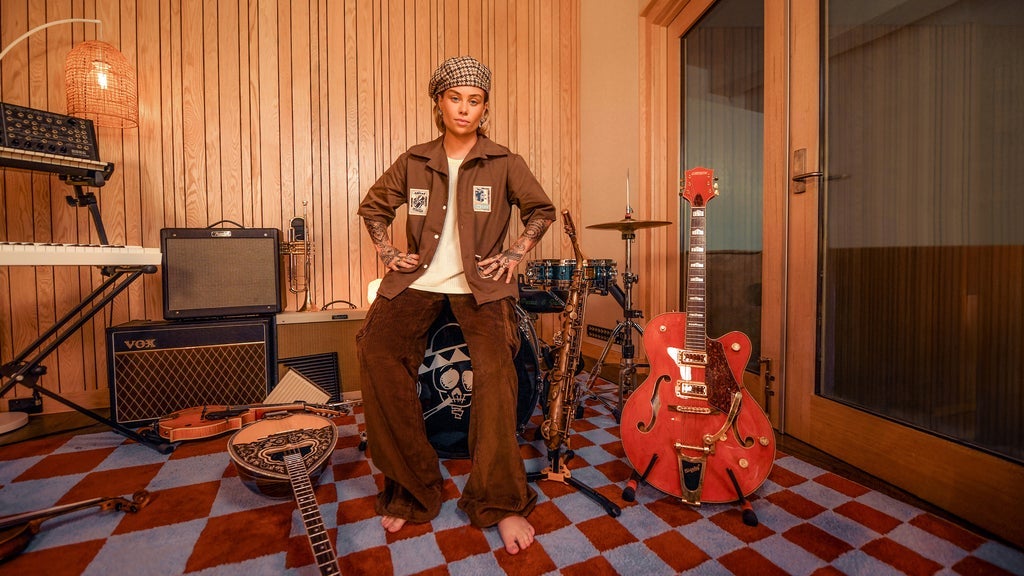
The Thesis: Ownership as Infrastructure
Tash Sultana didn't sign a record deal. They built a record label. Starting as a teenager busking on the streets of Melbourne, Sultana taught themselves dozens of instruments, produced their own recordings, and uploaded a single bedroom loop video that accumulated tens of millions of views. What happened next is what makes this a structural case study, not a biography: instead of converting viral attention into a traditional label deal — the default path for any artist with those numbers — Sultana chose to retain 100% of their master recordings and build every revenue stream from a position of ownership. The product was never the music alone. The product was the economic infrastructure around it.
Most independent musicians compete on distribution — getting music onto platforms and into playlists. Sultana competed on ownership. And then they did what most independent artists never do: they structured their business to compound the value of that ownership across live performance, streaming royalties, sync licensing, and a distribution model that paid on deliverables rather than signing away equity.
Sultana proved that a single artist — with no label, no manager, and no outside producers — could build an enterprise that retains every revenue stream traditional labels extract. The structural advantage was not talent. It was the decision to own everything from day one.
We read three distinct structures from the In Sequence library against Sultana's career — a premium service model that positions a one-person live show as a high-value experience, royalty structures across a self-owned catalog, and milestone-based distribution deals that preserved ownership while accessing global reach. Sultana did not work from a deal-structure menu — they declined every label offer because the math on master ownership was obvious to them. The structure names are how we read the career. The fit is what makes the case useful.
Tash Sultana's Evolution
Three eras, three structures. Each applied at the moment it became relevant — not before, not after.

Premium Service Model: The Live Show as High-Value Product
Sultana's foundational structure was the premium service model applied to live performance. Instead of pricing tours like a typical independent artist — playing small venues at modest ticket prices and depending on volume — Sultana positioned the live show as a premium experience that commanded above-market rates. The one-person multi-instrumentalist format was the structural basis: no other artist could replicate a single performer playing guitar, bass, keys, drums, trumpet, and vocals while building layers live on stage. That uniqueness justified pricing that exceeded what comparable-draw artists charged.
The structural innovation was treating live performance as a premium product, not a promotional vehicle. Most independent artists tour to promote album sales and streaming. Sultana inverted this — live performance was the primary revenue engine, and recordings existed partly to build the audience that would pay premium prices to see the show. This is the premium service model applied to music: value-based pricing anchored in a non-replicable offering.
Deal Comparison
Revenue by Source
How It Works
A band can be replicated — another group of musicians playing similar instruments. A one-person show performing 12 instruments live while building loops in real time cannot. Sultana's format is structurally non-substitutable. This is the core of the premium service model: when no competitor can offer the same experience, price elasticity increases dramatically. Festivals paid $150–300K per headline slot because no other act delivered the same proposition.
The traditional music industry model treats touring as a loss leader — artists tour to promote recordings, where the label captures most of the value. Sultana inverted this entirely. Live performance generates 60–65% of total annual revenue. Recordings support the touring business by building audience, not the other way around. This inversion only works when you own both sides — which is why the premium service model requires the royalty structure (Structure #25) to be viable.
Independent artists are told they need a label for touring infrastructure — tour support advances, marketing spend, routing expertise. Sultana proved this is a negotiation tactic, not an economic reality. By hiring a booking agent (10% commission) and a tour manager (salary), Sultana accessed the same venues, promoters, and festival circuits that label artists use — without ceding any revenue share. The infrastructure is available for hire. Ownership is not.
The premium service model is not about charging more. It is about creating a product that cannot be substituted — and then structuring the business so that the person who creates the product captures the full economic value of its uniqueness.
Royalty Structures: The Catalog as an Appreciating Asset
The second structural layer was royalty retention. By owning 100% of their master recordings from the first release, Sultana ensured that every stream, every sync placement, every mechanical reproduction, and every performance royalty flowed directly to their entities — not through a label's recoupment funnel. In the traditional model, an artist who signs a record deal receives an advance against future royalties. Until that advance is recouped — often years later, if ever — the artist sees zero royalty income. Sultana never took an advance. There was nothing to recoup.
This is the structure that turns a music career from a series of projects into a compounding asset. Each new recording adds to a catalog that generates ongoing revenue indefinitely. Two albums, multiple EPs, and singles — the entire catalog generates income every day, whether Sultana is touring, recording, or doing nothing at all. The catalog is the infrastructure. It appreciates over time as streaming accumulates and sync opportunities multiply.
| Revenue Stream | Est. Annual Income | Growth Trend | Ownership |
|---|---|---|---|
| Streaming Royalties | $2.5–3M | Growing (catalog effect) | 100% retained |
| Sync Licensing | $500–800K | Rapid growth | 100% retained |
| Mechanical Royalties | $150–250K | Stable | 100% retained |
| Performance Royalties | $200–350K | Growing | 100% retained |
| Publishing Income | $400–600K | Growing | 100% retained |
How It Works
A label-signed artist typically receives 15–20% of streaming royalties after recoupment. An independent artist who owns their masters receives 80–85% of gross streaming revenue (after the distributor's fee). On 2 billion streams, the difference between 18% and 82% is not incremental — it is the difference between $3M and $14M+ in cumulative streaming income. Master ownership is not a philosophical position. It is a financial structure that compounds with every stream.
Every song in the catalog is a potential sync placement — a film scene, a TV episode, a commercial, a video game. Sultana's catalog of self-owned recordings is available for sync licensing without label approval, label revenue sharing, or the delays that come from multi-party negotiations. A single sync placement in a major campaign generates $30–80K. Premium placements in film trailers or global advertising can exceed $150K. Each placement also drives new streaming activity, creating a secondary revenue effect.
A catalog is not static. Older recordings continue generating streaming revenue years after release. "Jungle" (2016) still generates meaningful monthly streams — eight years of passive income from a single bedroom recording. Each new release adds to the catalog, but it also drives listeners back to older material. The catalog compounds: new fans discover old music, and old music generates revenue that funds new recordings. This is the flywheel within the royalty structure.
Because Sultana writes, produces, and performs everything, they control both sides of music royalties: the master recording (owned through Lonely Lands Records) and the composition/publishing (owned as songwriter). Most artists who write their own songs still sign publishing deals that share 50% of composition income with a publisher. Sultana retains 100% of publishing, collecting both the writer's and publisher's share. This doubles the per-stream effective royalty rate compared to artists with standard publishing deals.
Milestone-Based Compensation: Distribution Without Equity Transfer
The third structure solved the distribution problem. Independent artists who own their masters still need to get music onto platforms globally — Spotify, Apple Music, Amazon, YouTube, physical retailers. This requires a distribution partner. The traditional choice is between a full record deal (which takes ownership) and a simple upload service (which provides no support). Sultana structured a third option: milestone-based distribution deals that paid advances tied to specific deliverables and achievements, without transferring any ownership.
The structural innovation was tying compensation to outcomes the artist controls — album delivery, release schedules, streaming thresholds, and tour benchmarks — rather than signing away master rights or future earnings. The distributor provided global infrastructure, playlist support, and marketing resources. In return, they received a distribution fee on revenue generated — typically 15–20% — plus the right to distribute for a defined term. At no point did they own the recordings.
Revenue Retention Comparison
How It Works
Traditional label deals pay an advance upfront — a lump sum that the artist must "earn back" through royalties before seeing any additional income. Sultana's distribution deals structured payments differently: advances triggered by delivery milestones (album completion, single releases) and performance milestones (streaming thresholds, chart positions). This aligned the distributor's payments with actual results, and it meant Sultana was never in a recoupment deficit. Each milestone payment was earned, not owed.
Every distribution deal Sultana signed included a fixed term — typically 2–3 years — after which all distribution rights reverted to Sultana's entity. This prevents catalog lock-in. When the term expires, Sultana can renegotiate from a position of proven performance data, switch distributors for better terms, or bring distribution in-house entirely. The reversion clause is the structural mechanism that preserves long-term optionality.
Each successful release and tour cycle under independent distribution created data — streaming numbers, ticket sales, merchandise revenue — that Sultana could use to negotiate stronger terms on the next deal. The first distribution deal might have carried a 20% fee. The next, backed by platinum-level streaming data, could negotiate down to 15% or lower. Independence is not just a philosophy — it generates the performance data that is itself a negotiating asset.
Distributors accept milestone-based deals with independent artists because the economics work. A distributor earning 15–20% of a catalog generating $3–5M in annual streaming revenue is earning $450K–$1M per year — without funding recording costs, tour support, or marketing budgets that labels absorb. The distributor's risk is lower, and the per-deal profitability is often higher than signing an unproven artist to a full label deal.
The milestone-based distribution model completed the structural trio. While the premium service model generates primary income and royalty structures build a compounding catalog asset, milestone distribution provides global reach without sacrificing ownership — ensuring that every new listener adds value to an artist-owned catalog. The combination of all three structures is what creates the compounding effect.
The Compounding Effect: How Three Structures Multiply
The three structures are not independent — they form a flywheel. The premium service model generates substantial touring income that funds recording and catalog expansion without outside investment. Royalty structures turn every recording into a permanent revenue stream that appreciates as the audience grows. And milestone-based distribution deals provide global reach without sacrificing ownership — ensuring that every new listener adds value to an artist-owned catalog. Each structure feeds the next.
Sultana didn't just stack income sources — they wired them into a cycle. Touring funds recording. Recordings generate royalties that compound. Distribution expands the audience that comes to the shows. The flywheel accelerates with every album cycle, and Sultana owns every node.
You do not need 2 billion streams or arena tours. But you can apply the same logic: price your primary service based on its uniqueness rather than market norms, retain ownership of the assets your work creates, and structure deals around milestones rather than equity transfer. The three structures work at any scale — and they compound.
Transferable Lessons
Retaining master rights is not a philosophical stance — it is a structural decision with compounding financial consequences. Sultana's catalog generates $3–5M annually in royalties precisely because there is no label recoupment, no revenue sharing beyond a modest distribution fee. If your creative output generates ongoing value — recordings, designs, code, content — the ownership structure determines whether that value accrues to you or to the entity that financed it. Structure ownership from the first project, not after you have leverage.
Sultana's live ticket prices are 2–3x what comparable-draw independent artists charge — because the one-person multi-instrumentalist show is structurally non-substitutable. If your offering cannot be replicated by a competitor, you are underpricing it by using market averages as a benchmark. The premium service model works in any discipline: identify what makes your work irreplaceable, and price to that uniqueness rather than to the category average.
Label advances are loans against future earnings disguised as validation. Sultana declined every label offer — not because the money wasn't attractive, but because the structural cost of accepting it (surrendering master rights, entering recoupment, losing control of release timing) exceeded the advance value. If you can fund your own production — even at a smaller scale — you preserve the asset. The advance is a one-time payment. Ownership is a perpetual revenue stream.
Sultana treats distribution as a hired service — comparable to hiring a booking agent or an accountant. The distributor provides infrastructure (platform access, playlist pitching, physical distribution) for a fee. They do not participate in creative decisions, they do not own any part of the catalog, and the relationship has a defined end date. Any creative professional can apply this: separate the infrastructure you need from the ownership you should retain.
Sultana's earliest recordings — bedroom loops uploaded for free — are now generating meaningful royalty income years later. The catalog was being built before there was any commercial infrastructure to monetize it. Start creating and retaining ownership of your output now, even if the immediate revenue is zero. Catalogs compound. The work you do today becomes the passive income stream of five years from now — but only if you own it.
The 12-instrument multi-instrumentalist live format. Playing guitar, bass, keys, drums, trumpet, and vocals while building loops in real time — solo, no backing tracks — is a structurally non-substitutable performance offering. Most musicians cannot self-produce, self-engineer, AND self-perform every part of a record. The 2016 "Jungle" Facebook moment. A bedroom video accumulating 30M+ views in 2016 happened on a platform algorithm that no longer routes organic music discovery the same way; the viral path that produced the festival/label inbound is window-specific. Self-funded production capability from the start. Sultana never needed an advance because they could produce, mix, and master in their bedroom — that technical self-sufficiency took years to build and is what made declining every label deal economically rational. Financial data is estimated. Career earnings, catalog valuation, distribution fee percentages, and tour revenue are not formally disclosed; figures are based on industry comparables for arena-tier independent artists.
But the ownership-as-infrastructure logic is universal. Retain masters / IP from project one — the structural cost of declining the advance is much lower at small scale than the structural cost of clawing back ownership later. Price for uniqueness rather than market norms; if your offering cannot be replicated by a competitor, the category average is underpricing it. Treat distribution as a hired service with a defined term and a reversion clause, not as a partnership that transfers equity. And build the catalog before you need it — the recordings or designs or code you ship today become the passive royalty stream five years from now, but only if you own them. These principles work whether the catalog is two albums plus EPs or a small body of self-released work.
Verification Info
Primary Sources
Verified Data Points
Gaps to Verify