Rich Tu: The Corporate Creative Director Who Came Back as a Partner
First-roster artist at Sunday Afternoon's 2016 launch. Returned as fourth equal partner seven years later. The third path — partner equity in an existing peer studio, not solo founding.
The Thesis: The Third Path Between Corporate and Solo
Rich Tu's career is a clean example of a pattern that does not get talked about enough: the senior creative who builds for a decade inside corporate media, then converts that accumulated judgment into ownership inside a peer studio rather than starting one alone.
He did not leave MTV to found his own shop. He did not break out as a solo brand. He did the harder, less photogenic thing — he kept an illustration practice alive through every corporate role, returned to a studio he had been associated with at its founding, and joined the cap table of an existing four-partner business.
That move is the inflection. Everything before April 2023 — Nike footwear graphics, NBCUniversal, the long ViacomCBS run, JKR — was Stage 1 work in service of someone else's company. The illustration practice running underneath it was Stage 2: a continuous, owned creative output that compounded reputation independent of any single employer. The 2023 partner move is Stage 3: equity, profit participation, and steering authority inside a studio that already had nine years of brand equity, an artist roster, and a recognizable client list (Apple, Disney, Google, NYT, NPR, Pinterest, Under Armour, HOKA).
The choice is not just "stay an employee" or "found your own thing." There is a third route: become a partner in someone else's already-working operation, on the strength of judgment you have spent fifteen years building.
For the Creative Majority, Tu's path matters because it dissolves a false binary. The leverage is the relationships, the reputation, and the demonstrated ability to lead at scale — not a deck and a dream. The structures we map onto the move (holding company, co-creation JV, founder/partner equity) are our reading of how the four-partner studio is set up; Tu didn't pick these from a deal-structure menu — he came back to a peer studio whose cap table was open. The fit between what he did and what the structures describe is what makes the case useful.
The Evolution
Four eras across roughly fifteen years. Three asset classes built simultaneously: corporate creative judgment, independent illustration practice, and community infrastructure.

Holding Company / Studio Partnership: The Primary Inflection
Sunday Afternoon is the operative structure. Four partners — Klink, Pagan, Poole, Tu — share ownership of an entity that runs both an artist representation agency (commission revenue from outside artists' work) and a brand design studio (project fees from clients).
What Tu Is Actually Paid In Now
The Non-Obvious Move Is the Timing
Tu joined at year seven, after the studio had:
Inc. 5000 listing confirmed growth-stage scaling. Tu did not take founding risk. He took partner equity in a proven entity at the moment when senior creative leadership was the gating constraint to the studio's next level.
Recognition was established. Multi-year relationships with brands like HOKA, Pinterest, Under Armour were in place. The roster of well-regarded represented artists was scaled.
Klink, Pagan, and Poole had built craft reputation and operational backbone over seven years. What they had not yet fully done was reposition the studio in client conversations from "talented execution partner" to "lead creative agency." Tu's experience running portfolio-level brand operations at network scale — and his pre-existing senior brand-side relationships — accelerated that repositioning.
Equity in a small studio is illiquid. It cannot be easily sold, it does not pay dividends in the year-one sense, and if the studio fails it goes to zero. The partner is also typically signing on to long-term obligations: non-competes, non-solicits, and capital calls. The structure is asymmetric upside, but it is not free upside.
Co-Creation Joint Venture: The Partnership Itself
The four-partner Sunday Afternoon model functions as an ongoing co-creation joint venture. Each partner contributes a distinct creative or operational asset, the entity owns the combined output, and revenue is shared according to the partnership agreement.
This is the structural answer to a question many senior creatives face: How do I build something bigger than my own name without losing equity to investors? Bring on partners, not investors. Each partner is also an operator. Each partner contributes something the others cannot. The cap table is closed and held by people who do the work.
Why Clients Buy a Four-Partner Studio Differently
The commercial logic for clients is also strong. When HOKA hires Sunday Afternoon, they are not hiring "Rich Tu's studio" or "Juan Carlos Pagan's studio." They are hiring a four-partner creative leadership team, plus a curated roster of represented artists who can be slotted in, plus a small in-house design team. The breadth is structural — it comes from the partnership model, not from anyone scaling their solo capacity.
The HOKA work is the cleanest case in point: a multi-product, full-funnel campaign relationship that the studio leads, with creative direction signed by Tu as ECD. Lead-creative engagements come with strategy fees, production margins, longer engagement windows, and renewing scope. Specialist engagements come with project fees that end on delivery. Same studio, same craft, but engaged at a different point in the value chain captures dramatically different economics.
Partner Equity vs. Founder Equity: The Underused Path
The standard advice to ambitious senior creatives is "found your own studio." This is heroic advice and often the wrong advice. Founding a studio means taking on year-zero risk: no clients, no reputation, no operations, no team, no roster.
Joining an existing peer studio at the partner tier — Tu's move — gets you most of the upside (equity, profit participation, steering authority, brand association) with vastly less of the downside.
The Five-Step Pre-Work for the Partner-Equity Path
List five to ten independent studios in your discipline whose work you respect, who appear to be at the scaling stage rather than the founding stage, and who you have at least one warm connection to.
Take one project together. Refer talent to them. Be on their roster if they have one. Be a thoughtful peer at industry events. The partner conversation never starts with "I want to be your partner." It starts with five years of demonstrated competence, reliability, and good judgment in the studio's actual orbit.
Tu was inside the Sunday Afternoon orbit since 2016. The 2023 partner conversation was the harvest of seven years of relationship.
Every studio at the scaling stage has a gating constraint — the thing they cannot do enough of, that is preventing them from going to the next level. You want to be the answer to a specific gating constraint, not a generic "more senior creative."
If they need senior client relationships, build senior client relationships. If they need a new revenue line, build expertise in that revenue line. By the time the partner conversation happens, you should already be visibly the answer.
Partner offers are not made in a quarter. They are made when the studio is ready, when the financials support adding a partner, when the existing partners trust the candidate, and when the candidate's commercial value is obvious. Pushing the conversation early kills it.
The Compounding Effect: Three Asset Classes Built Simultaneously
Tu's path is worth documenting because it shows compounding across three asset classes simultaneously over a fifteen-year period.
Asset class one: corporate creative judgment. Five years at ViacomCBS leading design across five networks is an unusual breadth of executive experience. Most agency creative directors do not have brand-side, multi-property, digital-and-broadcast scope at VP level.
Asset class two: independent illustration practice. A continuous personal body of work that is recognizable, awarded (ADC Young Guns, Paul Manship Medallion), and culturally specific (first-generation Filipino-American visual language).
Asset class three: community infrastructure. First Generation Burden (Webby Honoree podcast), the COLORFUL Awards (co-founded 2021), SVA professorship, ADC judging, Type Directors Club involvement. Reputation and access that took ten-plus years to build and that does not depreciate.
This is the actual mechanism of Stage 3 entry for the Creative Majority: not a single breakout moment, but a decade-long accumulation of parallel assets that eventually become structurally too valuable to be paid as salary.
Transferable Lessons
Most VP-level creatives stop illustrating, stop showing, stop teaching, stop podcasting. They tell themselves they will get back to it after the next promotion. They don't.
Tu's discipline — keeping the illustration practice, the podcast, the awards judging, the teaching, the COLORFUL grants — is what made him a partner candidate rather than just an employee candidate. The corporate role is paying you in cash. The parallel track is paying you in optionality. Optionality is what gets converted to equity later.
Joining an existing peer studio at the partner tier gets you most of the upside (equity, profit participation, steering authority, brand association) with vastly less of the downside (no zero-revenue years, no hiring from scratch, no first-client risk).
The path requires a peer studio that needs your asset class and trusts you enough to bring you into the cap table. That trust is built over years.
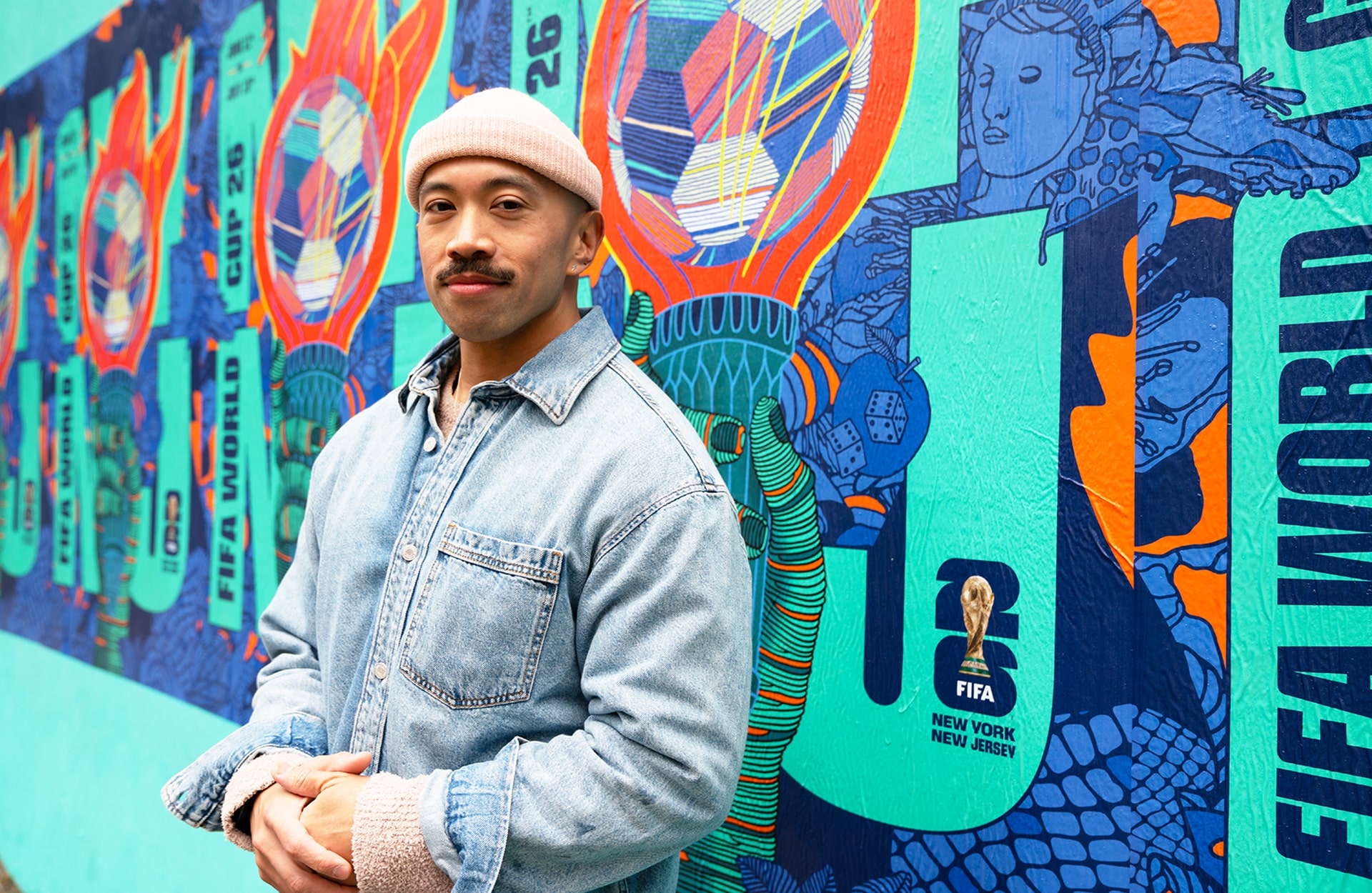
Tu's first-generation Filipino-American identity is woven through his work in ways that are commercially valuable, not commercially limiting. The FIFA poster's Sampaguita flowers. First Generation Burden as a podcast specifically about immigration and creative communities. The COLORFUL Awards.
These are not "personal projects" disconnected from the commercial work. They are the reason brands like FIFA, A24, ESPN/Andscape, and Sunday Afternoon's clients want him in the room.
The COLORFUL Awards are a partnership with The One Club, not a Rich Tu property. First Generation Burden uses the Sunday Afternoon orbit but is its own thing. Tu's SVA professorship benefits SVA, not him directly.
This pattern builds structural goodwill that compounds independently of any commercial venture. The COLORFUL Awards run whether or not Tu is at Sunday Afternoon. The lesson is not "don't monetize" — it is "build at least one piece of community infrastructure where the goal is contribution, not direct revenue." That piece tends to be the one that pays back the most, eventually, in optionality.
A salary, no matter how large, is a lagging indicator of past value. Equity is a leading indicator of future value. Profit participation is direct alignment with the studio's performance.
Track your career compensation across three buckets, not one: direct cash (salary, bonus, project fees) — pays current expenses; owned IP and practice (illustration, books, content, products) — pays in optionality; equity and enterprise value (ownership stakes in studios, businesses, productions, ventures) — pays disproportionately later, or zero. A career that is 100% in bucket one is a Stage 1 career, regardless of the salary level.
Seven years inside the Sunday Afternoon orbit. Tu was on the studio's first roster of represented artists in 2016 and continued the relationship through every corporate role. The 2023 partner conversation was the harvest of seven years of demonstrated competence inside a specific peer studio's orbit; that depth of pre-existing trust cannot be substituted by a pitch. VP-level multi-network corporate scope. Five years at ViacomCBS leading design across MTV, VH1, CMT, Comedy Central, and Logo is an unusually broad executive credential that qualified Tu specifically for the studio's lead-creative repositioning. Most agency creative directors do not have brand-side, multi-property, digital-and-broadcast scope at VP level. A scaling-stage studio at the moment its cap table opened. Sunday Afternoon hit Inc. 5000 in 2020 and Print's Design Agency of the Year in 2022 — meaning Tu joined a proven entity at the precise moment senior creative leadership was the gating constraint. That window of fit is structurally rare. Identity-aligned cultural authority. Tu's first-generation Filipino-American visual language, the First Generation Burden podcast, and the COLORFUL Awards are constitutive, not decorative — and they are what made him commercially valuable to FIFA, A24, ESPN/Andscape, and the studio's existing roster. Financial data is estimated. The four-partner equity split, FIFA poster compensation, and Sunday Afternoon revenue figures are not publicly disclosed.
But the third-path architecture is universal. Treat the parallel track as the bridge to ownership, not as a hobby — the corporate role pays in cash; the parallel track pays in optionality, which is what gets converted to equity later. Look for partner equity in existing peer studios at the scaling stage rather than only founder equity in new ones; the upside is comparable, the downside is dramatically lower, and the entry requires a specific gating-constraint match. Build community infrastructure that you do not own personally — partnership-format awards, podcasts, teaching positions — and treat cultural specificity as commercial leverage rather than a niche to soften. And track compensation across three buckets (cash, IP, equity), because a career that is 100% in cash is a Stage 1 career regardless of the salary level. These principles work whether the studio has four partners or two.
Primary Sources
Verification Info
Verified Data Points
Gaps to Verify