Bjarke Ingels / BIG: Multi-Discipline Platform with Adjacent Equity
Founded BIG as sole owner in 2005. Hired CFO Søgaard in 2008; promoted her to CEO in 2009; expanded to 7+ partners. Now: 700+ employees, 23+ partners, 9 cities. Plus KiBiSi, Nabr, ICON.
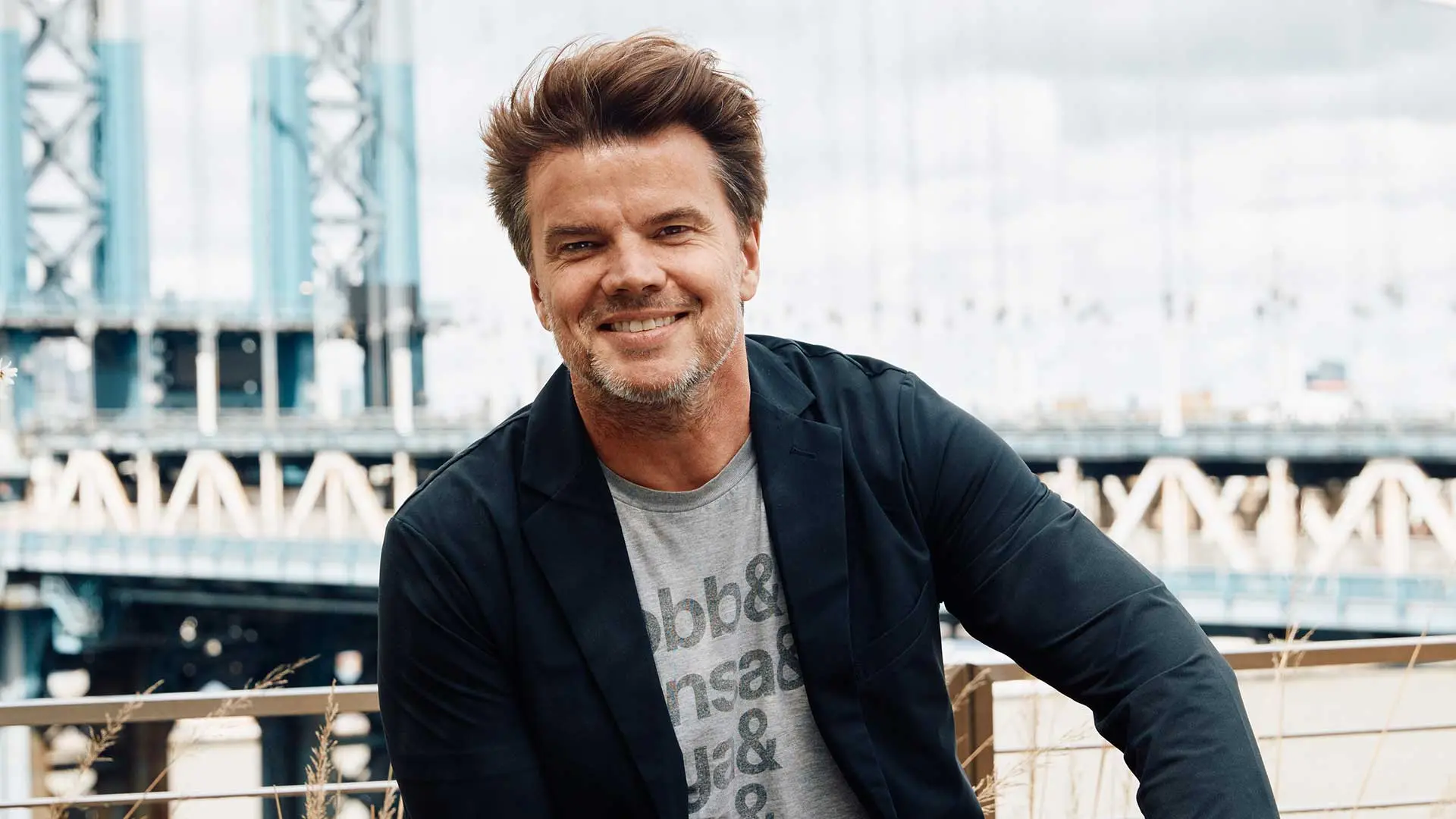
The Thesis: Creative Anchor + Operational Partner + Adjacent-Venture Equity
Bjarke Ingels and BIG are the canonical contemporary case of a creative anchor building a multi-discipline platform with adjacent equity ventures, while retaining creative authority over the core practice and offloading operational leadership to a non-creative partner.
Most architects who reach Ingels's level of cultural visibility do so as named principals of firms that operate as extensions of their personal authority. The standard model is: the architect's name is the brand, the architect is the creative director, the architect spends increasing time on lectures and books and exhibitions, and the firm operates as a service provider whose value scales with the architect's personal availability.
Ingels did not follow this model. The structural decisions he made between 2008 and the present produced a different kind of firm:
- Separated creative and operational leadership (Sheela Maini Søgaard as CFO 2008, CEO 2009)
- Distributed institutional ownership through partnership expansion (sole owner 2008 → 7 partners late 2009 → 23+ by 2026)
- Multi-discipline integration via the BIG LEAP framework (Landscape, Engineering, Architecture, Planning, Products)
- A portfolio of adjacent equity ventures (KiBiSi, Nabr, ICON, Hyperloop One, formerly WeWork)
- A deliberate cultural-platform investment treated as strategic capital (Yes Is More, Netflix Abstract, TED talks)
BIG operates as a Stage 3 creative platform, not as a Stage 2 service firm. A Stage 2 service firm sells time. BIG sells time AND captures equity in adjacent ventures AND owns IP AND operates at multiple scales — and the income and influence of the firm compound across multiple structures simultaneously.
A note on scale: Ingels operates at a different scale entirely from the typical Creative Majority practitioner — BIG is a 700+ person global firm, $92M+ revenue, several orders of magnitude beyond the typical Stage 2-to-Stage 3 transition story. The case is included nonetheless because the structural patterns are scale-invariant. The Søgaard CEO hire principle works at a 10-person firm. The equity-distribution sequencing works at a 25-person firm. The adjacent-venture-equity move works for any practitioner who can identify an industry where their design expertise is structurally valuable.
The case also documents the variance structure of Stage 3 strategies honestly. The WeWork unwind is real. The Hyperloop One trajectory has been complicated. Adjacent-venture exposure carries the risk profile of the underlying venture. Stage 3 strategies are not safer than Stage 2 strategies; they are higher-variance.
The structures we read against the BIG arc — founder-then-distributed equity, holding-company-with-operational-CEO, equity-for-services in adjacent ventures — are our framework, not a deal-structure menu Ingels worked from. He hired Søgaard because clients weren't paying, expanded partnership because PLOT had taught him 50/50 doesn't survive, co-founded KiBiSi and Nabr because he wanted the upside of design at industrial scale. The fit between what he built and how the structures behave is what makes the case useful.
The Evolution
Nine eras across fifty years. The August 2008 Søgaard hire and the late 2009 partnership expansion are the structural inflection.

Founder/Partner Equity: Sole Ownership First, Distribution at Maturity
Ingels founded BIG in 2005 as sole owner. The sole-ownership period (2005 to late 2009) was structurally important. It established his creative direction, his project track record, and his clear authority before equity was distributed to other partners. The PLOT lesson — that 50/50 partnerships can dissolve over creative-direction disagreements — was structurally absorbed into BIG's founding architecture.
Equity Distribution Timeline
Earlier distribution would have diluted Ingels's authority before he had established creative direction. Later distribution would have caused senior team members to leave to start competing firms.
The signal of the maturity-moment is when senior team members have demonstrated multiple cycles of independent project leadership and when the firm has accumulated enough financial stability to support multiple equity holders. For most creative service firms, this is somewhere between years three and seven of operation.
From 7 partners in 2009 to 12 in 2017 to 23+ by 2026. The expansion has continued, aligning long-term interests of senior team members the firm wants to retain.
Holding Company / Studio Partnership: The Søgaard Inflection
The structural mechanics of how the Søgaard hire became the inflection point are worth understanding precisely.
The Single Decision That Made the CEO Model Work
Within weeks of Søgaard joining, a client wrote Ingels an angry letter complaining that Søgaard was demanding payment too aggressively. Ingels passed the letter to Søgaard and asked what to do. Søgaard advised Ingels to tell the client that Bjarke would handle architectural conversation and Søgaard would handle payment. Ingels agreed. The client paid.
This single decision — that the creative principal would publicly stand behind the operational principal's authority on operational matters — is the structural foundation of BIG's CEO model. Without it, the model would have collapsed in the first year. Most creative principals undermine their operational hires by overriding them when clients complain. Ingels did not.
The Multi-Discipline Integration Math
| Project Type | Specialist Firm | Integrated Platform (BIG LEAP) |
|---|---|---|
| Architecture only | $5M fees | $5M fees |
| + Planning | Outside consultant | +$3–5M |
| + Landscape | Outside consultant | +$2–4M |
| + Engineering | Outside consultant | +$3–5M |
| + Products | Outside consultant | +$2–6M |
| $100M project total | $5M (one stage) | $15–25M (multiple stages) |
The integration multiplies the firm's revenue per project by 3–5x without requiring proportional increases in headcount or operational complexity. The integration also creates internal optionality — a firm with integrated landscape capability can pursue landscape-led commissions, integrated engineering capability enables infrastructure commissions, and integrated product capability enables product-led commercial opportunities.
Adjacent-Venture Equity: KiBiSi, Nabr, ICON, Hyperloop One, WeWork
The adjacent-venture portfolio represents the move from service-provider relationship to founder-equity / investor relationship in industries adjacent to architecture. The economics of equity positions are structurally different from service fees — a successful equity position can produce returns that dwarf the lifetime fees from a single architecture commission.
The Compounding Effect: Four Mechanisms Simultaneously
BIG's career compounds across four mechanisms simultaneously.
Creative-operational separation with institutional ownership. The Søgaard CEO hire and the partnership expansion mean that BIG's growth is not capped by Bjarke's personal bandwidth. A firm where creative direction and operations are separately led can scale far beyond the personal-bandwidth ceiling. BIG has scaled from 45 employees (2008) to 700+ (2023+) precisely because the operational ceiling was lifted by these structural decisions.
Multi-discipline integration. The BIG LEAP structure means BIG can capture revenue at multiple stages of the project value chain rather than only at the architecture stage. A $100M project that historically would have produced $5M of architectural fees can now produce $15–25M of integrated-design fees.
Adjacent-venture equity. KiBiSi, Nabr, ICON, and (formerly) WeWork represent founder-equity positions or investor positions. The economics of equity positions are structurally different from service fees — a successful equity position can produce returns that dwarf the lifetime fees from a single architecture commission.
Cultural-platform compounding. Yes Is More, Hot to Cold, the Netflix episode, the TED talks, the Serpentine Pavilion, the lectures, and the awards all compound to produce a level of cultural authority that translates directly into client demand, talent attraction, and adjacent-venture access. Cultural authority of this kind cannot be purchased; it must be built over decades through a deliberate sequence of investments.
Transferable Lessons
The August 2008 Søgaard hire happened because BIG was in a financial crisis. A more strategically prudent timing would have been earlier — when BIG was at 25 employees, not 45.
The operational partner does not need to know your discipline; they need to know how to run a business. Søgaard had no architecture experience but had general business experience. Hiring an operational partner from inside your discipline often replicates the principal's blind spots.
The operational partner has to be empowered with real authority, and the principal has to defend that authority publicly even when it is uncomfortable. The Søgaard hire worked because Ingels publicly stood behind her authority when the first client complaint tested him. Most creative principals fail this test.
BIG's sole-ownership period lasted four years (2005 to late 2009). Earlier distribution would have diluted Ingels's authority before he had established creative direction. Later distribution would have caused senior team members to leave to start competing firms.
The signal of the maturity-moment is when senior team members have demonstrated multiple cycles of independent project leadership and when the firm has accumulated enough financial stability to support multiple equity holders.
Service-provider economics produce revenue per billable hour with linear scaling. Founder-equity economics produce returns that are uncorrelated with hours and that can produce outlier returns when the venture succeeds.
Identify industries adjacent to your discipline where your design expertise is structurally valuable but where service-provider economics cap the upside, and pursue founder-equity positions in those industries rather than service contracts. Nabr is the cleanest example: Ingels co-founded a housing company rather than designing more housing for developers.
Yes Is More, the TED talks, the Netflix documentary, the Serpentine Pavilion — these are not marketing activities. They are deliberate investments in cultural authority that produce returns over decades.
Cultural-platform investment requires the same strategic rigor as any other capital allocation decision. The practitioners who do this well decide explicitly that some percentage of their time (often 15–25% in early-to-mid career) is allocated to platform-building rather than to revenue-generating work. The investment pays back over decades.
The WeWork unwind is the honest counter-example. A May 2018 Chief Architect appointment that looked like a major growth vector substantially reduced in value after WeWork's 2019 IPO collapse and corporate restructuring. The Hyperloop One relationship has had similar structural complications.
The adjacent-venture model is not a path to safe diversification; it is a path to higher-variance returns. Some ventures will succeed and produce returns that dwarf service-firm fees. Some ventures will fail. The portfolio has to be sized so that any single failure does not threaten the core firm. Stage 3 strategies are not safer than Stage 2 strategies; they are higher-variance.
700+ employee global scale. BIG operates at a scale that requires institutional capital and infrastructure beyond what most Creative Majority practitioners will encounter. The four-year sole-ownership runway. Ingels established creative direction under his sole name from 2005 to 2009 before partnership expansion was structurally workable. Most founders cannot fund four years of operation before distributing equity. Cultural-platform tier. Yes Is More, the Netflix episode, the TED stage, and the Serpentine Pavilion are platform-tier investments that produced returns over decades — but that platform tier required existing visibility to enter. Adjacent-venture access. WeWork, Hyperloop One, and ICON came to Ingels because his existing brand made him a desired partner. Those doors do not open without that.
But the structural moves are universal. Hire the operational partner before the crisis forces it — and let them have real authority. Establish creative direction under sole ownership before distributing equity. Treat your cultural platform as strategic capital, not as marketing. And remember that adjacent-venture exposure carries venture-level risk: size the portfolio so any single failure does not threaten the core practice. These principles work whether the firm is 700 people or 7.
Primary Sources
Verification Info
Verified Data Points
Gaps to Verify