[Case 27]Film / Directing / Producing / IP Ownership26 Min Read[ DISCLOSED ]

George Lucas: The $350,000 Trade That Built an Empire

$150K directing fee. Sequel + merchandise rights retained. $7B net worth. $4.05B Disney exit.
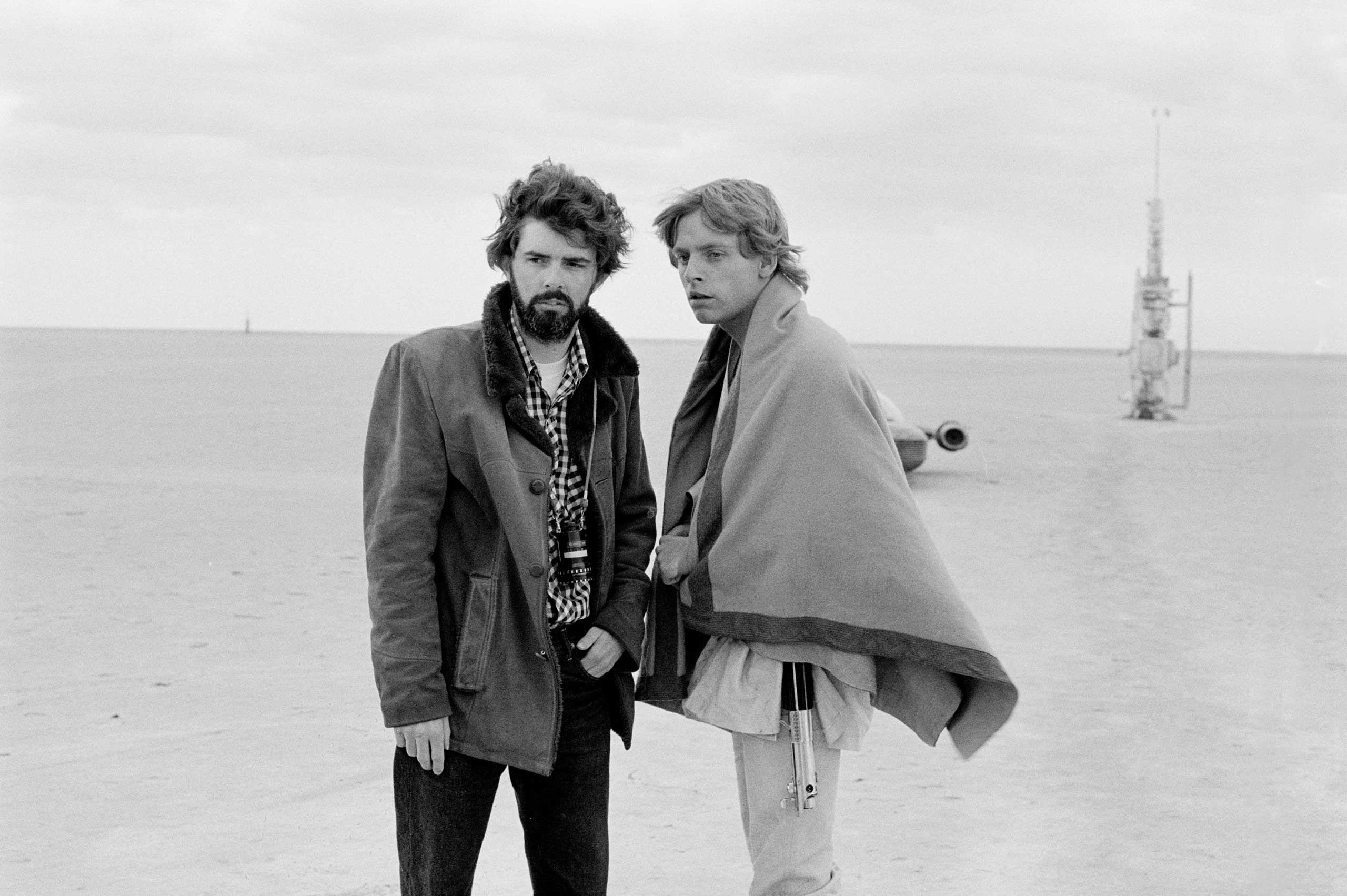
Photo by TIME via Google
$7BEst.Net Worth (2025)
$4.05BDisney Acquisition
$20B+Est.Lifetime Merchandise (Retail)
14,000xEst.Return vs. Standard Deal

The Thesis: Identify What They Don't Value — Then Keep It

In 1973, George Lucas offered to cut his directing fee from $500,000 to $150,000 in exchange for two things 20th Century Fox considered worthless: sequel rights and merchandising rights to a science fiction film nobody believed in. Over 40 studios, including Disney and Columbia, had already rejected the script outright. Fox greenlit it reluctantly, primarily because they wanted Lucas for future projects. To them, giving up sequel and merchandise rights on a risky space opera saved $350,000 on the budget. To Lucas, it was the purchase price of an empire.

That $350,000 salary reduction generated over $7 billion in personal wealth across four decades. Star Wars merchandise alone has exceeded $20 billion at retail. The original Kenner toy deal — a $100,000 flat fee — generated $100 million in its first full year. When Disney acquired Lucasfilm in 2012 for $4.05 billion, Lucas received the bulk as majority owner. He donated most of the proceeds to education.

Every deal has rights nobody values. Lucas found them. The question for every creative professional is: what rights in your current deals does the other side consider worthless?

This is the most consequential rights retention deal in entertainment history — and the template for every creator who has ever traded upfront payment for long-term ownership. It is also the purest expression of Structure #30 in the inventory — though the framework is ours, not Lucas's. He didn't sit down in 1973 to "apply subsidiary rights retention." He fought for sequel and merchandise rights because Fox wouldn't pay him what he wanted in cash, and the rights were what he could get instead. The structure name is how we read the deal half a century later. The fit is what makes the case useful.

Timeline

Era 1: Judgment — The Trade (1971–1977)
1971Lucasfilm Ltd. formed — a holding company created before there was anything to hold. Lucas was 27. One film (THX 1138, a commercial failure). One script in development. But the entity existed, ready to receive whatever rights he could retain.
1973Structured the deal as Structure #30 The deal. Lucas accepts $150,000 directing fee (reduced from $500,000). Retains sequel rights, merchandising rights, soundtrack rights, publishing rights. Fox receives theatrical distribution of the first film and right of first refusal on sequels — not control. Star Wars Corporation created as a subsidiary to hold these rights.
May 1977Star Wars released. $775M worldwide ($3B+ inflation-adjusted). Lucas's back-end participation on the first film alone: est. $40–50M. Kenner licenses toy rights for $100,000 flat fee. First full year: $100M in retail toy sales. Lucas initially receives 5 cents per dollar — but owns the licensing authority itself.
Era 2: Ownership — Self-Financing as Control (1978–2005)
1980Used Structure #9 The Empire Strikes Back — self-financed. $18M budget from Star Wars earnings. Offers Fox distribution rights on a 7-year license. Reclaims merchandise rights Fox had been collecting. Fox accepts because losing Star Wars entirely is unthinkable. Lucas now owns everything except time-limited theatrical distribution.
1983Functions as Structure #10 Return of the Jedi. Same structure. Also forms THX Ltd. Diversification into technology begins. ILM (Industrial Light & Magic) and Skywalker Sound become industry-standard technology services — revenue from non-Star Wars films.
1997Special Edition re-releases. Demonstrates the catalog has renewable value. Tests re-release economics before committing to prequels.
1999–2005Used Structure #22 Prequel trilogy — fully self-financed. Fox distributes. Lucas owns everything outright. $2.5B combined box office. Complete creative control — and no one who can tell him no. (This becomes both the triumph and the cautionary note.)
Era 3: Capital — Exit and Legacy (2012–ongoing)
Oct 2012Disney acquires Lucasfilm for $4.05B — split between cash and Disney stock. Lucas receives the bulk as majority owner. Donates most of the proceeds to education. The $350,000 trade in 1973 exits at $4.05 billion — 39 years later.
2025Lucas net worth: $7B (Forbes). The Disney stock alone appreciated significantly. Lucas Museum of Narrative Art under construction in Los Angeles.
Photo by Los Angeles Times via Google

The Deal: Anatomy of the $350,000 Trade

ElementWhat Fox GotWhat Lucas Kept
Directing fee$350K saved$150K accepted (reduced from $500K)
Theatrical distributionFirst film worldwideBack-end participation
Sequel rightsRight of first refusal onlyCreative and financial control of all sequels
MerchandisingNothing (after ESB renegotiation)100% of licensing authority
SoundtrackNothingFull ownership
PublishingNothingFull ownership
TelevisionNothingFull ownership
All future formatsNothingFull ownership (video, games, digital, streaming)
Directing fee
$150K (1973)
Rights retained
Sequel, merch, soundtrack, publishing, TV, future formats
Self-financed
Empire, Jedi, prequels
Exit
$4.05B (Disney, 2012)
Total wealth generated: $7B+. The retained rights enabled self-financing. Self-financing enabled complete ownership. Complete ownership enabled a $4.05B exit. Every step depended on the one before it.
Directing fee
$500K per film
Standard back-end
5–10% of net profits
Total across 6 films
~$50–60M (est.)
Ownership
$0 — studio owns everything
If Lucas had taken the standard deal: ~$50–60M over a career. Comfortable wealth. Zero ownership. Zero exit value. Zero control over the most valuable entertainment IP ever created.
Standard deal total
~$50–60M
Lucas deal total
$7B+
Multiple
~120x
Fee-to-empire multiple
14,000x ($500K → $7B)
The $350K trade — the difference between the offered fee and the accepted fee — generated a 14,000x return. No financial instrument in history has produced this multiple on a creative decision.

The Empire: Lucasfilm as Holding Company

Lucasfilm Ltd. (Pre-Disney Sale)
George Lucas — Majority Owner
Star Wars Corporation
IP holding entity — all Star Wars rights
Industrial Light & Magic (ILM)
Visual effects — Jurassic Park, T2, Marvel, etc.
Skywalker Sound
Audio post-production — industry standard
THX Ltd.
Audio/visual quality certification
LucasArts
Video games division
Lucas Licensing
Merchandise licensing apparatus
Lucas Books
Publishing division

Revenue Architecture (Pre-Disney Sale)

StreamTypeEst. Annual Value% of Total
Merchandise licensingIP royalties$300–500M/yr~45%
Film distributionLicensing~$200M (peak years)~25%
Home video / digitalLicensing~$100M~15%
Video games (LucasArts)Products + licensing~$75M~10%
Publishing, music, otherLicensing~$50M~5%
Lifetime Franchise Revenue (Cumulative)
Merchandise (retail)
$20B+
Box office (6 Lucas-era films)
$4.5B
Home video / digital
$4B+
Video games
$3B+
Publishing
$1.3B+
Theme parks, music, other
$1B+
$20B+
Est.
Lifetime Merchandise (Retail)
$4.05B
Disney Acquisition Price
2,000+
Est.
Lucasfilm Employees (Peak)
$7B
Est.
Lucas Net Worth (2025)

The Compounding Effect

Lucas — Rights Retention Flywheel
RETAINEDRIGHTSTrade Fee for Rights$350K → OWNERSHIPIP Generates Revenue$20B+ MERCHANDISERevenue Self-FinancesEMPIRE: $18M SELF-FUNDEDDeeper OwnershipRECLAIM MERCH FROM FOXBuild InfrastructureILM, THX, LUCASARTSExit at Scale$4.05B → DISNEY

Trade fee for rights (the $350K salary reduction). Retained IP generates revenue ($20B+ merchandise at retail). Revenue self-finances the next film ($18M for Empire from Star Wars earnings). Self-financing enables deeper ownership (reclaims merchandise rights from Fox). Deeper ownership funds infrastructure (ILM, THX, LucasArts, Skywalker Sound — 2,000+ employees). Infrastructure creates exit value ($4.05B Disney acquisition). Every step depends on the one before it, and the original $350,000 trade is the foundation for all of it.

Transferable Lessons

01Identify Undervalued Rights Before Anyone Else Does

Lucas saw merchandise and sequel rights as valuable when the entire industry considered them worthless. Fox had lost money on Doctor Dolittle merchandise in 1967 and wanted nothing to do with it. This is prognostic ability — sensing value before data confirms it. The rights cost $350K. They generated billions.

The present-day equivalents: AI training rights. International format adaptation. Derivative works in emerging media. In any deal, some rights feel incidental to the buyer. Those are the ones to retain. Ask: "What does the other side consider worthless that might not be?"

02Trade Upfront Payment for Long-Term Ownership

Accept less cash now in exchange for equity or retained rights. Lucas accepted $150K instead of $500K. Corbet accepted "zero dollars" on The Brutalist. Bowie traded 10 years of royalty income for $55M in capital while keeping ownership. The pattern repeats throughout the library: the fee you don't take is the ownership you retain.

The math: Lucas's $350K salary reduction generated a 14,000x return. No financial instrument in history has produced this multiple on a creative decision. The multiples won't be this extreme for most people — but the principle operates at every scale.

03Build Infrastructure to Exploit What You Own

Retained rights sitting in a contract have no value. Lucas built Lucasfilm, Lucas Licensing, LucasArts, and an in-house licensing apparatus that could systematically monetize every subsidiary right across every format and territory. Ownership without operational infrastructure is a paper asset.

The parallel: Sanderson built Dragonsteel. Sanchez built Main Street Hold Co. Defector built a cooperative with shared infrastructure. The retained right or the owned asset is step one. The infrastructure to exploit it is step two — and most people skip it.

04Self-Finance to Deepen Control

By financing Empire himself, Lucas shifted from Fox's partner to Fox's client. The distributor needed him more than he needed them. Self-financing is the mechanism that converts ownership into control. It's also the mechanism Corbet used (deferred fees as self-financing) and Sanderson used (Kickstarter revenue funding production).

05What Wouldn't Transfer

Historical timing. Lucas caught the pre-merchandising era. No studio today would give away sequel and merchandise rights. The window for this exact deal closed permanently after Star Wars proved the model. Singular cultural phenomenon. Star Wars was once-in-a-generation. The magnitude of demand is not replicable by design. Scale. Lucasfilm required hundreds of millions in investment over decades. Corporate-scale, not freelancer playbook. Unchecked creative control — the cautionary note. The prequels received significant critical backlash. Complete ownership meant no one could say no.

But the pattern is universal. Identify which rights buyers don't value today. Trade upfront payment for long-term ownership. Build the infrastructure to monetize what you own. These principles work at $50K or $50B.

Verification Info

$4.05B Disney acquisition of Lucasfilm (2012) is a public transaction verified through SEC filings. Personal net worth estimates are media calculations based on post-acquisition holdings.
Merchandising royalty retention and rights negotiation history are verified through business press; specific ongoing payment flows and estate structure are privately held.

Primary Sources

Deadline ("Star Wars Legacy II: An Architect of Hollywood's Greatest Deal") — Tom Pollock interview, deal terms, self-financing details
Disney/Lucasfilm acquisition press release + SEC filings — $4.05B, cash + stock split
Forbes — $7B net worth estimate (2025)

Secondary Sources

No Film School — deal mechanics, salary-for-rights trade
Celebrity Net Worth — Fox/Doctor Dolittle context, early merchandise economics
Den of Geek — Kenner $100K flat fee, early toy sales
Barker Brettell / CITMA — $20B+ lifetime merchandise at retail
Wikipedia — Lucasfilm, Star Wars franchise financials, subsidiary companies

Verified Data Points

Salary reduction $500K → $150K — Deadline, No Film School, CNWhigh
Retained sequel + merchandise rights — Tom Pollock interview, multiplehigh
Star Wars $775M worldwide (1977) — box office recordsvery high
Kenner $100K flat fee, $100M first year — Den of Geek, CITMAhigh
Self-financed Empire Strikes Back ($18M) — Pollock interview, Deadlinehigh
Merchandise $20B+ lifetime retail — Barker Brettell, industry reportshigh
Disney acquisition $4.05B — Disney press release, SEC filingsvery high
Net worth $7B — Forbes 2025high

Gaps to Verify

Exact back-end percentage on original Star Wars — not disclosed
Precise merchandise royalty rates across licensing eras — not disclosed
Renegotiated Hasbro deal terms after Kenner acquisition — not disclosed
In Sequence Membership
Study the structures behind every deal.
Get access to all case studies, the full structure library, interactive analysis tools, and monthly deep-dives into how creative professionals build lasting value.
Full Case Studies
Deep analysis of real creative deals with interactive breakdowns.
Structure Library
Every deal structure mapped, scored, and compared across disciplines.
Monthly Deep-Dives
New analysis published monthly on emerging deal structures.
Advisory Access
Book sessions with deal structure advisors for personalized guidance.