Blumhouse: The Constraint-Based Production Empire
Every dollar of budget you remove forces a dollar of creativity in. That's the model.

The Thesis: Constraints as Creative Infrastructure
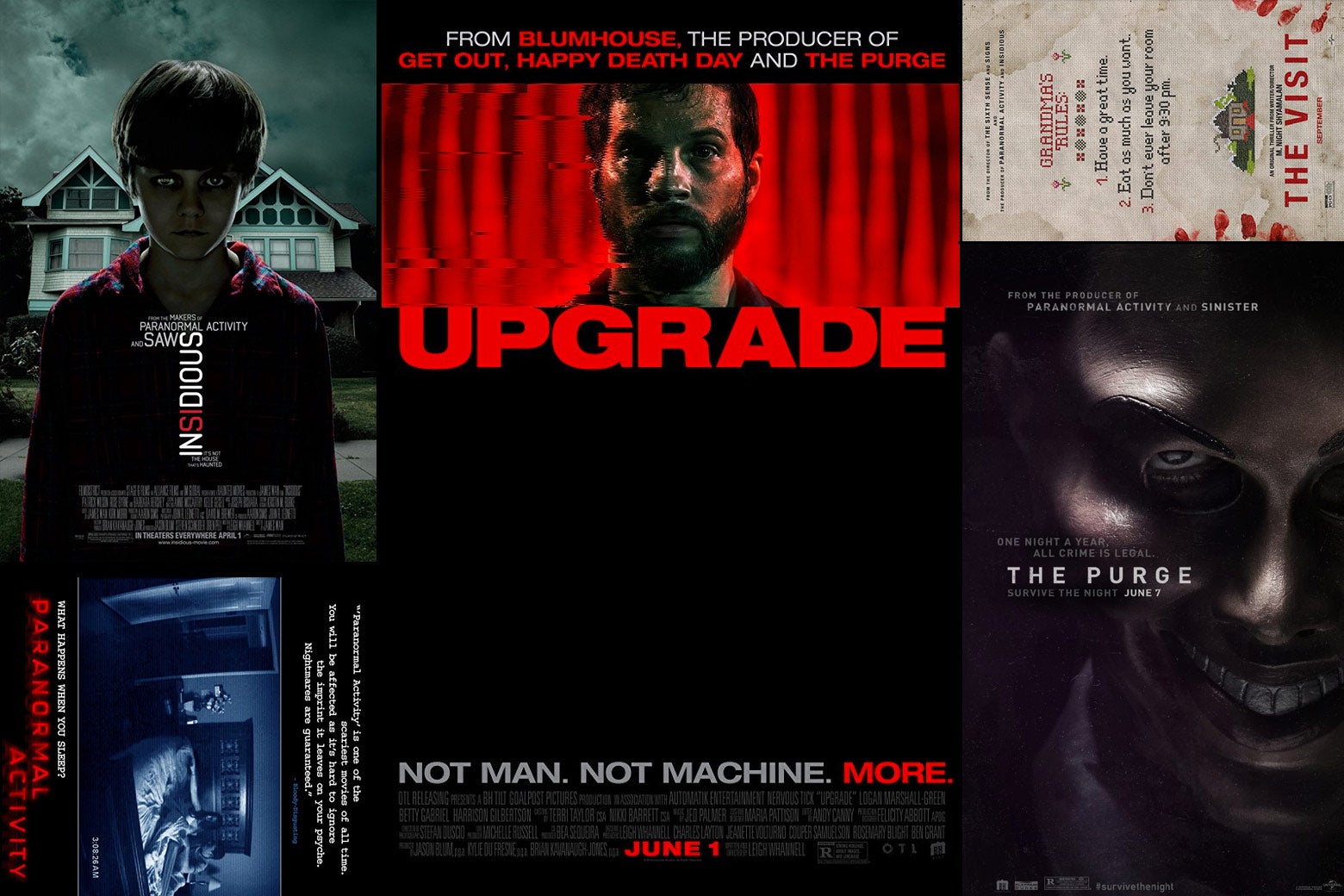
Paranormal Activity cost $15,000 to make. It grossed $193 million worldwide — the largest return on investment in film history. From that single proof of concept, Jason Blum built Blumhouse Productions into a company that has generated over $6 billion in box office revenue from films with an average budget of $3–5 million. In 2025, merged with James Wan's Atomic Monster, the combined entity crossed $1 billion in annual box office for the first time — from production costs of just $204 million. A 5:1 return on theatrical revenue alone, before home video, streaming, and merchandise.
The counterintuitive insight: extreme budget constraints don't limit creativity — they liberate it. When your entire film costs less than a Marvel movie's catering budget, you can afford creative risks that $200 million tentpoles cannot. Every decision must serve the story because there's no money for anything else.
The more you spend, the less creativity you can tolerate; and the less you spend, the more indispensable creativity becomes.
This case study maps two intersecting structures. Constraint-Based Production (#13) — reverse-engineering budgets from guaranteed recoupment, not aspirational revenue. And Gross Participation (#22) — negotiating first-dollar revenue share for the entire production company, not just individual stars. Together they created an asymmetric risk profile: small losses on failures, massive returns on successes, compounding across a portfolio of 12+ films per year. Blum did not sit down to "apply Structure #13"; he saw what Paranormal Activity worked because of, then built a company around it. The structures we map onto Blumhouse are how we read the model decades later — and the fit is what makes the case useful.
Timeline
Constraint-Based Production: Reverse-Engineering Risk
Blumhouse doesn't ask "how much will this cost?" It asks "what can we definitely recoup?" Budgets are set at levels where even a limited release breaks even. Everything above that is upside. This inverts the standard studio model, where budgets are set by creative ambition and profitability is hoped for.
The three-to-five million dollar figure is not a random picked number. That amount is about what we are able to recoup on the movies if we don't get a wide release.
Budget Tiers
| Tier | Budget Range | Volume | Breakeven | Risk Profile |
|---|---|---|---|---|
| Micro | $1–3M | 5/year | ~$5M domestic | Near-zero |
| Core | $3–5M | 5/year | ~$15M domestic | Low |
| Mid | $5–10M | 3–5/year | ~$30M domestic | Moderate |
| Sequel/IP | $10–30M | As warranted | ~$60M domestic | Moderate (data-driven) |
The operating principles are non-negotiable: no upfront producer fees for Blum personally, no company overhead charged to production budgets, everyone works for union scale plus backend participation, and budget caps are real — overages not tolerated.
ROI Comparison
Gross Participation: First-Dollar Revenue for a Company
The Universal deal is the structural enabler that makes constraint-based production scalable. Universal covers all production, marketing, distribution, and overhead costs. Blumhouse receives first-dollar gross participation — a percentage of revenue from the first dollar, not "net profits" calculated after Hollywood accounting has eliminated them.
This is the same structure Tom Cruise commands individually. Blumhouse negotiated it for an entire production company — unprecedented in the industry.
Franchise Economics
| Franchise | Films | Total Gross | Est. Production Costs | ROI |
|---|---|---|---|---|
| Paranormal Activity | 6 | $890M | ~$28M | 32x |
| Halloween (2018–22) | 3 | $640M+ | ~$55M | 12x |
| Insidious | 5 | $540M+ | ~$30M | 18x |
| The Purge | 5 | $450M+ | ~$40M | 11x |
| Conjuring Universe* | 8 | $2.1B+ | ~$150M | 14x |
The Compounding Effect
Low budgets enable creative freedom — no committee interference when the stakes are $5M, not $200M. Creative freedom attracts visionary talent willing to trade upfront pay for final cut. Visionary talent produces asymmetric returns (Get Out: 57x, Paranormal Activity: 428x). Asymmetric returns get absorbed across a portfolio of 12+ films per year, making individual failures irrelevant. Universal funds all production, marketing, and distribution at zero risk to Blumhouse. And Universal keeps funding because the returns justify the deal — which cycles back to more low-budget productions.
The Atomic Monster merger (#9 Holding Company) was the structural capstone. Combined, Blumhouse and Atomic Monster control most of the theatrical horror market. Eight productions in 2025 from two labels that retain creative independence under a shared business structure. The constraint-based model has scaled from micro-budget experiments to billion-dollar annual output.
Transferable Lessons
Blumhouse doesn't set budgets based on creative ambition. It sets them at levels where even a limited release breaks even. The $3–5M range isn't arbitrary — it's the amount recoupable without a wide release. Every dollar above breakeven is upside.
The application: Whatever you're building, set the cost at a level where you can survive failure. Then let success surprise you. The asymmetry between small downside and large upside is the entire strategy.
Directors, actors, and Blum himself all work for scale wages plus backend participation. This isn't austerity — it's alignment. When everyone's compensation depends on the film's success, everyone makes decisions that serve the film rather than their individual career hedging.
The principle: If you're asking collaborators to accept less upfront, you must offer genuine participation in upside. "Net points" that never pay are worse than no backend at all. Blumhouse's first-dollar gross makes the backend real.
Jordan Peele (sketch comedy background, first feature) got complete creative control on Get Out. No studio committee would have approved a socially charged horror-comedy at $100M. At $4.5M with final cut, Peele made exactly the film he wanted — and it grossed $255M with an Oscar.
The pattern: The best talent will accept lower fees for more control. This is a structural advantage that well-capitalized competitors cannot match — because their budgets require committee oversight that repels the talent Blumhouse attracts.
Studios bet everything on four tentpoles and can't tolerate a single bomb. Blumhouse produces 12+ films per year. A flop at $7M is a blip. A hit at $5M that grosses $255M funds ten more experiments. The portfolio absorbs variance that would destroy a concentrated strategy.
The math: At 12 films per year with average budgets of $5M, total annual production risk is $60M. A single hit at 20x returns $100M. The portfolio is designed so one success covers all failures.
Horror economics. Horror is uniquely suited to micro-budgets — scares don't require expensive effects, atmosphere and tension are cheap to create. Romantic comedies, action films, and sci-fi don't have this cost advantage. The Universal partnership provides infrastructure (marketing, distribution, overhead) that independent companies can't access. Jason Blum's relationships — decades of industry connections enable talent access that new entrants can't replicate. Market position — as the dominant horror producer, Blumhouse attracts the best horror scripts and talent, creating a self-reinforcing advantage.
What did go wrong: The Exorcist: Believer ($400M franchise acquisition, $136M gross — a genuine flop). M3GAN 2.0 ($39M vs. original's $180M — franchise fatigue). Budget creep on recent films ($10–30M vs. traditional $3–5M). Even the best model has failure modes. The question is whether the portfolio absorbs them — and so far, it has.
But the constraint architecture is universal — and the failure realism is part of why it transfers. Reverse-engineer budgets from a recoupment level you can survive without a hit, so any failure is a blip rather than a crisis. Trade upfront fees for first-dollar gross participation across everyone involved, so collaborators are aligned with the project rather than hedging their careers. Use creative control as the compensation premium that recruits talent the well-capitalized competition can't keep. Run enough projects in parallel that no single failure threatens the slate. These principles work whether the slate is twelve films a year or three.
Verification Info
Primary Sources
Verified Data Points
Gaps to Verify