Artists Equity: Democratized Profit Participation
What happens when A-list leverage is used to restructure deals for everyone, not just the stars.
The Thesis: Rebuilding Compensation From the Inside
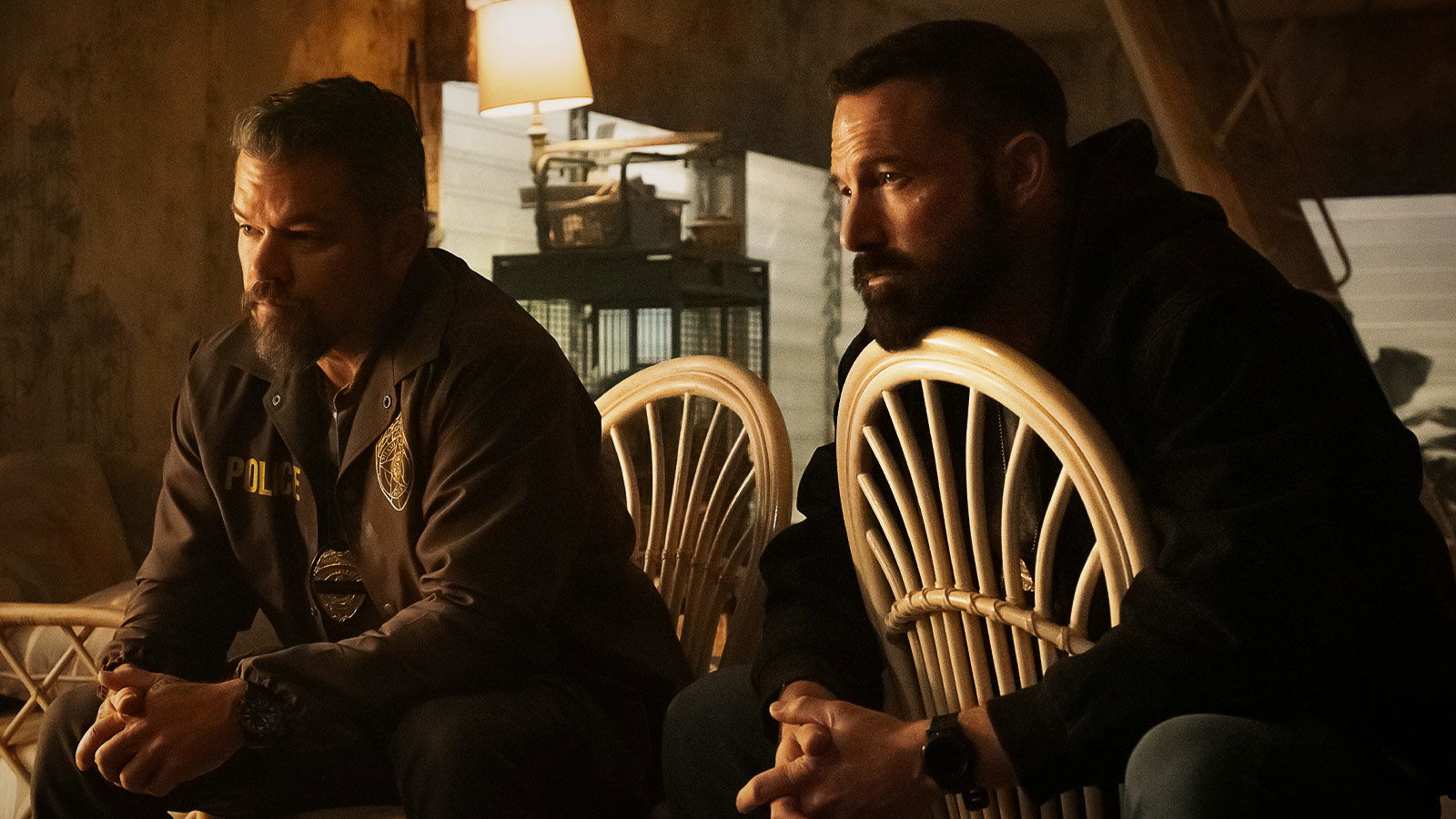
In November 2022, Ben Affleck and Matt Damon launched a production company with a premise Hollywood had never seriously tried: give profit participation to everyone. Not just the stars. Not just the director. The cinematographer. The editor. The costume designer. Three years in, with a growing slate of films, a 70+ person operation, and performance-based deals with Netflix, they're stress-testing whether the Hollywood compensation model can actually be rebuilt from the inside.
Artists Equity treats every crew member's contribution like an investment — valued equally with the financial capital backing the project. The model inverts Hollywood's standard approach: instead of paying maximum upfront fees and minimizing backend, Artists Equity moderates upfront compensation and shares genuine profit participation — calculated transparently, without the accounting games that have historically made "net points" worthless.
Not just writers and directors and stars. But also cinematographers, editors, costume designers and other crucial artists who, in my view, are very underpaid.
Both founders had spent three decades watching Hollywood's compensation model deteriorate. In the pre-streaming era, top talent could negotiate first-dollar gross participation — genuine ownership stakes in a film's success. Streaming destroyed that. Studios offered flat fees and eliminated meaningful backend. Writers, directors, and actors saw their upside disappear. Below-the-line crew never had upside to begin with.
The 2023 WGA and SAG-AFTRA strikes confirmed what Artists Equity was already building toward: participation and transparency weren't perks — they were the central demand of an entire industry's labor force.
We read four structures from the In Sequence library against Artists Equity's first three years — revenue-share partnership, constraint-based production, gross participation, and a creative-collective dynamic for the talent that has come in around the founders. The company didn't build itself from a deal-structure menu; Affleck and Damon spent three decades watching the model break and built what they wished had existed. The structures are how we name what they built — and the company is early enough that the case is honest about which mechanisms are documented (the launch financing, Air's box office, the Netflix deal's existence) and which are not (the specific participation percentages and per-project profit math).
Timeline
Constraint-Based Production: Moderate Budgets, Shared Upside
The participation model only works if there's profit to participate in. Artists Equity follows the Blumhouse logic: constrain production budgets to increase the probability of returns, then share those returns broadly.
Air was the proof of concept — a moderate budget, quality-focused production that grossed $90M worldwide. The math is straightforward: lower budgets mean lower breakeven points, which mean more projects generate actual profit, which means participation payments are real rather than theoretical.
Each project is customized. Affleck described a flexible approach: the underlying philosophy stays the same, but because each film's scale, participants, and cost structure differ, the participation terms are tailored. The Netflix deal for The Rip — with performance-based incentives for actors AND crew on a streaming project — represents the model's most ambitious structural test.
| Project | Year | Distributor | Format | Significance |
|---|---|---|---|---|
| Air | 2023 | Amazon | Theatrical | First proof of concept — $90M gross |
| Small Things Like These | 2024 | Various | Festival/Theatrical | Cillian Murphy attachment |
| The Instigators | 2024 | Apple TV+ | Streaming | Streaming participation model |
| The Rip | 2026 | Netflix | Streaming | Performance incentives for crew — unprecedented |
| The Accountant 2 | 2025 | Amazon MGM | Theatrical | Franchise capacity demonstrated |
The Compounding Effect
The flywheel works because transparent participation creates a self-reinforcing cycle. Better talent produces better work. Better work generates better returns. Better returns mean real backend payments. Real payments build industry reputation. Reputation attracts more talent. Each rotation strengthens the next.
The Revenue Share (#24) model is the engine. Constraint-Based Production (#13) ensures there's profit to share. Gross Participation (#22) on the Netflix deal proves the model adapts to streaming. The Creative Collective (#8) dynamic — Hemsworth, Murphy, and other A-list talent seeking out the model — demonstrates that participation is a talent magnet, not a cost center.
The advertising division adds a critical structural element. Super Bowl campaigns for Dunkin' and Stella Artois generate predictable revenue that subsidizes the film operation's ability to offer better participation terms. This is Diversified Revenue (#10) in service of the core mission.
Transferable Lessons
The problem in Hollywood isn't that "net points" exist — it's that they're calculated dishonestly. Affleck described the industry's approach as intentionally obscuring profit to avoid paying participants. Artists Equity's simplified accounting may matter more than the participation percentage itself.
The principle: In any industry with a reputation for opaque economics — advertising, consulting, publishing — being genuinely transparent about how value is shared becomes a competitive advantage. People work harder when they trust the math.
Artists Equity identified below-the-line crew as people who contribute enormous value but receive none of the commercial upside. The cinematographer shapes what the audience sees. The editor determines the film's rhythm. The costume designer builds character before anyone speaks a word.
The application: In any creative business, ask who contributes value that isn't reflected in their compensation. Freelancers, contractors, junior team members — the people closest to the work often have the worst deal.
Blumhouse uses budget caps. Artists Equity moderates upfront fees. The principle is identical: constrain fixed costs to create variable upside that can be shared. Lower budgets mean lower breakeven points, which mean more projects generate actual profit.
The math: A $200M film needs $400M+ to break even. A $30M film needs $60M. The moderate-budget film is far more likely to generate the surplus that makes participation real rather than theoretical.
RedBird's $100M+ commitment meant Artists Equity didn't need to accept studio financing terms. They bring completed projects to distributors as finished products — negotiating from strength, not dependence.
The prerequisite: You cannot restructure deals if you're dependent on the existing structure for survival. Independent capitalization — whether $100M or $10K — is the prerequisite for model innovation.
A-list leverage. Affleck and Damon bring $10.7B in combined worldwide box office. Distributors want their projects. A first-time producer cannot replicate this pull. Personal wealth — both founders can absorb below-market fees on their own projects. Emerging creators can't self-subsidize. RedBird backing — $100M+ in institutional capital isn't available to most startups.
The honest caveat: The model also hasn't been tested through a massive commercial hit where backend payments would be truly significant, or through a genuine failure where the participation pool is empty and expectations go unmet. It's still early.
But the participation architecture is universal. Replace opaque accounting with line-item transparency that contributors can audit themselves. Extend backend to the people whose contributions are currently uncompensated upside. Cap fixed costs so the breakeven point sits inside reachable territory and surplus actually accrues. Secure independent capital — at any size — before negotiating the deal that depends on it. These principles work whether the slate is institutionally backed or self-funded; the model is three years old, but the moves are not new.
Verification Info
Primary Sources
Secondary Sources
Verified Data Points
Gaps to Verify