[Case 33]Film / Acting / Production28 Min Read[ DISCLOSED ]

Tom Cruise: The $2M to $200M Role — Deal Structure as Wealth Engine

$2M salary → $100–200M same role. 7 M:I films → $420–435M. First-dollar gross. The last movie star deal.

Photo by The Times via Google
$100–200MEst.Top Gun: Maverick Earnings
$420–435MEst.M:I Franchise Earnings (7 Films)
50xEst.Same Role, Same Franchise
$600M+Est.Net Worth

The Thesis: Accept Less Upfront. Capture Everything on the Backend.

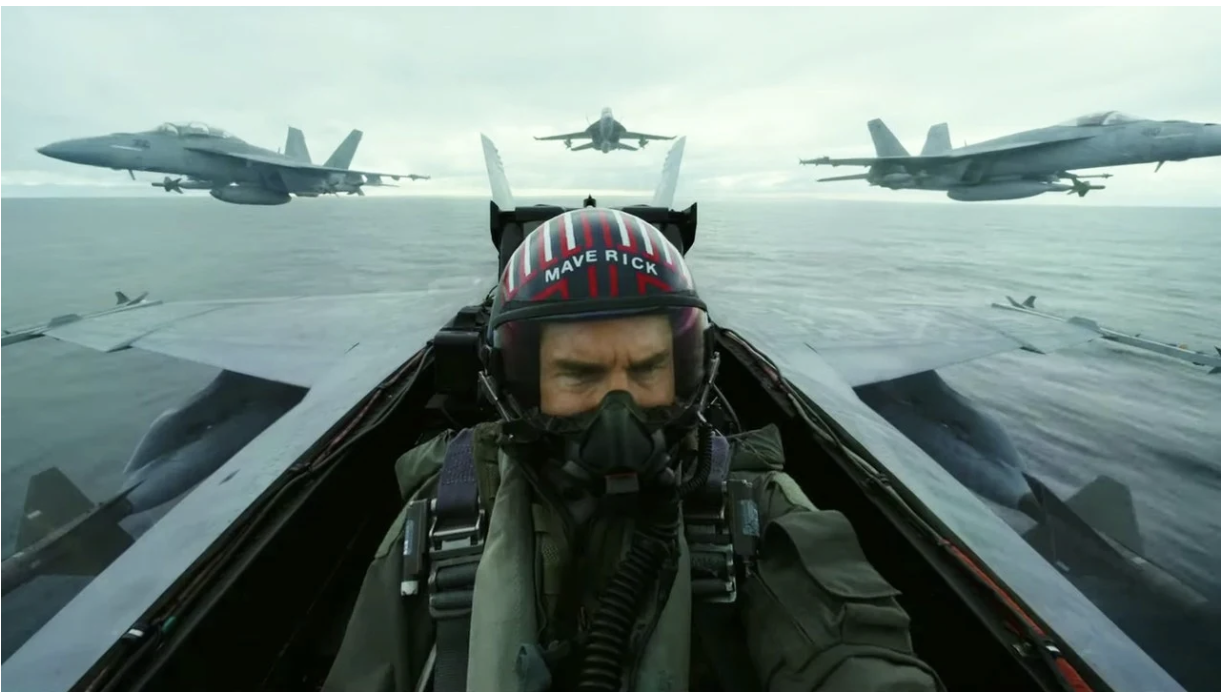
Tom Cruise made $2 million for the original Top Gun in 1986. Thirty-six years later, he earned over $100 million from Top Gun: Maverick — the same role, the same franchise, 50 times the compensation. The difference wasn't inflation or star power alone. It was deal structure. Cruise is widely considered the last remaining actor in Hollywood with consistent first-dollar gross participation on his films. This means he receives a percentage of revenue from the moment theaters collect ticket money — before the studio deducts a single cost. For Top Gun: Maverick, that structure translated to 10% of first-dollar gross with escalators tied to box office milestones. On a film that earned $1.49 billion worldwide, his total take exceeded $100 million. Some sources suggest $200 million including home entertainment.

Net profit participation is worthless — Hollywood accounting ensures films "never profit." Gross participation pays from revenue before costs. That one word — gross vs. net — is the difference between $0 and $200 million.

The strategy: accept a "modest" $12–13 million upfront salary, but negotiate percentage participation in revenue that can't be manipulated through Hollywood accounting. When the film succeeds, you capture the upside. When it becomes a phenomenon, you capture exponential returns. This is Structure #22 at its most extreme expression — and the clearest illustration in the library of why deal structure matters more than talent, fame, or negotiating skill. The structures we map onto Cruise's career — gross participation, founder equity, hybrid fee+backend — are our framework, not a deal-structure menu he ran. Cruise and his agents negotiated each deal on its own terms; the fit between what they got and what the structures describe is what makes the case useful.

Timeline
Era 1: Actor-for-Hire — Rising Fees, Linear Limits (1986–1992)
1986Functions as Structure #1 Top Gun — $2M salary. Film grosses $360M worldwide (highest-grossing of 1986). Cruise becomes global star. Captures tiny fraction of value created.
1988–92Traditional fee escalation. $3M (Cocktail), $9M including participation (Rain Man), $12–15M per film by early 1990s. Linear growth. No structural advantage. Even at peak rates, fixed fees have a ceiling.
Era 2: Producer/Owner — Gross Participation Begins (1992–2018)
1992Used Structure #18 Cruise/Wagner Productions co-founded with former agent Paula Wagner. Shift from actor-for-hire to producer/owner. Learns Paramount owns Mission: Impossible TV rights. Proposes to develop the franchise.
1996Structured the deal as Structure #22 Mission: Impossible — $70M earnings. Star AND producer. First major first-dollar gross deal. Template established: lower base salary, percentage of gross revenue. Film grosses $457M. Cruise captures ~15% of total box office.
2000–18Consistent gross participation across M:I franchise. M:I 2 ($546M, ~$75M), M:I III ($398M, ~$75M), Ghost Protocol ($695M, ~$70M), Rogue Nation ($683M, ~$70–75M), Fallout ($791M, ~$100M+). The structure compounds: each film validates the next deal.
Era 3: Market-Shaping — The Last Movie Star Deal (2022–ongoing)
2022Structured the deal as Structure #26 Top Gun: Maverick — $100–200M earnings. $12.5M base salary. 10% first-dollar gross with escalators at $500M, $1B. Film grosses $1.49B worldwide. Deadline: "an old-fashioned movie star deal, one of the best in history." $280M allocated to above-the-line talent. Home entertainment: $250M+ in digital/physical revenue, Cruise participates.
2023–25M:I Dead Reckoning ($571M) — lower than franchise average but backend still pays. M:I Final Reckoning (2025) — est. $25M base + 10% gross. Franchise total: $420–435M+ from M:I alone. Net worth: $600M+.
Photo by John McDonald via Google

The Deal Structure: First-Dollar Gross vs. Net Profit

Calculation basis
Revenue from moment theaters collect tickets
Deductions before payment
None (first-dollar)
Manipulation risk
Near zero — box office is public, verifiable
Typical percentage
10%+ with escalators at milestones
First-dollar gross means Cruise gets paid from the first ticket sold. No costs deducted. No creative accounting. No overhead charges. The box office numbers are public — you can verify the math yourself.
Calculation basis
Revenue AFTER all studio costs deducted
Deductions before payment
Production, marketing, overhead, distribution, interest, etc.
Manipulation risk
Extreme — studios inflate costs to eliminate profit
Typical outcome
$0 (even on billion-dollar films)
Through creative accounting — overhead charges, inflated marketing, interest on production loans — studios can show that even billion-dollar films "lost money." Actors with net points often receive nothing. This is why "net profit participation" is called "monkey points" in Hollywood.
On a $1.49B film (Maverick)
Gross: $100–200M vs. Net: likely $0
On a $457M film (M:I 1)
Gross: $70M vs. Net: likely $0
Career difference
$800M+ vs. ~$200M (fixed fees only)
One word
Gross vs. net = $400–600M difference
One word in the contract — "gross" instead of "net" — is the difference between $800M+ in career earnings and ~$200M. This is the most expensive vocabulary lesson in the library.

Cruise Standard Deal Architecture

ComponentStructureValue Driver
Base salary$12–25M (deliberately below market)Lower upfront creates room for backend
First-dollar gross10%+ of worldwide theatricalEscalates at box office milestones
Escalators% increases at $500M, $1B, etc.Potentially reaching 20% on mega-hits
Producer creditAll M:I filmsCreative control + additional compensation
Home entertainmentRevenue participationDigital, physical, streaming rights
Promotional commitmentExtreme (global press tours)Marketing value justifies premium deal

Franchise Economics: Seven Films, $420–435M

FilmYearWorldwide GrossCruise Earnings (Est.)
Mission: Impossible1996$457M$70M
M:I 22000$546M$75M
M:I III2006$398M$75M
M:I Ghost Protocol2011$695M$70M
M:I Rogue Nation2015$683M$70–75M
M:I Fallout2018$791M$100M+
M:I Dead Reckoning2023$571M$50–75M (est.)
FRANCHISE TOTAL1996–2023$4.14B+$420–435M
M:I Franchise — Box Office vs. Cruise Earnings
M:I (1996)
$457M / $70M
M:I 2 (2000)
$546M / $75M
M:I III (2006)
$398M / $75M
Ghost Protocol (2011)
$695M / $70M
Rogue Nation (2015)
$683M / $70–75M
Fallout (2018)
$791M / $100M+
Dead Reckoning (2023)
$571M / $50–75M
$4.14B+
M:I Franchise Worldwide Gross
$420–435M
Est.
Cruise M:I Earnings
~10%
Est.
Value Captured
7
Films in Franchise

Top Gun: Maverick — Peak Structure

ElementDetail
Base salary$12.5M
First-dollar gross10% minimum, escalating at milestones
Escalators% increased at $500M, $1B (potentially reaching 20%)
Home entertainmentParticipation in $250M+ digital/physical revenue
Total talent pool$280M allocated to above-the-line
Worldwide gross$1.49B
Cruise total earnings$100–200M (range reflects home entertainment uncertainty)
Comparison to original$2M (1986) → $100–200M (2022) = 50–100x
Base
$12.5M
Gross participation
10%+ of $1.49B
Home entertainment
Share of $250M+
Total
$100–200M
On the highest-grossing film of 2022. The film held premium digital pricing ($20–25) for extended periods, generating exceptional home entertainment revenue that Cruise participates in.
Fixed fee
$20–25M (generous estimate)
Backend
$0 (net profit = nothing)
Home entertainment
$0
Total
$20–25M
Without gross participation, Cruise earns $20–25M on a $1.49B film. A comfortable paycheck. But $80–175M left on the table. This is the cost of not understanding deal structure.
Same role, 1986
$2M
Same role, 2022
$100–200M
Multiple
50–100x
Driver
Deal structure, not talent increase
Cruise was already a star in 1986. He didn't become 50x more talented. He learned how value flows in Hollywood and positioned himself to capture it. The talent was the prerequisite. The deal structure was the wealth engine.

The Compounding Effect

Cruise — Gross Participation Flywheel
FIRST-DOLLARGROSSDeliver Box Office$1.49B (MAVERICK)Track Record GrowsEVERY FILM $500M+Leverage IncreasesSTUDIOS NEED HIMBetter Deal Terms10% → ESCALATORS → 20%Promotional MachineGLOBAL PRESS TOURSPhysical CommitmentREAL STUNTS = FREE PR

Deliver box office ($1.49B for Maverick). Track record grows (nearly every film $500M+ globally). Growing track record increases leverage (studios know the backend will pay because his films reliably perform). Leverage yields better deal terms (10% → escalators → potentially 20%). Better terms justify extreme promotional commitment (legendary global press tours, every market, every interview). Physical commitment (real stunts — Burj Khalifa, HALO jumps, motorcycle cliff jumps) generates press coverage worth tens of millions in marketing equivalent, driving more box office. And the cycle compounds.

Transferable Lessons

01Accept Less Upfront for Percentage Upside

Cruise consistently takes $12–25M base salaries when he could demand $40–50M fixed. The "discount" funds his backend percentage, which pays exponentially on hits. On Top Gun: Maverick, the $12.5M base was 6–12% of his total earnings. The other 88–94% came from deal structure.

The pattern across the library: Lucas accepted $150K instead of $500K. Corbet accepted "zero dollars." Bowie traded current royalties for $55M in capital. The fee you don't take is the ownership you retain.

02Demand Gross, Never Accept Net

Net profit participation is structurally worthless. Through creative accounting, studios can show that billion-dollar films lost money. Gross participation pays from revenue before any costs are deducted — verifiable, transparent, manipulation-resistant. One word in the contract — "gross" instead of "net" — is the difference between $800M+ in career earnings and approximately $200M.

The application beyond Hollywood: In any deal, understand whether your compensation is calculated before or after the other party deducts costs. Revenue share beats profit share. Gross beats net. This principle applies to freelance contracts, licensing deals, and partnership agreements.

03Producer Status Creates Leverage Beyond Talent

Cruise doesn't just act in Mission: Impossible — he produces it. Producer status gives him creative control and negotiating power that pure actors lack. The franchise effectively can't exist without him. This is the Sanderson principle (build the infrastructure, not just the content) applied to Hollywood: own the franchise position, not just the role.

04Add Value Beyond Your Core Deliverable

Real stunts generate press coverage worth tens of millions in marketing equivalent. Legendary global press tours add measurable value. Studios factor this into deal structures because they spend less on marketing. The promotional commitment isn't generosity — it's leverage. It justifies the premium deal because the value is quantifiable.

05What Wouldn't Transfer

40 years of proven box office. Studios offer first-dollar gross because Cruise's films reliably perform. This track record takes decades to build. Physical commitment level. Few people will hang off airplanes or scale the tallest building in the world. Franchise essentiality. Mission: Impossible doesn't exist without him — he IS the franchise. Most talent is replaceable. Theatrical commitment. Gross participation requires theatrical releases where box office is verifiable. As streaming grows, the transparency that makes gross participation work may erode.

But the structural principles transfer at every scale. Understand net vs. gross. Accept less upfront for percentage upside. Seek producer/ownership status. Add value beyond your core deliverable. These principles work whether the deal is $200M or $20K.

Verification Info

Box office data for all films is publicly available through independent tracking. Back-end profit participation (reportedly 20-30% of gross on Mission Impossible and Top Gun) is from industry press but exact contract terms are confidential.
Estimated career earnings and net worth are media calculations; actual wealth and individual deal terms are not publicly verified.

Primary Sources

Deadline (April 2023) — Top Gun: Maverick profit analysis, $100M+ Cruise earnings, "best deal in history"
Variety (July 2022) — movie star salaries, first-dollar gross explanation
Forbes — net worth tracking, franchise earnings estimates
Box Office Mojo — all box office figures

Secondary Sources

Celebrity Net Worth — deal structure analysis, earnings history
FandomWire — complete M:I salary history
The Richest — M:I franchise earnings breakdown
Screen Rant — Top Gun franchise comparison

Verified Data Points

Top Gun: Maverick $1.49B gross — Box Office Mojovery high
M:I franchise $4.14B+ gross — The Numbersvery high
Cruise base salary range $12–25M — Deadline, Varietyhigh
First-dollar gross structure 10%+ with escalators — Deadline, Varietyhigh
Net worth $600M+ — Celebrity Net Worth, Forbeshigh
Top Gun (1986) salary $2M — multiple sourceshigh
Cruise/Wagner Productions founded 1992 — multiplehigh
$280M above-the-line talent pool (Maverick) — Deadlinehigh

Gaps to Verify

Top Gun: Maverick total ($100M vs. $200M) — range reflects home entertainment uncertainty
Exact escalator trigger points and percentages — not disclosed
Precise home entertainment vs. theatrical participation split — not disclosed
M:I Dead Reckoning exact earnings — lower gross, backend structure unclear
In Sequence Membership
Study the structures behind every deal.
Get access to all case studies, the full structure library, interactive analysis tools, and monthly deep-dives into how creative professionals build lasting value.
Full Case Studies
Deep analysis of real creative deals with interactive breakdowns.
Structure Library
Every deal structure mapped, scored, and compared across disciplines.
Monthly Deep-Dives
New analysis published monthly on emerging deal structures.
Advisory Access
Book sessions with deal structure advisors for personalized guidance.