Ryan Coogler: Sinners and the 25-Year Reversion
How a decade of bankable filmmaking, an independent-financing alternative, and a project about Black ownership produced three contract terms that almost no working director receives in combination — and what makes the structure replicable at smaller scale.
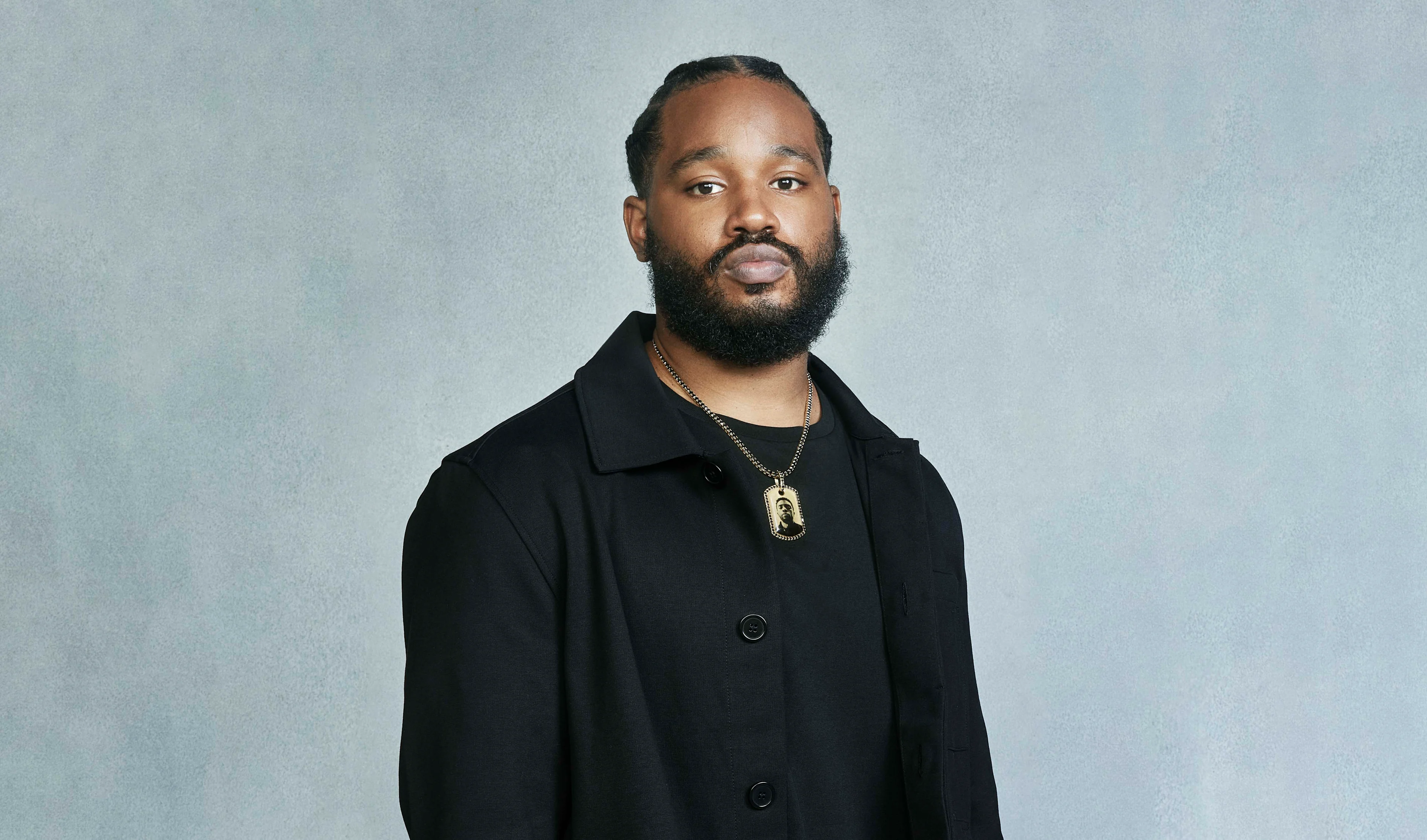
The Thesis: The Film and the Deal Are the Same Argument
Sinners is a film about Black ownership in 1932 Mississippi. Twin brothers, both played by Michael B. Jordan, return from Chicago, buy a sawmill from a racist white landowner, and open a juke joint for the Black community. They put their name on the deed. Then the vampires arrive. The film grossed $370.2 million worldwide on a reported $90–100 million budget. It was the highest-grossing original (non-sequel, non-IP) film in fifteen years, earned the most Oscar nominations of any 2025 release, and set a Juneteenth box-office record. But the more important number is twenty-five — the number of years before the film itself reverts to Coogler's ownership.
The Sinners deal is, depending on who's quoted in the trade press, "dangerous," "the end of the studio system," "precedent-breaking," or simply "what the market dictated." All four framings appeared within a week of each other in spring 2025. What's not in dispute is the structure: Coogler walked into Warner Bros. with a thematically charged project about Black ownership and walked out with three concurrent contract terms that almost no working director receives in combination — first-dollar gross participation, final cut, and rights reversion to him after twenty-five years.
The film and the deal are the same argument. Smoke and Stack scrape together cash to buy the sawmill outright because, in the world of the film, ownership is the only durable form of power. Coogler's contract makes the same argument in legal language. That alignment isn't decorative. It's the leverage.
Ryan Coogler is the IP behind Black Panther, the same as Greta Gerwig is the IP behind Barbie. We believe the filmmakers of the IP. — Mike De Luca, WB Co-Chair, defending the deal publicly
We read three structures from the In Sequence library against the Sinners deal: gross participation (#22) on the box office, a contractual rights-reversion clause (#29) returning the IP in 2050, and Proximity Media (#9) — the holding company sitting on the other side of the table from the studio. Coogler and his team negotiated the actual contract; we are reading the structures onto what they negotiated. The fit between what they did and what the structures describe is what makes the case useful.
Ryan Coogler's Evolution
Three eras across roughly fifteen years. The Sinners deal was the consequence, not the strategy.

Project Equity Model: First-Dollar Gross Participation
The conventional director deal: studio pays a fee, studio funds production, studio absorbs marketing, studio recoups, then the director may participate in "net profits" — a number that, by long-running studio accounting tradition, is almost always zero. Top filmmakers have known for decades not to bother with net.
First-dollar gross works differently. The director's percentage triggers from ticket one. No recoupment hurdle. No marketing-cost waterfall to climb out of. The studio and the director participate in the upside concurrently, not sequentially. It is the contractual recognition that the audience is showing up because of the director, not because of the studio's marketing budget.
Conventional Deal vs. Coogler's Stack
How It Works
First-dollar gross participation begins from the first ticket sold. There is no recoupment hurdle, no marketing-cost waterfall, no studio overhead deduction. The studio and the director participate in the upside concurrently. This structure is reserved for filmmakers whose name moves the audience to the theater.
Sinners opening-weekend exit polling: 47% Jordan, 40% Coogler, 45% word-of-mouth (overlapping). For a director to drive a 40% pull rate on opening weekend is a measurement that brand-name actors would envy. It means the audience was specifically buying tickets to a Ryan Coogler film, not just to a film that happened to have him as director. That number is the verification of the central premise of the deal.
Coogler's compensation is not a single number — it's a portfolio of related streams. Director fee + first-dollar gross + Proximity producer fees + Proximity participation as production company. Each line is triggered by the same theatrical release. The structure stacks, which is why pure-fee structures from the conventional deal universe are not comparable on apples-to-apples basis.
First-dollar gross is reserved for filmmakers whose track record makes the audience-pull case empirically defensible. $2.5B in pre-Sinners box office across five films, zero flops, every project either set a record or earned a Best Picture nomination or both. That track record is not an accident — it is the asset that makes the negotiation conversation possible.
Option Agreements: The 25-Year Reversion Clause
The reversion clause is the headline. It is also, in industry terms, the most consequential single contract term to enter a major studio agreement in the past decade.
In film, copyright reversion as a creator's statutory right exists under U.S. law — Section 203 of the Copyright Act allows authors to reclaim transferred rights after thirty-five years. But studio film contracts almost always include work-for-hire language that defeats statutory reversion. Coogler did something different. He negotiated a contractual reversion — an explicit term written into the original agreement — that returns rights to him after twenty-five years, regardless of how the work-for-hire framing is structured.
What Reverts (and What Doesn't)
| Period | Who Controls What |
|---|---|
| 2025-2050 | WB controls all primary rights — theatrical, home video, streaming, broadcast, sequels, licensing, music sync, library inclusion. WB earns revenue, makes decisions, absorbs risk. |
| 2050+ | Rights revert to Coogler. Theatrical exhibition (revivals, special screenings). Home video + streaming. Sequel + derivative rights. Licensing + merch. Music sync. Library inclusion. All of it. |
Why a Studio Would Agree
A film generates the overwhelming majority of its lifetime revenue in the first decade after release. By year twenty-five, ancillary income on most films has tapered significantly. The 25-year window captures the peak of the curve. The reversion gives away the long tail — a long tail that, when discounted back to 2025 dollars, has a much smaller present value than the headline framing suggests. WB is giving up something real, but less valuable than perpetual ownership sounds.
WB's De Luca said publicly that another studio was prepared to do the deal on comparable terms. In a competitive auction, a studio's choice is not "include reversion or don't" — it's "include reversion or lose the project." Once that's the calculus, including the term is the rational move. The studio that wouldn't agree was not the studio that would acquire Sinners.
WB landed Coogler at their studio with this deal. Sinners was the price of entry. Future Proximity Media projects, future Coogler-directed films, future production deal flow — all of that is the multi-decade payoff. WB's calculation almost certainly considered the lifetime value of the Coogler-WB relationship, not just the standalone Sinners economics.
Quentin Tarantino has reversions on certain projects. Richard Linklater on Boyhood. Peter Jackson on Lord of the Rings. Mel Gibson on The Passion of the Christ. What's new about the Coogler version is that it was negotiated mid-career rather than as a career-capstone deal, the studio went on the record defending it, and the film immediately succeeded — making the structure visible and replicable rather than burying it.
Holding Company Model: Proximity Media as the Vehicle
The Sinners deal is not a director's deal. It is a director-producer's deal, structured through a production company. When Coogler negotiates Sinners, he is not just selling his time as a director. He is selling Proximity Media's development work on the script and project, Proximity's executive team's involvement in production, Proximity's producing partners (Zinzi Coogler, Sev Ohanian, Ludwig Göransson on score), and Proximity's downstream development pipeline that WB now has access to.
How It Works
When Proximity walks into a meeting with Warner Bros., it is not Coogler-the-director negotiating for himself. It is one operating entity negotiating with another. The asymmetry of "famous director versus studio" becomes "studio versus studio." Studios negotiate with each other regularly. They are accustomed to deal terms that include rights, participation, and reversion language because those terms exist between studios as a matter of course. By framing the negotiation as company-to-company, Proximity makes the unusual deal terms feel like normal deal terms.
Proximity earns producer fees on every project — including projects Coogler doesn't direct. Creed III generated $275M with Coogler as producer, not director. Judas and the Black Messiah won two Oscars with Coogler as a producer rather than director. The holding company captures value from work Coogler doesn't personally execute. Coogler's directing capacity is finite — he can make one film every two to three years. His producing capacity, channeled through Proximity, is a multiple of that.
Proximity has the Disney 5-year overall deal for TV, project-by-project relationship with WB for film, a podcast network, a nonfiction documentary division. The diversification across formats and partners means no single deal is do-or-die. Coogler can credibly walk — and that walk-away credibility is what produces the deal terms he gets. A director with a single project and a single financial dependency cannot walk. A holding company with diversified deal flow can. The walk-away is not a posture; it's an operational reality.
The Sinners deal terms didn't come from Coogler's negotiating skill. They came from the fact that Proximity Media's diversified deal flow made the Sinners negotiation a single line item in a larger portfolio. WB's choice was to take the deal or watch Proximity place the project elsewhere. Once Proximity has that posture, the terms follow.
The Compounding Effect: 15 Years of Building Into a Single Negotiation
The three structures form a flywheel that took roughly fifteen years to build and now compounds with each new deal.
The cycle: Track record produces independent financing optionality. With $2.5B in pre-Sinners box office and zero failed films, Coogler can credibly assemble independent financing. Independent financing produces bidding leverage — the negotiation reframes from "what will we offer the director?" to "what will it take to keep this project at our studio?" Bidding leverage produces better deal terms — first-dollar gross, final cut, reversion in combination. Better deal terms flow back into Proximity Media as fees, participation, rights, and additional deal flow. Holding company optionality compounds back into track record — the richer Proximity becomes, the more selective Coogler can be about which projects he directs personally. Selectivity protects the track record. The track record drives the next bidding situation. The flywheel turns again.
Coogler did not negotiate his way into the Sinners deal. He built his way into it over more than a decade, structured the infrastructure that made the negotiation possible, aligned the project's themes with the deal's terms, and waited for the moment when the leverage was real.
Transferable Lessons
The Sinners deal is, in its specifics, not replicable for almost anyone reading this case study. Pretending otherwise would be dishonest and would lead working creatives to misapply the lessons. But the underlying moves are replicable, scaled to whatever stage you're in.
Coogler's leverage in the Sinners negotiation was not rhetorical. It was $2.5B of prior box office across five films, every one of which delivered. The deal terms were a recognition of that fact, not a negotiating triumph. Audit your last five projects — can you state the outcome of each in one sentence with a number (revenue, audience, award, market created)? If not, the gap isn't your negotiation skill — it's your portfolio's evidence base. The temptation mid-career is to accept volume work that pays well but doesn't produce a documentable result. Volume work generates income but not leverage. Coogler made five films across a decade — selective volume, optimized for receipts.
Coogler had independent financing optionality on Sinners. WB's De Luca confirmed publicly that another studio was prepared to do the deal on comparable terms. That belief — held by the studio, not the filmmaker — is the leverage. A creative without a BATNA (Best Alternative To a Negotiated Agreement) is in a single-buyer negotiation. A creative with a BATNA is in a competitive negotiation. The terms in those two situations are not similar. For a designer mid-career: a paying advisory relationship that lets you turn down underpriced project work. For a writer: a Substack income floor. For a filmmaker: a teaching position or commercial-direction relationship. Build the BATNA before you need it.
Proximity Media is not a vanity production banner. A studio negotiating with a person tends to behave like an employer. A studio negotiating with a company tends to behave like a peer. The asymmetry is real and substantial. The entity can hold IP that personal services cannot. The entity can survive the founder. If your work is currently being signed under your personal name, you are negotiating from a personal-services posture. The first move toward Stage 3 is forming an entity that can hold rights, take deals, and accumulate value across projects. Legal cost: modest. Cost of not forming one and operating for years under personal services: substantial in tax structure, negotiating posture, and asset accumulation.
Coogler's first-dollar gross is the difference between a $5-15M director's fee and an open-ended share of $370M+ box office. A flat fee of even $15M on a film that grosses $370M is a 4% capture rate. When your work creates outsized value, structure compensation to participate in that value rather than capping it at a fee. Royalties on a product. Profit share on a project. Equity in a venture. Performance bonuses tied to outcomes. Clients who refuse participation entirely are signaling that they view the engagement as a service transaction, not a value-creation relationship. That signal itself is useful information. On your next significant project, propose a fee + participation structure — even a small percentage will out-earn pure fees, and the conversation recalibrates the relationship.
Sinners is a film about Black ownership in 1932 Mississippi. Coogler's deal is a contract about creative ownership in 2025 Hollywood. The two are not separate arguments — they are the same argument made in different registers. That alignment made the deal terms easier to defend, not harder. The studio could not credibly say "Black ownership, but only on screen and not in the contract." When the deal you're negotiating is in tension with the work you're producing, you are negotiating against gravity. A project about creative freedom signed under work-for-hire feels wrong to everyone involved. When the deal aligns with the thematic and economic logic of the work, the negotiation becomes a conversation about consistency rather than extraction.
$2.5B in pre-Sinners box office across five films. Black Panther's $1.347B alone is a once-in-a-generation result; combined with Fruitvale, Creed, Wakanda Forever, and Creed III as producer, this is the empirical evidence base that made first-dollar gross + final cut + reversion negotiable in combination. Most directors will never accumulate this. The Disney 5-year overall TV deal as walk-away cushion. Proximity's existing exclusive with Disney made the WB negotiation a single line item rather than a do-or-die. The Göransson / Nicks / Davis brain trust. Co-founders who each run a division and bring their own award-tier credibility (multiple Göransson Oscars, Emmy-winning Nicks documentaries) is a co-founder bench that took fifteen years to assemble. Studio-vs-studio bidding dynamics. WB's "another studio was prepared to do this deal" was a real competitive auction — that auction does not exist outside the very top of the major-studio tier.
But the leverage-before-reversion sequence is universal. Build the receipts before you ask for the deal — the deal terms recognize a track record, they don't manufacture one. Form an entity that can sit on the other side of the table from your buyer; the asymmetry between "person-vs-company" and "company-vs-company" is real at any scale. Construct a credible BATNA — a teaching post, a Substack floor, a parallel client — before the negotiation that needs it. And align the deal you negotiate with the work you make, so the contract terms read as consistency rather than extraction. These principles work whether the project is a $90M studio film with a 25-year reversion or a $9K commission with a five-year licensing window.
Primary Sources — Deal Terms
Primary Sources — Box Office + Production
Primary Sources — Career + Proximity
Verified Data Points
Gaps to Verify