Erik Spiekermann: Four Companies, One Designer, One Clean Exit
An agency, a catalog, an eponymous holding company, and a non-profit atelier — run in parallel for forty years. The structural argument for separating asset classes into separate legal entities.
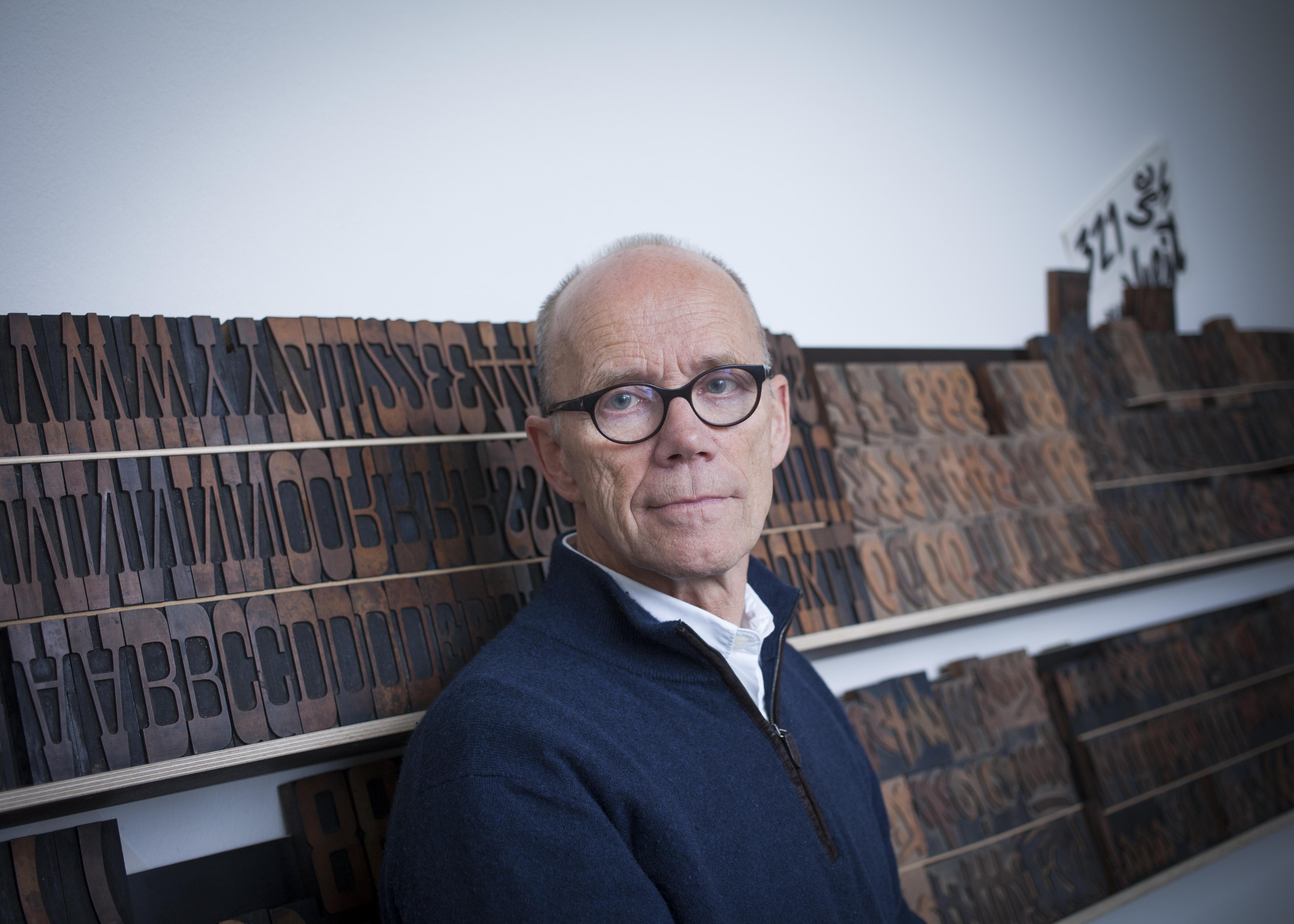
The Thesis: One Designer, Four Asset Classes, Four Entities
In July 2014, Monotype paid roughly $13 million in cash for FontShop — the type foundry Spiekermann co-founded in Berlin in 1989 with Joan Spiekermann and Neville Brody. The same year, Spiekermann moved off the operating board of Edenspiekermann, his third agency, onto its supervisory board. And the same year, he expanded p98a, an experimental letterpress workshop he has since described as the hobby that costs him a lot of money.
Three companies. Three different relationships to ownership. One designer, working all of them in parallel. The fourth — MetaDesign, the agency he co-founded in 1979 and was forced out of in 2001 after Lost Boys acquired the majority — is the structural lesson sitting underneath everything else: ownership without voting control is fragile, and a designer trading time for money inside a service business hits a ceiling that no amount of additional skill can break.
Spiekermann ran four different value-capture games — agency, catalog, eponymous holding company, and non-profit atelier — at the same time, for forty years. The agency taught him that ownership without voting control is fragile. The catalog produced the only clean cash exit. The holding company kept his name as an asset after he stepped out of operations. The atelier showed him the limit of what an exit can buy.
We read four structures from the In Sequence library against Spiekermann's career: a co-creation joint venture (FontShop) that produced an eight-figure cash exit, an eponymous holding-company / franchise structure (Edenspiekermann) that kept his surname earning after he stepped off the operating board, royalty structures across the FontFont catalog that compounded for 25 years, and a non-profit holding form (gGmbH) for the post-exit cultural project. The structural insight is the separation itself — four asset classes, four legal entities, none depending on any other. The fit between what he did and how the structures behave is what makes the case useful.
Spiekermann's Evolution
The unusual feature of this progression is that the four stages run in parallel, not in sequence. By 2014 Spiekermann was simultaneously in Stage 3 (Edenspiekermann supervisory board, type royalty income), Stage 4 (FontShop exit), and Stage 1 in a different discipline (p98a letterpress, starting from zero).

FontShop: Distribution Before the Product
In 1989, Spiekermann, Joan Spiekermann, and Neville Brody founded FontShop as a retailer — selling other foundries' fonts by mail. FontFont, the in-house foundry, came a year later. By the time he was publishing his own typefaces, he already knew who bought them and at what price. Most designers do this in reverse: make the product, then look for a market.
The FF Meta release in 1991 was the catalog's first hit. It became, in the trade phrase, the Helvetica of the 1990s — adopted by Mozilla, Herman Miller, The Weather Channel, Imperial College London, the Greek government, and roughly fifty other corporate identity programs. In 2011 it was added to the Museum of Modern Art's permanent collection. The single typeface generated decades of royalty income and validated the foundry model that would eventually be sold for eight figures.
FontShop Sale Terms (Monotype, July 2014)
The buyer paid roughly 1.4× revenue and roughly 8.7× EBITDA — modest multiples, but real cash for an asset built over 25 years on royalty compounding rather than venture funding. Spiekermann's individual share of the $13M is not disclosed (Joan Spiekermann and Brody were also founders, and 25 years of management changes meant other shareholders existed by 2014). What is public is what the cash bought him: the freedom to step off the Edenspiekermann operating board the same year, and the means to fund p98a.
FontShop opened as a retailer in 1989 — selling other foundries' fonts by mail-order. By 1990, when FontFont (the in-house foundry) launched, Spiekermann already knew the customer base, the pricing, and the channel. The publishing arm wasn't a hopeful product launch; it was a known-market line extension.
The structural lesson generalizes. Build the customer relationship before the product if the market doesn't exist yet for the product you want to sell. Spiekermann's casual courtesy of bringing back the latest US digital fonts for German colleagues scaled into the first independent font mail-order business when he set it up in autumn 1989.
FF Meta started as a custom commission for the German Federal Post Office in 1985. The post office rejected it. Spiekermann kept the drawings. Five years later, when FontFont launched, he had a finished typeface ready to publish.
The structural template is general: a custom client commission can produce both an exclusive license for the client AND a non-exclusive version for the catalog — but only if the contract was structured to allow it from day one. The Spiekermann move with the rejected Bundespost typeface — turning a dead client deliverable into a published asset — is the canonical example.
A custom typeface for Deutsche Bahn is paid once. A licensed typeface in the FontFont catalog is paid every time it's downloaded — for thirty years. The same week of drawing produces a one-time invoice or a thirty-year annuity, depending on the structure underneath.
Specific royalty splits between FontShop, FontFont designers, and Spiekermann personally are not public. The mechanic is documented in industry reporting; the specific terms are not.
Eponymous Holding Company: Name on the Door — at the Right Moment
By 2001 MetaDesign had been quietly losing autonomy. Lost Boys acquired the majority of the Berlin operation that year; Spiekermann left. Multiple bio sources and interviews describe the departure as a policy disagreement with the new ownership.
Within a year, he founded United Designers Network with Susanna Dulkinys, taking offices in Berlin, London, and San Francisco and bringing client relationships with him — most notably the Deutsche Bahn typography commission, which produced DB Type in 2005 (Federal German Design Prize gold, 2006).
UDN was renamed SpiekermannPartners in 2007 — putting his name on the door so the brand equity belonged to him, not to the entity. The 2009 merger with Eden Design & Communication of Amsterdam created Edenspiekermann Holding AG, with the trade name registered as a Community trademark of the holding company. Specific equity splits at merger are not public.
The structural insight is that Spiekermann separated four distinct asset classes into four distinct legal entities over forty years: an agency he could exit (MetaDesign), an IP catalog he could sell (FontShop / FontFont), an eponymous holding company with his surname registered as a trademark (Edenspiekermann Holding AG), and a non-profit cultural project he could subsidize without commercial pressure (Erik Spiekermann Foundation gGmbH). Each entity solved a different problem. None of them depended on the others.
The Edenspiekermann trademark — which carries Spiekermann's surname — is held by the holding company, not licensed from Spiekermann personally. That detail matters. A personally-licensed trademark would have created an exit vulnerability: the holding company would depend on Spiekermann's continuing license for its brand.
Holding the trademark inside the entity means the entity owns its own name, even after Spiekermann steps off the operating board. The 2024 Appsfactory transaction worked because the trademark belonged to the entity, not to him.
The MetaDesign exit in 2001 was not a triumphant sale — it was a forced departure after he lost the policy fight inside a company he had founded. The lesson he appears to have drawn from it shows up in every subsequent structure: ownership of the trademark, name on the door, supervisory rather than operating roles after the operational fight is no longer worth having.
UDN became SpiekermannPartners in 2007 — six years after he had left a firm where his name wasn't on the door. Then SpiekermannPartners merged into Edenspiekermann, where his name is now on the registered trademark. Reputation in the agency business is hard to capitalize unless the brand carries the founder's name — but the name only works when the reputation is large enough to carry the brand.
For most readers, the equivalent move is harder: build the reputation first, then put the name on the door, not the reverse.
The gGmbH: Subsidized Cultural Project as Honest Limit
Spiekermann's first career was as a basement letterpress printer in 1960s Berlin. By 2013, with FontShop on the path to exit and Edenspiekermann handed off to operating leadership, he had both the means and the time to return to it.
In 2013 he opened p98a in Berlin — a working letterpress workshop with vintage Heidelberg presses, training programs, and limited-edition print runs. In 2017 it was reorganized as the Erik Spiekermann Foundation gGmbH, a German non-profit limited liability structure: founder-controlled, tax-advantaged, but legally barred from distributing profits to him.
By his own published statements in Type Journal and his blog, the workshop has run net-negative for years and required public sponsorship appeals in 2024–2025 to continue operating. This is the honest part of the case. The exit cash bought him the optionality to fund a passion project at scale — but not infinitely. A reader inferring "designer with one big exit can fund creative passion projects forever" is reading the case wrong.
The gGmbH (gemeinnützige GmbH) is a German non-profit limited liability form. Founder-controlled, tax-advantaged, eligible for public funding and tax-deductible donations — but legally barred from distributing profits to the founder. For a workshop whose entire premise is that it isn't a business, the legal form is the credible signal. Sponsors and public funders can support a gGmbH; they could not support a personal hobby.
Spiekermann has stated publicly that the workshop has consumed substantial personal capital and that he cannot continue subsidizing it indefinitely. By 2024–2025 he was publicly soliciting sponsors. The exit cash from FontShop bought real optionality — but not infinite runway for an uncommercial cultural project with central-Berlin overhead and no revenue model.
Total cumulative cash deployed into p98a between 2013 and 2025 is not publicly disclosed. Spiekermann has indicated substantial personal subsidy, but no specific number is public.
If the post-exit plan involves a passion project, it needs its own viable structure (sponsorship, public funding, paid workshops, foundation revenue) — not just savings. p98a's transition to gGmbH form in 2017 was the structural acknowledgment that the project couldn't run forever on personal cash. The lesson generalizes: a clean cash exit is more than most readers will see, and even that wasn't enough to indefinitely sustain a non-profit letterpress workshop.
The Compounding Effect: Four Entities, No Cross-Dependencies
The four structures don't compound on each other in a flywheel. They compound by not interfering with each other. When MetaDesign was lost to Lost Boys in 2001, the FontShop catalog kept compounding. When FontShop was sold to Monotype in 2014, the Edenspiekermann trademark kept earning. When Edenspiekermann's operating majority went to Appsfactory in 2024, p98a continued (subsidized but extant) and the Monotype royalty catalog continued. The portfolio absorbs single failures.
He never made one company carry everything. The agency taught him about voting control. The catalog produced the cash exit. The eponymous holding company kept his surname earning. The foundation absorbed the cultural project. Four entities, four asset classes, no cross-dependencies.
By separating the agency, the catalog, and the eponymous trademark into distinct entities — each created at a different time, with different partners, under different terms — he created multiple shots at value capture instead of one. The 2014 capital year was not a single structural move; it was the harvest of three structurally different bets that had been running in parallel for decades.
Transferable Lessons
MetaDesign was an agency. FontShop was a catalog business. Edenspiekermann is a holding company with his name on the trademark. p98a is a non-profit. Each entity had its own logic, its own partners, and its own exit profile. When MetaDesign was lost to Lost Boys, the catalog kept compounding. When FontShop was sold, the Edenspiekermann trademark kept earning. The portfolio absorbs single failures.
FontShop opened in 1989 as a retailer — selling other foundries' fonts by mail. FontFont, the in-house foundry, came a year later. By the time he was publishing his own typefaces, he already knew who bought them and at what price. Most designers do this in reverse: make the product, then look for a market.
A custom typeface for Deutsche Bahn is paid once. A licensed typeface in the FontFont catalog is paid every time it's downloaded — for thirty years. The same week of drawing produces a one-time invoice or a thirty-year annuity, depending on the structure underneath. Where client work produces a system, methodology, or piece of software, pay attention to which legal structure owns the output, and structure custom commissions to allow non-exclusive versions for your catalog.
UDN became SpiekermannPartners in 2007 — six years after he had left a firm where his name wasn't on the door. Then SpiekermannPartners merged into Edenspiekermann, where his name is now on the registered trademark. Reputation in the agency business is hard to capitalize unless the brand carries the founder's name — and the name only works once the reputation can carry it.
The name-on-the-door move should follow the reputation, not lead it.
A clean cash exit is more than most readers will see — and it still wasn't enough to indefinitely sustain a non-profit letterpress workshop. If the post-exit plan involves a passion project, it needs its own viable structure (sponsorship, public funding, paid workshops, foundation revenue) — not just savings. p98a's reorganization as a gGmbH in 2017 was the structural acknowledgment that the project couldn't run forever on personal cash.
Timing. Founding a type foundry in 1989 captured an entire technology transition — the move from analog/photo typesetting to PostScript/digital — in which there was effectively no incumbent. That window is closed. The 2014 exit also benefited from a consolidation phase in the type industry that has since intensified to the point where many independent foundries (Klim, Commercial Type, Grilli Type, Dinamo) have publicly committed not to sell. An eponymous brand worth registering. Edenspiekermann's structural elegance — a holding company whose registered trademark carries the founder's surname — only works if the surname is industry-famous. For most readers, the equivalent move is harder: build the reputation first, then put the name on the door, not the reverse. Letterpress as a serious recreational pursuit. Spiekermann's first career was as a basement letterpress printer in 1960s Berlin. p98a is, in part, a return to a craft he had operational fluency in for sixty years. The lesson generalizes — funding a non-commercial passion project with commercial proceeds — but the specific craft does not. Financial data is partly estimated. Spiekermann's individual share of the 2014 FontShop sale, his specific equity in Edenspiekermann at any point, and the annual royalty income from the 13 typefaces in Monotype's catalog are not public. Figures here are based on public transaction terms (where disclosed), industry comparables (where not), and Spiekermann's own statements.
But the structural pattern is universal. Separate the entity from the IP — when client work produces a system, methodology, or piece of software, pay attention to which legal structure owns the output, and structure custom commissions to allow non-exclusive versions for your catalog. Build distribution before owning the product, so you know who buys before you know what you're selling. Stack a royalty layer on top of the project layer, so the same week of work can produce a one-time invoice or a thirty-year annuity. Put the name on the door only when the brand can carry it. Don't expect the exit to fund the dream forever — a passion project needs its own viable structure, not just savings. These principles work whether the designer is the most-cited typographer of his generation or the freelance brand designer billing $200K out of a home office.
Verification Info
Primary Sources
Secondary Sources
Verified Data Points
Gaps to Verify