Rick Rubin has no technical ability. He's said so, on camera. Doesn't engineer. Doesn't play. Can't operate a mixing board. He sits in the room and listens. For that, he holds ownership stakes in two record labels, points on records compounding for forty years, and an estimated $500M+ fortune.
Now read this tweet from the president of OpenAI, posted February 16, 2026:
Taste is a new core skill.
Five words. Read them again. Pay attention to the last one.
Skill. Not capital. Not asset. Not stake. Skill. As in: hireable. As in: salaried. As in: the thing Rick Rubin has is a thing they want to buy on a W-2.
When capital identifies a scarce resource, the first move is always to reclassify it. Skill is the magic word. Once it's a skill, it can be hired, priced down, and replaced.
That's the heist. F.Y.P.M.
The Chorus
I've been watching this discourse build for over a year. Same word, different mouths. The voices aren't coordinated by intent. They're coordinated by interest. The song is the same.
Start with Paul Graham. He's the one voice in this chorus who's been thinking about taste for a long time, and he deserves a more careful read than the rest.
In 2002, Graham wrote Taste for Makers. It is genuinely good. It argues taste isn't subjective. That there are principles. That taste is built through years of looking, comparing, and making bad work until you can tell the difference. A practitioner's argument for practitioners.
That essay is still online. You should read it.
What changed is not the essay. What changed is the economy the essay is being read in.
February 14, 2026. Graham posts to his 2.2 million followers: "Prediction: In the AI age, taste will become even more important. When anyone can make anything, the big differentiator is what you choose to make." He links the 2002 essay.
Same words. Different function. In 2002, a craft argument for makers. In 2026, a recruiting pitch for hiring. The 2002 essay belongs to Graham. The 2026 deployment belongs to a different argument — one Graham didn't make, but one his words now serve.
Then Greg Brockman, two days later. The cleaner version: "Taste is a new core skill." The compression is the move. Graham's word was important. Brockman's word is skill. Small shift. Everything depends on it.
Then Sam Altman, the day before announcing OpenAI's $110B round: "We believe the best research teams are built through context, taste and a real feel for where the field is headed next." Posted as career advice for non-technical job seekers. Read it again with the audience in mind. Altman isn't telling existing owners their taste is valuable. He's telling people who don't work for OpenAI yet that their taste might get them hired.
Then Dane Knecht, CTO of Cloudflare: "In 2026, taste is the engineering differentiator." Engineering. Notice the slot. Skill. Differentiator. Engineering differentiator. Anything but ownership.
Then Matt Schumer, CEO of OthersideAI, viral essay: GPT-5.3 Codex felt for the first time "like judgment. Like taste." And in a follow-up: "I don't see why 'taste' and direction are uniquely human, like many people say. If an AI can train on it, it can learn it."
He's wrong on the merits. Taste runs ahead of pattern. Models train on what taste already identified. By the time something is trainable, the discernment that surfaced it has already moved. AI is always downstream of the act.
But he's right about the play. The false claim is what makes the extraction possible. Schumer is the tell. The one who gives it away.
In the same week — sometimes the same hour — the chorus makes two contradictory claims.
One. Your taste is the human edge. Bring it. We'll hire it.
Two. Taste isn't uniquely human. We'll train AI on it.
Both can't be true on the same balance sheet. They're being said at the same time because they're addressed to different audiences. The first is for job seekers. The second is for investors. The first invites you in. The second tells the people funding the company you'll be working for that the thing you're being hired for is the thing being automated.
Not a contradiction by accident. The play.

Three Moves
Strip the language away. The heist runs in three moves. Run before. Running again. Will run on cognitive workers the way it's run on every previous wave of creative labor.
1. Reclassification
Capital identifies a scarce resource. Capital reframes that resource as labor. Labor is legible. Labor fits in an org chart. Labor sits in a salary line. Capital doesn't — capital has to be partnered with, equity-shared, given points and stakes and seats. Reclassifying capital as labor is the structural arbitrage. Once taste is "a skill," it goes into HR. Once it's in HR, it's priced against other skills.
2. Commoditization-by-claim
The same companies running the recruiting pitch are claiming to train models on the thing they're recruiting for. Notice the verb. Claiming. Because the substitution doesn't actually work. Models train on patterns. Taste generates the patterns models will eventually train on. They aren't competing functions. They're sequenced. AI is always downstream.
But the claim of substitution is what powers the heist. Creatives onboard. Contribute judgment as training data. Supervise output. Refine the prompts. Calibrate the filter. Eighteen months later, the model gets shipped with marketing copy that says it can do this part now. Thanks for the input.
The model can't actually do what the creative does. By then it doesn't matter. The compensation has been priced as labor. The compounding has been given away. The next thing the creative's judgment is already moving toward is being captured by someone else's structure. Same playbook used on illustrators, voice actors, copywriters, and translators. Same trick. The substitution never fully works. The extraction works perfectly.
3. Pre-empted negotiation
The narrative does the work the contract used to do. Accept taste is a new core skill, and you accept the compensation that comes with skills. Hourly. Salaried. Contracted. No points. No equity. No royalties. You walk into the meeting having already lost the leverage you didn't know you had — because the language conceded it before you got there.
The reframe is the negotiation. By the time you're in the room, it's over.
The Play Isn't New
The play runs every time technology commoditizes a craft and the industry needs to keep the judgment on the cheap.
Stagecraft to film
When motion picture technology arrived, stage performers were told their presence and timing would matter even more. They came. Studios put them on contracts. Judgment got priced as salaried talent inside the studio system. The performers who became wealthy owned production companies. The ones who stayed under contract — most of them — captured a fraction of the value their judgment generated.
Recording to session economics
When multitrack recording arrived, session players were told their feel and one-take instinct was now what mattered. Session work got priced by the hour. The catalog — the part that compounds — got owned by labels and publishers. The session players who built fortunes held publishing or got artist deals. The rest worked for hourly rates while their playing fueled records that earned forty years of royalties for someone else.
Print columnists to digital media
When platforms made anyone a publisher, columnists were told their voice was what mattered now. They came to the platforms. The voice got priced as content production. The audience and the data got owned by the platform. Most of those columnists are not the wealthy ones. The wealthy ones founded their own outlets, kept their email lists, structured their own subscriptions, or — like Defector — walked out and built worker-owned cooperatives instead.
Each wave had a chorus that sounded exactly like this one. Your judgment is the edge. Your taste is what matters. Come work with us. The technology never replaced the judgment. The judgment kept moving — that's what judgment does. What changed was who owned the structures capturing the value of where it went next. The creatives who read the chorus correctly captured generational value. The ones who didn't were re-priced as labor and quietly compressed for a decade.
The taste heist of 2026 is the same heist. Different technology. Same mechanic. The judgment isn't actually being replaced. It's being re-priced while it's still doing what it always does.
What Ownership Looks Like
The counter-evidence is in plain sight. Creatives who treat taste as capital — who structure their careers around ownership of what their judgment produces, not salary against it — capture asymmetric returns.
Rick Rubin
Entered the music industry at 21 by co-founding a label, not by taking a session gig. Two record label ownership stakes. Royalty points retained on records as far back as 1986. Sold American Recordings to Warner Brothers in 2006. Three equity events before age 45. He doesn't play, doesn't engineer, doesn't write. He sits in the room and listens. The thing he sells is judgment. The way he prices it is ownership. Forty years of catalog royalties plus three liquidity events plus a #1 NYT bestseller about how to listen. He has never let his work be classified as a skill. Skills get hired. What he has does not.
A24
Structured a studio around the same insight. Their case study on the In Sequence library is literally titled How Taste Became a Capital Allocation Advantage. Constraint-based production model. Holding company. Catalog now estimated at $800M+ — built by treating curatorial judgment as the asset class to compound around, not the skill to hire. Directors trade lower upfront fees for adjusted gross participation and full creative control. Revenue diversifies across film, television, brand licensing, retail, and catalog securitization. Each structure feeds the others. Taste, properly structured, became a self-funding flywheel.
Defector Media
The story I keep coming back to.
October 29, 2019. The private equity owners of Deadspin fire deputy editor Barry Petchesky for refusing to "stick to sports." Within 48 hours, the entire editorial staff — roughly twenty people — quits in solidarity. Mass resignation makes national news. Senators tweet support. The Times covers it. Kelsey McKinney, one of the few writers with a company credit card, pays for the farewell drinks at Planet Hollywood and leaves a 100% tip.
Then the hard part. Eighteen unemployed writers. Mid-career. Families. Rent. The same questions every creative asks at the moment of refusal: what do we do now?
VC offers came in. Each one with preferred structures that diluted collective ownership. Substack offered the atomized path — go solo, ride your name. Some of them probably could have. Magary, Petchesky, McKinney each had audiences. But going solo meant breaking the thing that made them strong: the collective.
So they made a different deal. Nineteen co-founders. Equal equity. Roughly five percent each. A worker cooperative. They hired one business person — Jasper Wang, a former Bain consultant who happened to be a Deadspin reader — and made him a co-owner with the same equity as everyone else. They launched a subscription site. The day they announced, ten thousand people paid before a single word was published.
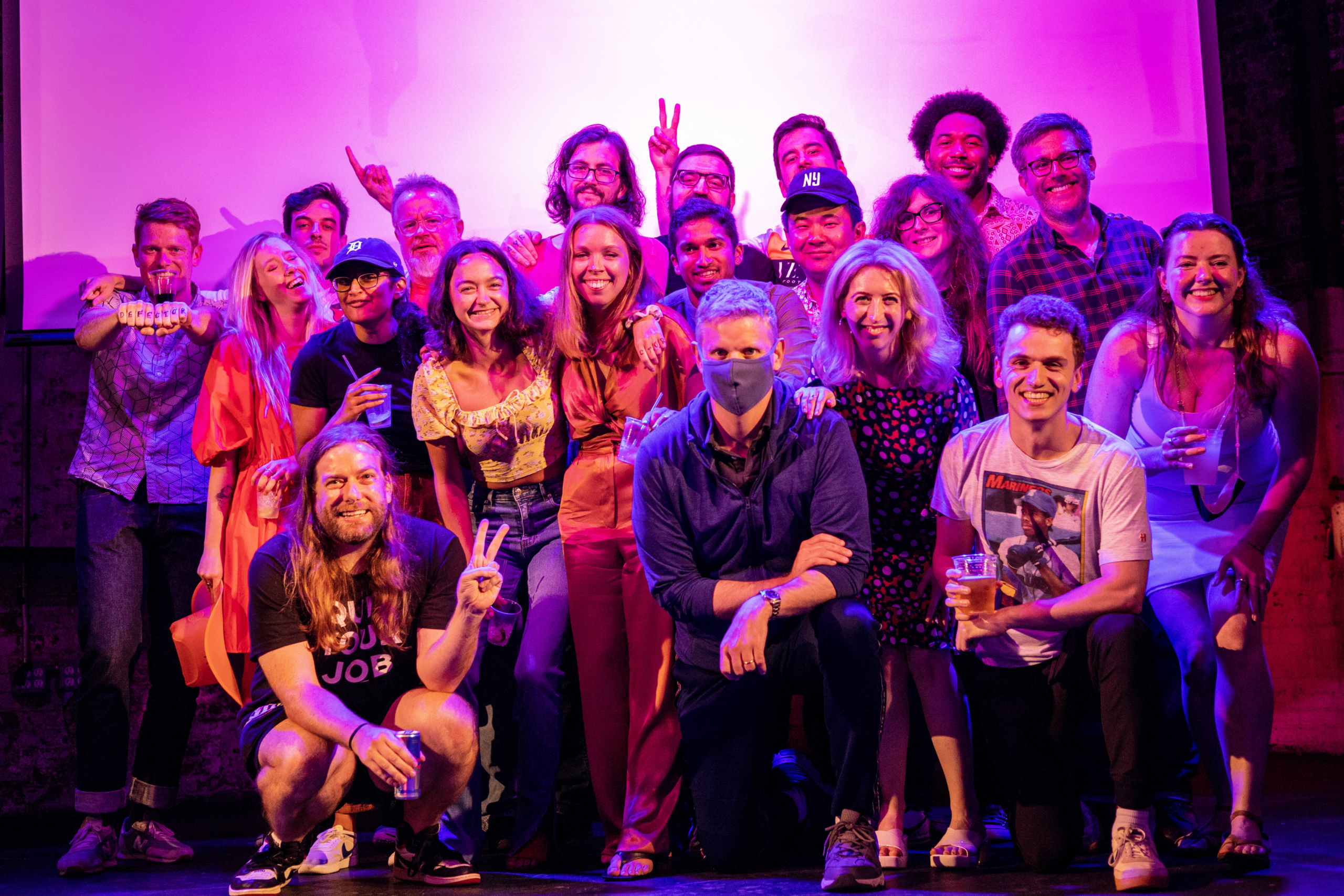
Five years in:
A staff of 25 with a $70,000 base, full benefits, total salary transparency, quarterly profit-sharing. They publish an annual report with full financials every year. Because they decided to.
The thing the private equity owners wanted to extract — the writers' judgment, the voice, the audience trust — they refused to let be extracted. Then they built a structure to own it.
That's what walking out of the heist looks like. That's what it costs. That's what it returns.
These are not Stage 4 fairy tales. They are deal structures. Co-founder equity. Royalty backends. Holding companies. Worker cooperatives. Catalog securitization. Gross participation. Documented. Operational. They exist precisely because previous waves of creatives lost the value capture argument and had to rebuild ownership from outside the standard structures.
Every one of them is in the In Sequence library. Most creatives have never seen them.
The Reframe — and What's Different This Time
Taste isn't a skill. It's capital. It compounds. It can't be transferred at scale. It is the rarest input into a production process that has just had every other input commoditized. Price it accordingly. Or own the output.
Anything else is the heist.
And here's the part the chorus needs you not to think about: discernment doesn't sit on top of culture. It runs ahead of it. By the time a pattern is trainable, taste has already moved. The model is studying yesterday's judgment. The judgment is already in tomorrow.
AI is always downstream of the act. Always.
This play has run before. It will run again. The thing I keep coming back to is that the structures exist now. The library exists. The progression is documented. The previous waves of creatives didn't have what creatives have now. They had to figure it out alone, after the fact, often with their leverage already gone.
That advantage only matters if creatives — collectively — refuse the language and price the work correctly. If they don't, the cycle simply repeats. Another decade compressed. Another generation of judgment extracted at salary while the compounding accrues to the people who own the deal structures. The heist works because most creatives have never been told the structures are negotiable.
They are.
Recognize the play. Refuse the frame. Send this to the friend who's about to take that meeting. Send it to the colleague who keeps getting told their judgment is what makes the place special. Send it to the one who can feel the squeeze but hasn't named it yet. The work of changing this is the work of enough creatives reading the chorus correctly, at the same time, and refusing to sing along.
This is one of three pieces in The Taste Heist.
Article 2 — The Confusion — on why creativity and taste are not the same thing, why most discourse confuses them on purpose, and why the integration of both is what tech is actually trying to buy and can't.
Article 3 — No Is Strategy — on the most powerful word in the language and how to use it as an operational tool, not a personality trait.
The library has 35 deal structures. Most are designed exactly for this moment. Read along.
F.Y.P.M.
Sources cited in this piece include Greg Brockman (X, Feb 16, 2026), Paul Graham (X, Feb 14, 2026; "Taste for Makers," 2002), Sam Altman (X, Feb 2026), Dane Knecht (X, Jan & Feb 2026), Matt Schumer ("Something Big is Happening," Feb 2026). Case studies referenced — Rick Rubin, A24, Defector Media — available in full at insequence.so.