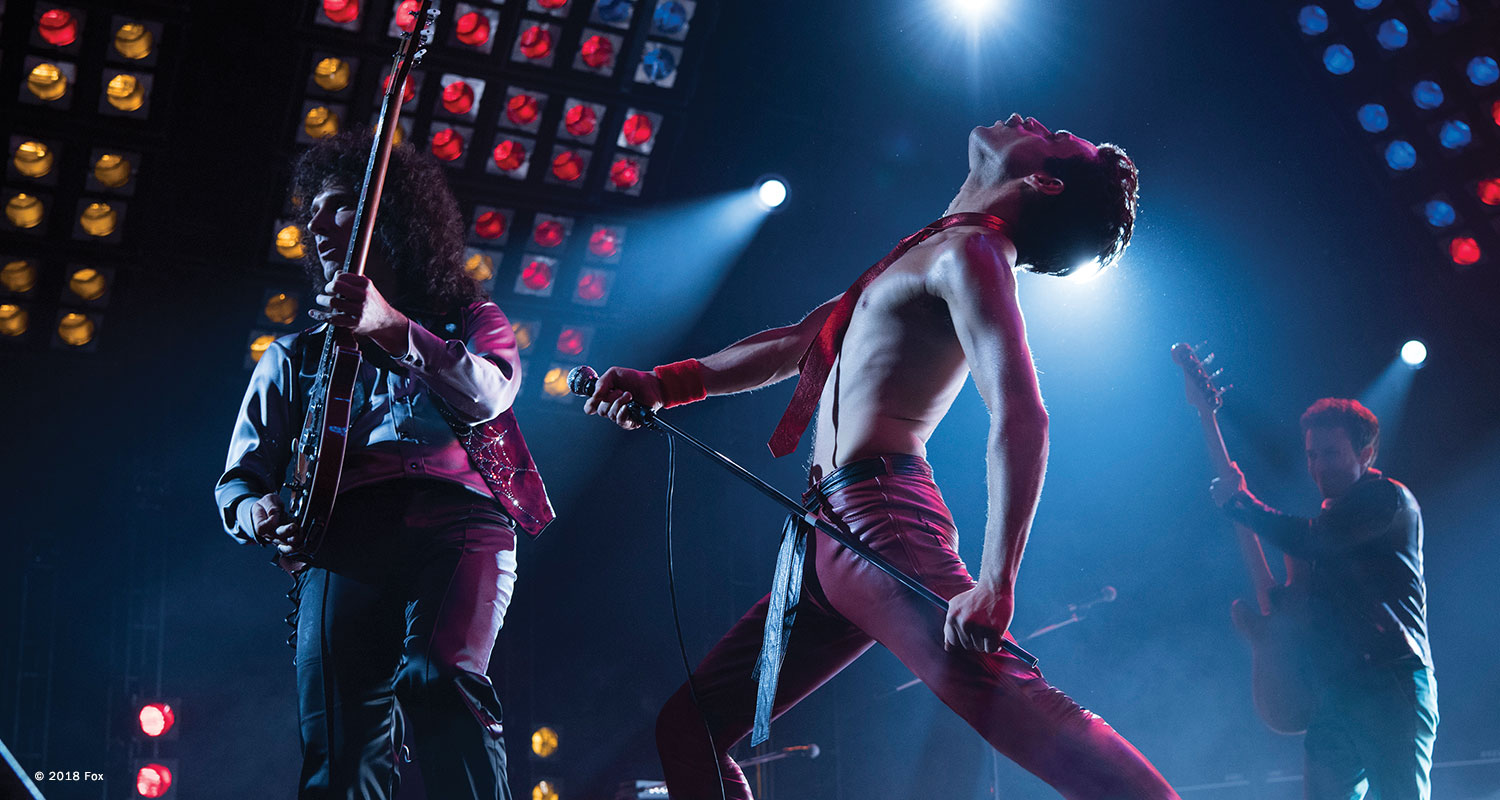
"Bohemian Rhapsody" was recorded in 1975. It cost approximately 35,000 pounds to produce — around $200,000 in today's dollars. Fifty years later, the song generates more annual revenue through streaming than it ever generated through vinyl, cassette, or CD sales in any single year of its original commercial life. It has earned its way through five distinct distribution technologies — vinyl, cassette, CD, digital download, streaming — each one expanding its revenue base without requiring a single additional dollar of production investment. And it will earn its way through the sixth distribution technology, and the seventh, and whatever comes after that.
This is the temporal dimension of creative assets that most capital allocators systematically undervalue. Not because the data is hidden — it isn't — but because the time horizons involved are so far outside the typical investment mandate that the models simply don't capture them. A venture fund operates on a 10-year horizon. A private equity fund on 5-7 years. A family office, in theory, thinks in generations. In practice, most family office investment committees still evaluate creative assets using frameworks built for a decade, not a century.
That mismatch is creating one of the largest structural mispricings in alternative assets.
The Compounding Dynamic
Creative assets that achieve cultural durability don't just maintain their value. They appreciate — through a compounding mechanism that has no parallel in traditional asset classes.
The mechanism works like this: a song, film, book, or design that enters the cultural canon becomes a reference point. Future creators reference it, sample it, adapt it, and react against it. Each reference expands the original work's cultural surface area, introducing it to new audiences who then seek out the original. New distribution technologies — radio, television, home video, digital, streaming, and whatever emerges next — create entirely new revenue channels for existing works. And each generation's rediscovery of a canonical work resets its cultural relevance, creating demand cycles that repeat indefinitely.
Consider the evidence across creative verticals.
Music: The Recognition Music Group catalog (formerly Hipgnosis Songs Fund) — backed by Blackstone and valued at $2.95 billion — has an average song age of approximately 19 years. These are not nostalgia assets depreciating on a long tail. They are appreciating assets benefiting from streaming infrastructure that didn't exist when most of them were recorded. KBRA rated the catalog's asset-backed securities at A — the third-highest credit quality rating — because the revenue streams are recurring, geographically diversified, and growing.
Film: Disney's animated film library, much of it produced before 1970, remains among the company's most valuable IP. Each film generates revenue through theatrical re-releases, home entertainment, streaming licensing, merchandise, theme park integration, and derivative works (sequels, remakes, Broadway adaptations). The original $1.5 million production cost of Snow White (1937) has generated billions in aggregate value over 89 years — and continues to generate.
Literature: Shakespeare's works have been out of copyright for four centuries. They continue to generate billions annually through theatrical productions, film adaptations, educational licensing, publishing, and an ecosystem of derivative works that shows no signs of contraction. The creative asset appreciates even after the legal asset (copyright) has expired — because cultural canonicity creates demand that doesn't require legal protection.
Real estate depreciates. Technology obsolesces. Patents expire. A creative work that enters the cultural canon appreciates — because every new generation, every new technology, and every new market expands the demand for the original act of imagination.

Why This Matters for Multi-Generational Capital
Family offices and multi-generational investment vehicles have a structural mandate that aligns more naturally with creative assets than with almost any other alternative asset class. They are specifically designed to think in 50-100 year increments. They can tolerate illiquidity. They can hold assets through market cycles without forced selling. And they typically seek investments that will generate income and preserve value for the next generation, not just the current one.
Creative assets that are selected with genuine discernment — not chasing trends but identifying work with durable cultural resonance — are among the most natural fits for this mandate.
Duration Advantage
A premium music catalog has a productive lifespan measured in decades to centuries. Compare this to other alternatives in a family office portfolio: commercial real estate (depreciates, requires ongoing maintenance capital), technology companies (face disruption cycles every 7-15 years), energy assets (face regulatory and transition risk on multi-decade timelines), even farmland (produces, but doesn't appreciate through cultural compounding). Creative assets with cultural durability are the longest-duration income-producing assets available outside of sovereign debt — with significantly higher yields.
Distribution Technology Optionality
This is the dimension that most financial models miss entirely. When a music catalog was valued in 1990, the revenue model assumed physical media distribution. Streaming didn't exist. It wasn't in the model. It couldn't be in the model — the technology hadn't been invented. Yet streaming has expanded the revenue base of pre-existing catalogs by orders of magnitude, creating value that was entirely outside the original investment thesis.
This will happen again. Whatever distribution technology follows streaming — spatial audio, AI-generated personalized performances, neural interface experiences, technologies we can't yet name — will create new revenue channels for existing creative assets. Each technological wave is a free option on the catalog. And the catalog owner pays nothing for that option.
Each row in that list represents a revenue channel that didn't exist when the previous channel was the primary income source. The song's productive capacity expanded not because the asset changed, but because the infrastructure around it evolved. This is a fundamentally different appreciation dynamic than any other asset class — and it's why the standard 10-year DCF model systematically undervalues premium creative assets.
Inflation Characteristics
Creative asset royalties are implicitly inflation-linked. As streaming subscription prices increase (Spotify has raised prices multiple times since launch), the per-stream payout to rights holders increases. As sync licensing fees grow with the expanding advertising and content production markets, the income from catalog placement grows. Creative assets don't have an explicit CPI adjustment — but they have a de facto one, driven by the economic growth of the entertainment and media industries that consume them.
The Bowie Precedent and Modern Infrastructure
David Bowie's 1997 securitization was visionary not because it generated extraordinary returns (the bonds paid 7.9% annually for ten years — respectable, not spectacular) but because it established the concept that creative assets could serve as collateral for institutional-grade debt. That concept has matured into a multi-billion-dollar market.
In 2024-2025 alone: Recognition Music Group issued $1.47 billion in ABS, followed by a $372 million supplemental issuance. Concord closed a $1.77 billion ABS backed by rights from The Beatles, Beyonce, and Pink Floyd — the largest music rights securitization in history. HarbourView Equity Partners closed a $500 million ABS. Kobalt completed a $266.5 million ABS. The Carlyle Group neared a $464 million bond sale backed by royalties from Katy Perry, Keith Urban, and Benny Blanco.
The liquidity infrastructure that family offices have historically cited as a barrier to creative asset investment is maturing rapidly. Secondary markets for catalog rights are active. Securitization provides institutional-grade liquidity for income-producing catalogs. And the emerging creator HoldCo models discussed in the previous article in this series are building toward public market liquidity through IPO paths.
The illiquidity premium that creative assets carried a decade ago is compressing. The durability premium — the value of an asset that produces income across generations and distribution technologies — is not.

The Selection Problem
Duration without discernment is worthless. A song that nobody listens to has infinite duration and zero value. The temporal advantage of creative assets only materializes for works that achieve cultural durability — and identifying which works will achieve that durability is, once again, a judgment call that resists quantification.
This is where the arguments from the earlier articles in this series converge. The diligence model requires judgment infrastructure, not just financial models. The investable structures are creator HoldCos and alignment-based deals that attract the best discernment. And the returns compound across generations — but only if the initial creative selection was correct.
For family offices, this means that creative asset allocation is not a passive strategy. It requires active engagement with the creative economy — not as patrons (though patronage has a long and economically productive history), but as informed participants who understand which creative decision-makers have the discernment to produce culturally durable work.
The most valuable creative assets of 2075 are being made right now. The capital that identifies them — through cultural fluency, creative judgment, and aligned deal structures — will compound for generations.
The practical implication: family offices considering creative asset allocation should be thinking less about acquiring existing catalogs (where the premium is already priced in) and more about identifying and aligning with creative decision-makers whose current work shows the markers of cultural durability — distinctive voice, deep cultural resonance, and the kind of prognostic ability that senses where culture moves before the data confirms it.
The George Lucas Proof
If there is a single case study that demonstrates the multi-generational thesis, it is George Lucas.
In 1977, Lucas negotiated a deal with 20th Century Fox for the original Star Wars. He accepted a reduced directing fee of approximately $350,000 — about $500,000 less than he could have commanded — in exchange for sequel rights and merchandising rights. Fox considered these rights essentially worthless. They were granting Lucas the right to make sequels to a movie that hadn't proven it would earn back its budget, and merchandising rights for a brand that didn't yet exist.
Those "worthless" rights generated over $5 billion in merchandise revenue alone before Lucas sold Lucasfilm to Disney in 2012 for $4.05 billion. The subsidiary rights retention — Structure #30 in the In Sequence library — transformed a $350,000 salary concession into a multi-generational fortune built on a single creative act and a single deal structure.
The critical element: Lucas didn't just create the work. He structured the ownership. And the ownership compounded across distribution technologies (theatrical, home video, streaming), product categories (toys, games, apparel, theme parks), and derivative works (sequels, prequels, animated series, Disney+ content) for nearly fifty years.
That's the multi-generational thesis in a single data point. The creative act created the asset. The deal structure determined who captured the value. And the temporal dimension — the fact that culturally resonant IP compounds across decades and technologies — turned a salary concession into one of the most valuable creative assets in history.

Positioning for the Next Fifty Years
The creative economy is in the early stages of a repricing that will unfold over the next decade. The forces are clear: AI commoditizes execution, concentrating value in discernment. Creative output financializes, creating institutional-grade investment vehicles. Capital restructures from time-based to outcome-based models, rewarding ownership over fees.
For multi-generational capital, the positioning is straightforward but not simple:
Build creative asset allocation as a dedicated portfolio sleeve — not a hobby allocation or a "passion investment" bucket, but a structured allocation with the same rigor, governance, and performance expectations as real estate or private equity. The asset class merits it.
Weight emerging over established. The premium on established catalogs is largely priced in. The asymmetric opportunity is in identifying the next generation of culturally durable creative assets — and the creators, HoldCos, and alignment structures that will produce them. This requires the judgment infrastructure discussed throughout this series.
Think in terms of creative ecosystems, not individual projects. A single film is a lottery ticket. A creative ecosystem — a studio with curatorial judgment, a creator HoldCo with compounding verticals, a collective with deep cultural resonance — is an investment in the system that produces culturally durable work. Systems compound. Individual projects don't.
Accept the irreducible role of taste. This asset class cannot be fully systematized, fully quantified, or fully delegated to algorithms. The returns require human judgment at every stage — in selection, in structuring, and in ongoing stewardship. That is not a flaw. That is what makes the returns possible and the market persistently inefficient.
Production commoditizes. Discernment becomes scarce. Capital follows scarcity.
The capital with the longest time horizon has the greatest advantage — if it develops the judgment to deploy.
This concludes the four-part Capital Allocator Series.